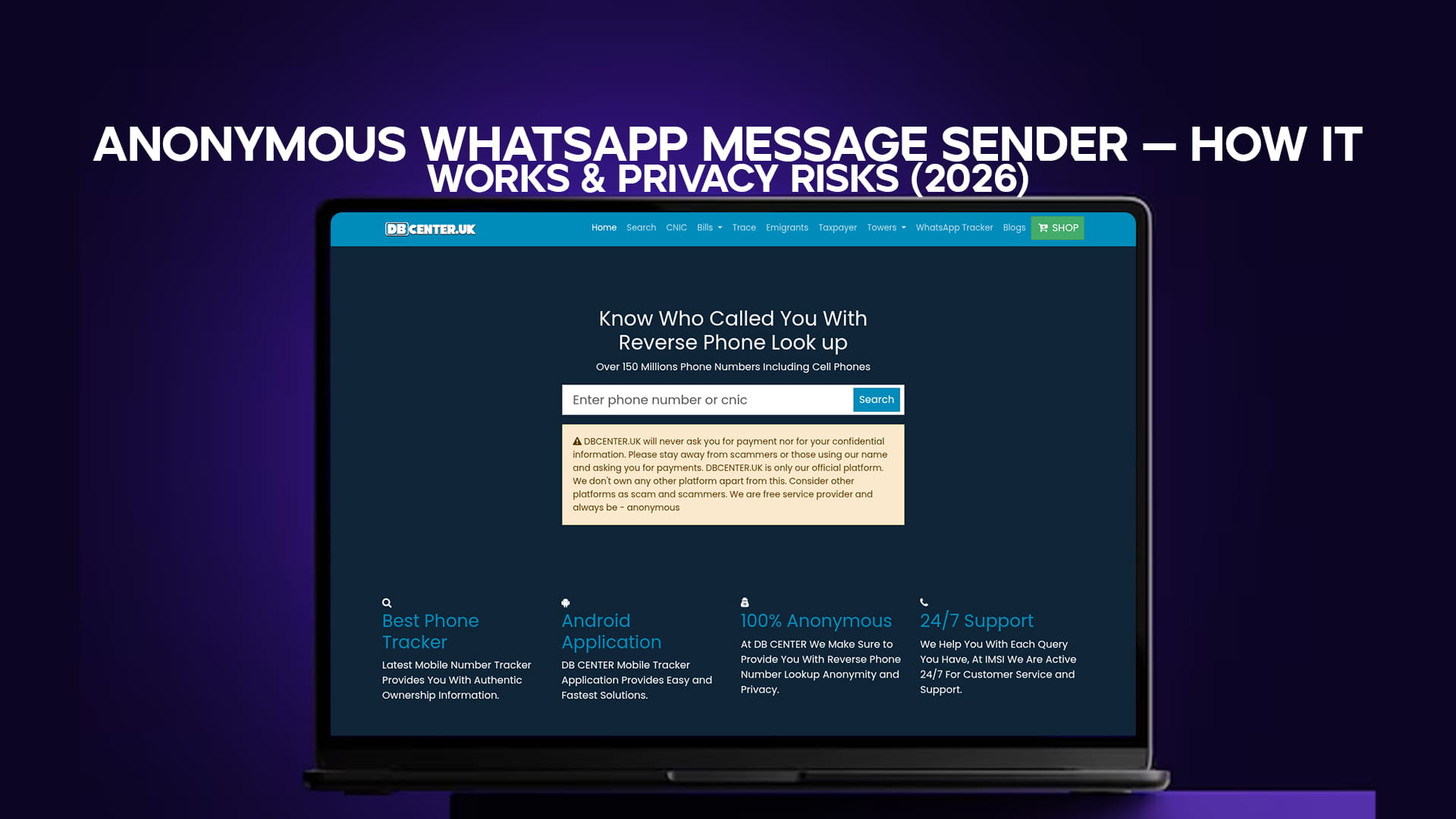
Services that promise to send a WhatsApp or SMS message without revealing the sender's identity are widely advertised across Pakistani search results and social feeds, and tools such as DB Center's anonymous message sender fall into this category. The pitch is simple: type a message, enter a recipient, and the message arrives without your name or number attached. It is worth understanding both how these tools actually function and, more importantly, where the promise quietly falls apart.
The Common Mechanisms
There are a few typical ways these services operate, and they differ in how much they really hide.
Some use a pool of throwaway sender numbers, routing your message through one of them so the recipient sees an unfamiliar number rather than yours. Others are web tools that push the message through a messaging gateway, so it arrives from a generic short code or a business number that says nothing about you. A third type hides nothing at all — it simply opens a WhatsApp chat to a number you have not saved, which some sites misleadingly label as "anonymous" even though your real number is exposed the instant the message lands. Knowing which type you are dealing with matters, because the weakest of the three is often the one marketed most aggressively.
Why "Anonymous" Is Mostly an Illusion
The central thing to understand is that genuine anonymity here is largely a marketing word. Even when the recipient cannot see your number, the service sitting in the middle can, and almost always does.
These platforms keep logs as a matter of routine operation: the originating account or IP address, timestamps, the destination number, and frequently the message content itself. None of that is visible to the person receiving the message, but all of it exists on the provider's servers. Reputable services state plainly in their terms that they will disclose this information in response to a lawful request, and even the disreputable ones tend to retain it. Metadata is sticky and difficult to erase. The practical result is that you are anonymous to the recipient, not to the system, and certainly not to an investigator with a court order.
The Privacy Risks Run Both Ways
The exposure is not only legal. It is also a data-privacy problem in both directions.
If you use one of these services, you are handing your message and your identifying details to an unknown third party whose security and data practices you have no way to verify. Many free anonymous-message sites exist precisely to collect that data, and the "free" service is the bait. Your phone number, the contents of what you sent, and the identity of who you contacted can all end up in a database you will never see.
If you are on the receiving end, the discomfort of a message from an unidentified sender is real, and these tools are a well-worn channel for spam, scam attempts, and phishing links designed to look like they come from a stranger with nothing to lose. Treating any link or request from an anonymous sender with suspicion is sensible.
The Legal Reality in Pakistan
The legal dimension is the part most users skip past, and it is the part that bites. Anonymity does not create immunity.
Using an anonymous sender to harass, threaten, defame, or intimidate someone is an offence under PECA 2016, which deals specifically with cyberstalking and harassment. The supposed anonymity tends to evaporate the moment a complaint reaches the FIA's Cybercrime Wing, because the intermediary's logs point back at the sender. People in Pakistan have been traced and prosecuted for exactly this reason — the borrowed number gave them false confidence, and the records behind it gave investigators a direct trail. A message that would be unlawful sent from your own number does not become lawful because it travelled through someone else's.
The Limited Legitimate Cases
There are narrow, benign reasons a person might want to obscure their number. Submitting a sensitive tip, reaching a business without exposing a personal line, or contacting someone in a situation where revealing your number could put you at risk are real scenarios.
Even in those cases, a dedicated secondary number or a recognised business-messaging service is the safer and more honest choice than a free anonymity gimmick, because at least you know who is holding your data and under what terms. The blunt summary for 2026 is that anonymous WhatsApp senders are anonymous to the wrong party, retain far more about you than they admit, and offer no protection whatsoever once the message itself crosses a legal line.