The most honest answer to "which is the best network in Pakistan?" is that it depends entirely on where you live and work. A network that delivers flawless 4G in one neighbourhood can be unusable two kilometres away. National reputation matters far less than the signal in the exact spots where you spend your day — home, office, and commute.
So the smartest approach is two-step: understand each network's general strengths, then verify coverage at your specific locations before committing. This guide does both.
The Four Networks at a Glance
Jazz — Widest Coverage
Jazz is Pakistan's largest network by subscribers and operates the widest 4G LTE footprint in the country. If you travel frequently, live in a smaller town, or need the highest probability of signal in rural and semi-rural areas, Jazz's reach is its main advantage. Its packages lean heavily toward hybrid bundles combining data, minutes, and SMS. Check Jazz coverage in your area.
Zong — Data and Speed
Zong built its brand on data. It was an early 4G mover, is 5G-ready in select areas, and is often the preferred choice for heavy internet users in cities where its network is strong. If your priority is streaming, downloading, and fast mobile data rather than voice, Zong is frequently the value leader. Check Zong coverage in your area.
Ufone and Telenor — The Unified PTCL Group
The biggest 2026 development is the merger of Ufone, Telenor, and PTCL into a single group with a shared on-net calling pool. Calls between all three networks now count as on-net, which gives their packages the widest unified calling footprint in Pakistan. For households and businesses whose contacts are spread across these three, the combined calling value is significant. Check Ufone coverage and Telenor coverage in your area.
How to Actually Check Coverage in Your Area
Reputation is a starting point, not a decision. Before you buy a SIM or port your number, verify the signal where it matters:
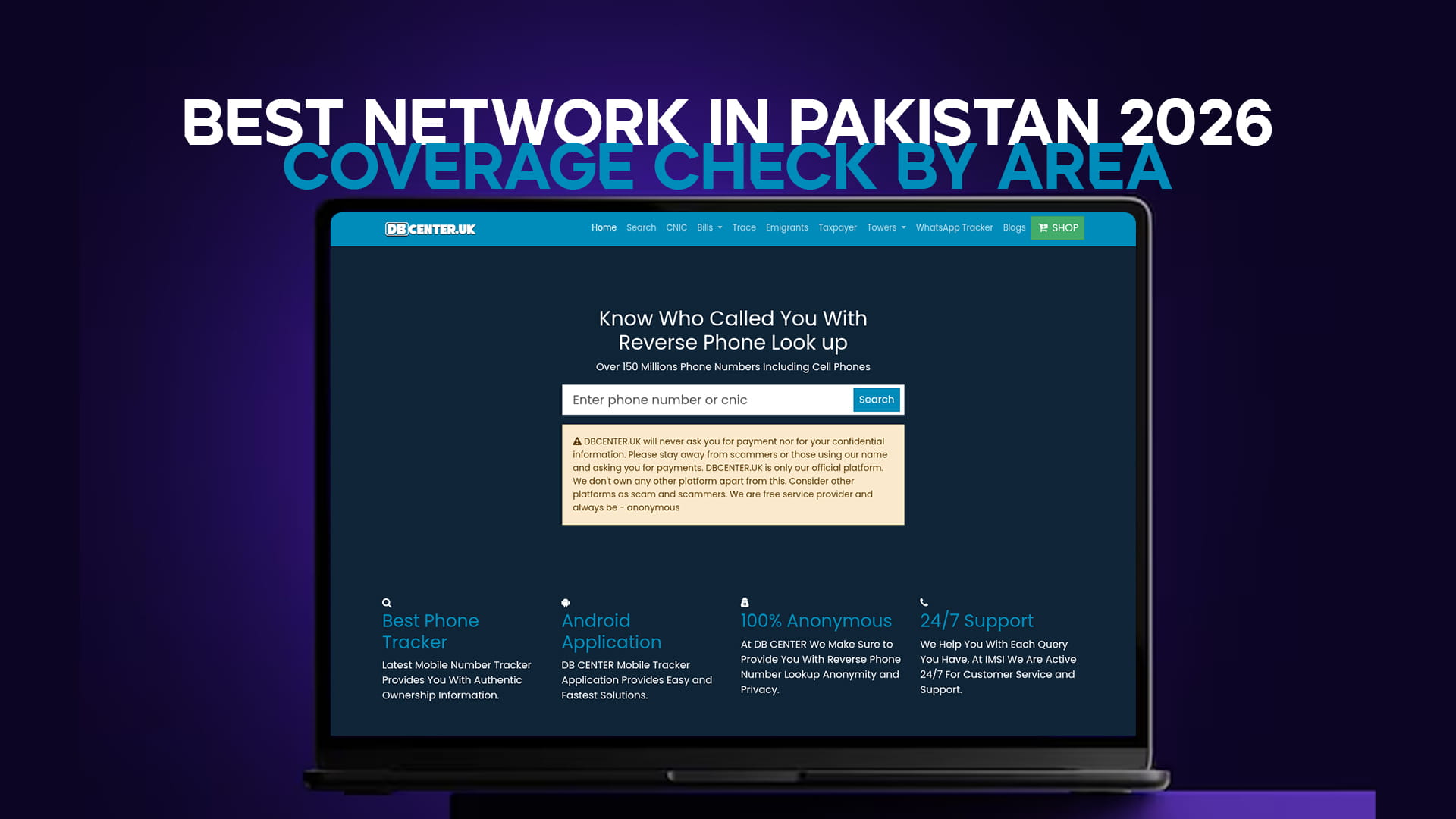
Check tower maps. The most practical first step is looking at where each operator's towers are relative to your home and office. DB Center maintains tower location maps for Jazz/Mobilink, Zong, Ufone, Telenor, and Vfone. A nearby tower is the single strongest predictor of good signal.
Ask your neighbours. The people in your building or street using each network are the most reliable real-world coverage test you have. If everyone on your floor complains about one network, that is your answer.
Test before you commit. Buy a prepaid SIM with a small load and test it for a few days at your key locations — home, office, and commute — before porting your main number. Run a speed test and make some calls during peak evening hours, when networks are most congested.
Use MNP to switch without losing your number. Mobile Number Portability lets you keep your number while changing networks. If your current network underperforms where you live, you can switch to a better one and keep the same number — send your CNIC-based porting request through the new operator.
Matching a Network to Your Priority
If your priority is widest coverage and travel, Jazz's national footprint is the safest default. If it is fastest data in a major city, Zong is frequently the leader where its network is strong. If it is calling across Ufone, Telenor, and PTCL numbers, the unified group offers unmatched on-net value. And if it is rural signal, check tower proximity carefully, because coverage varies most in less-populated areas — the tower maps matter more here than anywhere.
The Short Version
There is no universal best network in Pakistan — only the best for your specific location. Jazz leads on coverage breadth, Zong on data speed, and the unified Ufone/Telenor/PTCL group on cross-network calling value. Before committing, check tower proximity for each operator (Jazz, Zong, Ufone, Telenor), ask people nearby, and test a prepaid SIM at your key locations first. Then use MNP to switch while keeping your number.