Every SIM card in the world carries a hidden identity. It is not your phone number. It is not your name. It is a unique string of digits that telecom networks use to identify and connect you every single time you make a call, send a message, or use mobile data. This hidden identity is called the IMSI — the International Mobile Subscriber Identity.
Most people have never heard of IMSI data. And yet, this piece of information is one of the most fundamental building blocks of mobile communication. Understanding what IMSI data is, how it works, and how it connects to SIM ownership details can help you make smarter decisions about your digital security — especially in Pakistan, where SIM fraud and identity misuse have become serious everyday concerns.
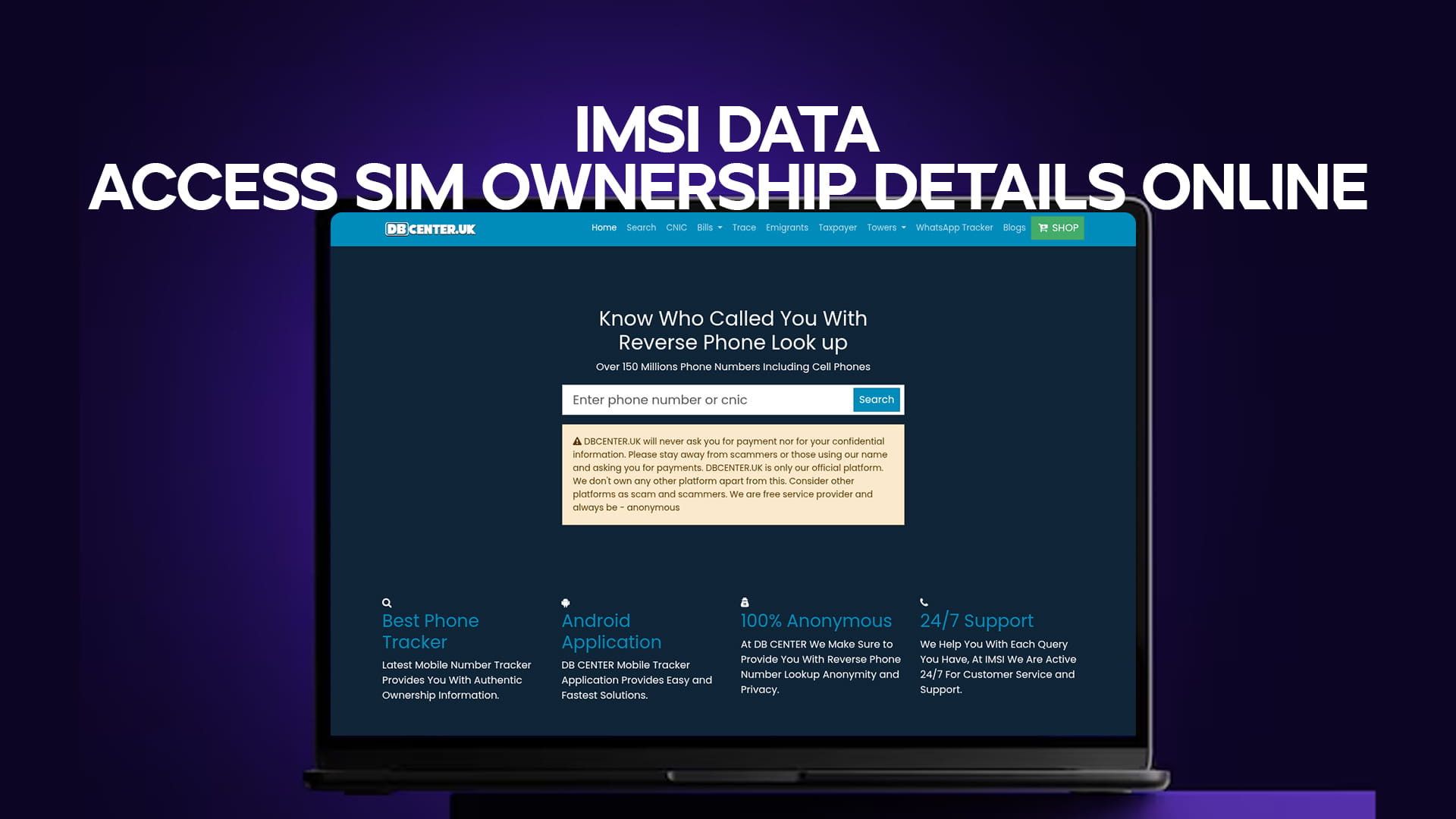
DB Center is a platform that helps people in Pakistan access SIM ownership details online quickly and easily. With a reverse phone lookup database of over 150 million phone numbers, DB Center empowers users to verify numbers, check SIM registration, and protect themselves from phone-based fraud. In this article, we will break down everything you need to know about IMSI data, SIM ownership, and how you can use DB Center to stay safe and informed.
What Is IMSI Data?
IMSI stands for International Mobile Subscriber Identity. It is a unique identification number that is assigned to every SIM card in the world. This number is stored directly on the SIM card and is used by mobile networks to identify and authenticate a subscriber when they connect to the network.
Think of the IMSI as the internal identity of your SIM card — one that is separate from your phone number, your name, or your CNIC. While your phone number is the identity that other people use to reach you, the IMSI is the identity that your telecom network uses to recognize your SIM card behind the scenes.
The IMSI is typically a 15-digit number and is broken down into three parts:
- MCC (Mobile Country Code): A three-digit code that identifies the country where the SIM was issued. For Pakistan, the MCC is 410.
- MNC (Mobile Network Code): A two or three-digit code that identifies the specific telecom operator (for example, Jazz, Telenor, Zong, or Ufone).
- MSIN (Mobile Subscription Identification Number): A unique number that identifies the individual subscriber within that network.
Together, these three components form the complete IMSI and allow mobile networks around the world to route calls, messages, and data correctly and securely.
Why Does IMSI Data Matter?
You might be wondering — if IMSI data is something that works quietly in the background, why does it matter to regular people? The answer lies in what IMSI data represents: it is the link between a physical SIM card and the subscriber identity behind it.
When a SIM card is registered in Pakistan, the telecom operator links the IMSI of that specific SIM card to the CNIC of the person registering it. This means that every IMSI in Pakistan is legally tied to a real identity. If that SIM is ever used for fraud, harassment, or any illegal activity, the IMSI trail leads directly back to the registered owner.
This connection between IMSI data and SIM ownership is what makes understanding it so important. Here is why it matters:
Identifying Unauthorized SIM Use
If someone registers a SIM using your CNIC without your permission, a new IMSI is created and linked to your identity. By accessing SIM ownership details, you can identify whether any IMSI-linked SIMs are registered in your name without your knowledge.
Supporting Fraud Investigations
Law enforcement agencies in Pakistan use IMSI data to trace fraudulent calls and messages back to specific SIM cards and ultimately to the registered individuals. Understanding IMSI helps you appreciate why SIM registration and ownership verification are so critical in fighting telecom crime.
Verifying SIM Identity
When you check a phone number's SIM ownership details online, the underlying process involves matching the IMSI data stored in the network's records to the registration details on file. DB Center makes this process accessible to ordinary users without requiring any technical expertise.
SIM Ownership and IMSI: How They Are Connected
Every SIM card has one IMSI. Every IMSI is linked to one mobile network. And in Pakistan, every SIM is linked to one CNIC holder through biometric registration. This chain of connections — from IMSI to SIM to CNIC — is what makes SIM ownership verification possible.
When you access SIM ownership details online through a platform like DB Center, you are essentially querying this chain of connections. You enter a phone number or CNIC, and the system searches its database to return the associated ownership information. Behind the scenes, this process relies on the IMSI-linked data that telecom operators maintain for every active subscriber.
Understanding this connection helps explain why SIM ownership data is so reliable when accessed through a trusted platform. It is not guesswork or user-submitted speculation — it is rooted in verified telecom registration records.
How to Access SIM Ownership Details Online With DB Center
DB Center makes it easy for anyone in Pakistan to access SIM ownership details online. The process requires no technical knowledge, no account registration, and no payment. Here is how to do it:
Step 1 – Visit DB Center Open your browser on your phone or computer and navigate to DB Center. The platform is designed to be clean, simple, and easy to use for everyone.
Step 2 – Select the Appropriate Search Tool DB Center offers multiple lookup options. For SIM ownership details, select the SIM ownership or phone number search section from the available tools.
Step 3 – Enter the Phone Number or CNIC Type in the phone number whose ownership details you want to verify, or the CNIC you want to check for registered SIMs. Make sure the number is entered in the correct format — Pakistani mobile numbers typically begin with 03, or with the country code +92.
Step 4 – Run the Search Click the search button to initiate the lookup. DB Center will query its database and return any available information within seconds.
Step 5 – Review the Results Your results may include the name associated with the SIM registration, the mobile network the SIM belongs to, the city of registration, and any user reports or flags linked to that number. If multiple SIMs are registered on a CNIC, this information may also be available depending on the query type.
The entire process is fast, private, and user-friendly.
The Importance of Accessing SIM Ownership Details in Pakistan
Pakistan's telecom landscape has grown at a remarkable pace. With well over 190 million mobile connections active in the country, managing SIM ownership has become more important than ever. Here is why accessing SIM ownership details online is a vital tool for people across Pakistan:
Rising Phone Fraud
Phone fraud is one of the most common crimes in Pakistan today. Scammers register SIMs under stolen identities and use them to target innocent victims. Being able to access SIM ownership details helps people verify who is behind a call before they engage or respond.
Mobile Banking Vulnerabilities
Millions of Pakistanis use their mobile phones for banking and financial transactions. Services like JazzCash, Easypaisa, and HBL Mobile are all tied to mobile numbers. If someone gains unauthorized access to a SIM registered in your name, your financial accounts could be at serious risk. Regularly checking SIM ownership details helps you catch and stop this kind of threat early.
Harassment and Cyberstalking
Harassment through phone calls and messages is unfortunately common in Pakistan. Platforms like DB Center allow victims to look up the details behind harassing numbers, which can help them report the caller to the relevant authorities.
Business Verification
Businesses regularly receive calls from unknown numbers claiming to be clients, suppliers, or partners. Accessing SIM ownership details online allows business owners to verify whether a number belongs to a legitimate registered entity before sharing confidential information.
What Information Is Available Through SIM Ownership Lookup?
When you use DB Center to access SIM ownership details, the information available will depend on what is recorded in the database for that specific number. Commonly available details include:
- Registered Name: The name of the person or business against whom the SIM is registered
- Mobile Network: The telecom operator the SIM belongs to (Jazz, Telenor, Zong, Ufone, or SCOM)
- City or Region: The location where the SIM was registered
- SIM Registration Status: Whether the SIM is currently active or has been flagged
- User Reports: Comments and reports submitted by other DB Center users who have received calls from this number
- Number of SIMs on CNIC: In CNIC-based searches, information about how many SIMs are registered under that identity
It is worth noting that not every number will return full results. The depth of available information depends on the data available in the database and whether the number has been previously searched or reported by users. However, even partial information can be extremely useful when you are trying to verify an unknown caller.
Understanding Pakistan's SIM Registration Framework
To fully appreciate the importance of IMSI data and SIM ownership verification, it helps to understand how SIM registration works in Pakistan.
When the Pakistan Telecommunication Authority made biometric SIM registration mandatory, it required all mobile subscribers to verify their identity using their CNIC and fingerprint at the time of SIM purchase. This data is then stored by the telecom operator and linked to the IMSI of the SIM card being issued.
The entire system is designed to ensure accountability. Every SIM in Pakistan is traceable to a specific individual. Every IMSI is connected to a real identity. This makes it possible for authorities to track criminal activity carried out through mobile phones and hold the responsible parties accountable.
However, the system is not completely foolproof. Cases of fraudulent biometric registration — where dishonest agents fake or bypass the verification process — do still occur. This is why it remains important for individuals to proactively check their SIM ownership details and report any discrepancies rather than assuming the system will catch everything automatically.
IMSI Data and Digital Privacy in Pakistan
One topic that often comes up alongside IMSI data is digital privacy. Some people worry that looking up SIM ownership details online could compromise the privacy of others. This is a fair concern and worth addressing clearly.
DB Center is not a surveillance tool. The platform provides access to information that is either publicly available, derived from telecom registration records that are linked to verified identities, or submitted voluntarily by users reporting specific numbers. The purpose of the platform is to help ordinary people verify the identity behind unknown numbers and protect themselves from fraud — not to enable invasive monitoring of private individuals.
Pakistan's digital privacy framework recognizes the need for balance between individual privacy and public safety. SIM ownership verification falls clearly on the right side of this balance. Knowing who is behind a phone number that has been used to harass, scam, or threaten you is not a violation of privacy — it is a legitimate and necessary tool for self-protection.
DB Center respects this balance by providing useful, practical information without crossing into territory that could enable misuse or abuse.
How DB Center Stands Out From Other Platforms
There are a handful of tools available online that claim to offer phone number lookup or SIM verification services for Pakistan. So why is DB Center the right choice?
Size of the Database
With over 150 million phone numbers in its database — including both mobile numbers and landlines — DB Center offers one of the most comprehensive phone number lookup resources available for Pakistan. A larger database means a higher probability of finding useful information about any number you search.
User-Generated Reports
DB Center benefits from a growing community of users who report suspicious or fraudulent numbers. This layer of community-generated intelligence adds real value to the search results. When you look up a number on DB Center, you can often see whether other users have flagged it as spam, fraud, or harassment — giving you immediate context that a bare database entry cannot provide.
Free Access
DB Center provides its core services free of charge. You do not need a subscription, and you do not need to create an account. This open access makes it useful to the broadest possible range of users across Pakistan, regardless of their technical ability or financial resources.
Simple and Clean Design
The platform is designed with simplicity in mind. There are no confusing menus, no unnecessary steps, and no technical jargon. Anyone from a student in Lahore to a shopkeeper in Peshawar can use DB Center without any prior experience or training.
Reliability
DB Center has built a reputation for being a reliable and trustworthy source of phone number and SIM ownership information in Pakistan. Users return to the platform repeatedly because it consistently delivers useful, accurate results.
Practical Use Cases for Accessing IMSI and SIM Ownership Data
To bring everything together, here are some real-world situations where accessing IMSI-linked SIM ownership details through DB Center can make a genuine difference in people's lives:
A woman in Karachi receives repeated harassing calls from an unknown number late at night. She searches the number on DB Center, finds reports from other users identifying it as a known harassment number, and uses this information to file a complaint with the FIA's Cybercrime Wing.
A shopkeeper in Lahore receives a call from someone claiming to be a supplier offering goods at very low prices. Before proceeding, he checks the number on DB Center and discovers it has been flagged as a scam number by multiple users. He avoids the transaction and saves himself from financial loss.
A father in Islamabad wants to ensure that no SIMs have been registered against his CNIC without his knowledge after losing his wallet. He uses DB Center's CNIC lookup to verify and confirms that only his own registered numbers appear — giving him peace of mind.
A bank customer in Faisalabad receives a suspicious OTP message and an unknown call asking her to confirm it. She searches the number on DB Center, finds it flagged as a banking scam number, and immediately reports it to her bank.
Each of these situations illustrates the practical, everyday value of having access to IMSI-linked SIM ownership details through a platform like DB Center.
Conclusion: Access the Information You Need, Right When You Need It
IMSI data is the invisible foundation of mobile communication. It connects every SIM card to a telecom network and ultimately to a registered identity. In Pakistan, where SIM cards are legally tied to CNIC holders through biometric registration, understanding and accessing SIM ownership details online is one of the most powerful steps you can take to protect your identity and your safety.
DB Center makes this process simple, fast, and free. Whether you want to check whether unauthorized SIMs are registered against your CNIC, verify who is behind an unknown number, or protect yourself from telecom fraud, DB Center gives you the tools to do it all in one place.
Do not wait until something goes wrong to start paying attention to your SIM identity. Take a few moments today to access your SIM ownership details through DB Center. It is a small action that can make an enormous difference in protecting your digital life in Pakistan.