If you have ever tried to verify someone's identity in Pakistan — a new tenant, a business contact, an unknown caller — you know how quickly the process can hit a wall. Official channels exist, but they are built for formal transactions, not everyday quick checks. The gap between what people need and what the system conveniently offers is real, and it drives a lot of searches for faster, more accessible solutions.
The phrase "live CNIC tracker" reflects that demand. People want current, accurate information about a CNIC number — whether it is valid, who it belongs to, and whether the person presenting it is who they claim to be. They want it quickly and without navigating bureaucratic processes designed for banks and government departments, not individuals trying to make an informed decision before signing a rental agreement or accepting a payment from a stranger.
This article explains what tracking CNIC details actually means in practice, what tools are officially available in Pakistan, what their limits are, and where services like DB Center provide genuinely useful support — particularly when what you need is to identify a phone number rather than verify a document.
What "CNIC Tracking" Actually Means
The word "tracker" can mean different things depending on the context. In this context, it does not mean real-time GPS location of a person. It means the ability to look up current, verified details linked to a CNIC number — checking whether the number is valid, confirming the name on record, and cross-referencing associated information like phone registrations or vehicle ownership.
Think of it less like tracking a moving object and more like querying a database. You have a 13-digit number, a name, or a phone number. You want to verify that the information you have been given is accurate and traceable to a real, registered identity. That verification process — fast, accessible, and reliable — is what people mean when they search for a CNIC tracker online.
The closest official equivalent is NADRA's own identity verification infrastructure. But because that infrastructure is designed for institutional access rather than consumer-level queries, individuals looking for quick answers often find themselves searching for more accessible alternatives.
NADRA — The Source of All CNIC Records
Before exploring any verification tool, it helps to understand where CNIC data ultimately comes from. Everything traces back to NADRA — the National Database and Registration Authority.
NADRA was established in 2000, taking over from a fragmented district-level system that had no central digital registry. The upgrade was substantial. NADRA introduced biometric enrollment — fingerprints, photographs, and digital signatures — and created a centralized database that now holds the identity records of over 120 million registered Pakistanis.
Every CNIC issued carries information that feeds into and draws from this central database. The 13-digit number on the card is structured: the first five digits identify the province and district of registration, the next seven form a unique personal identifier, and the final digit encodes gender — odd for male, even for female.
The database NADRA maintains is not a static record. When a citizen updates their address, renews their card, registers a family member, or has records amended through legal processes, the database is updated. This is the "live" aspect of the system — records change as life circumstances change.
NADRA's database is also deeply integrated with other government and private-sector systems. Through formal partnerships, PTA uses it for SIM registration biometrics. Banks use it for account verification. Provincial governments use it for voter lists and vehicle registration. FBR links it to taxpayer records. This interconnection is what makes the CNIC such a powerful identifier — and why keeping it secure matters so much.
Official Tools for Checking CNIC Details in Pakistan
NADRA and other official bodies have made several tools accessible to the public. These cover the most common individual verification needs without requiring institutional authorization.
NADRA SMS Service — 8009
Send any valid 13-digit CNIC number as an SMS to 8009 from any Pakistani mobile network. NADRA's system processes the query and replies with the registered name and a confirmation of whether the number is active and valid.
This is the most direct individual check available. It costs a standard SMS fee, works without internet, and returns results within seconds. For most day-to-day verification needs — confirming a name matches a CNIC before a transaction, checking whether a CNIC number is genuine before accepting it as identification — this is sufficient.
The limitation is that it only returns the name. It does not provide address, date of birth, photograph, or any extended record. For basic confirmation, that is usually enough. For anything requiring deeper verification, formal channels with NADRA are needed.
Pak Identity App and NADRA Web Portal
NADRA's official digital services are available through the Pak Identity mobile application and through nadra.gov.pk. These platforms let citizens:
- Track the status of a CNIC application or renewal
- Update a registered address
- Apply for a new or replacement CNIC
- Request a Family Registration Certificate
- Pay service fees online
These are entirely self-service tools for managing your own records. They are not designed for, and do not support, querying other people's CNIC details.
PTA SIM Registration Check — 668
Pakistan's telecom regulator requires biometric CNIC verification for every SIM card activation. This creates a direct, documented link between phone numbers and national identity records. By sending an SMS to 668, any Pakistani citizen can retrieve a list of all SIM cards currently registered under their own CNIC.
This check is more important than many people realize. If an unknown SIM appears on that list, it could mean someone has used your CNIC — whether through a forged copy, stolen data, or a fraudulent biometric bypass — to register a phone number without your knowledge. Those SIMs are used for scams, fraud, and crimes that officially point back to your identity.
Finding an unauthorized SIM is a situation requiring immediate action: contact your telecom carrier to block it, report it to PTA, and consider filing a formal complaint with NADRA and the FIA Cybercrime Wing.
Punjab MTMIS and Provincial Vehicle Registries
At mtmis.punjab.gov.pk, any user can enter a vehicle registration number and retrieve the registered owner's name and CNIC number. This publicly accessible tool is designed specifically to reduce vehicle fraud in the second-hand market.
Before buying a used car or motorcycle in Punjab, this check tells you whether the seller is actually the registered owner. If names do not match, the transaction should not proceed. Sindh has an equivalent system, and other provinces have varying degrees of online accessibility for vehicle records.
e-Sahulat Centers
For citizens who need in-person assistance — whether for biometric renewal, family registration, or more complex verification — NADRA's e-Sahulat network operates across both urban and rural Pakistan. These centers bridge the gap for people without reliable internet access or those dealing with records issues that cannot be resolved through self-service digital tools.
The Gap These Tools Do Not Cover
The official tools above are well designed for what they do. But they do not cover one of the most common real-world situations in Pakistan: you have a phone number, not a CNIC, and you want to know who is behind it.
Someone calls from an unknown number claiming to be from your bank. A stranger contacts you about an online listing. A number you have never seen keeps calling without leaving a voicemail. You want to know, before you call back or engage further, who this person is.
NADRA does not offer a public reverse lookup for phone numbers. PTA does not provide a searchable database for subscribers. Telecom companies cannot legally share subscriber information without court orders. The formal system is structured to protect privacy, which means it also closes off the kind of quick, casual identity check that individuals genuinely need in daily life.
This is the specific problem that reverse phone lookup services are designed to solve.
How DB Center Addresses This Gap
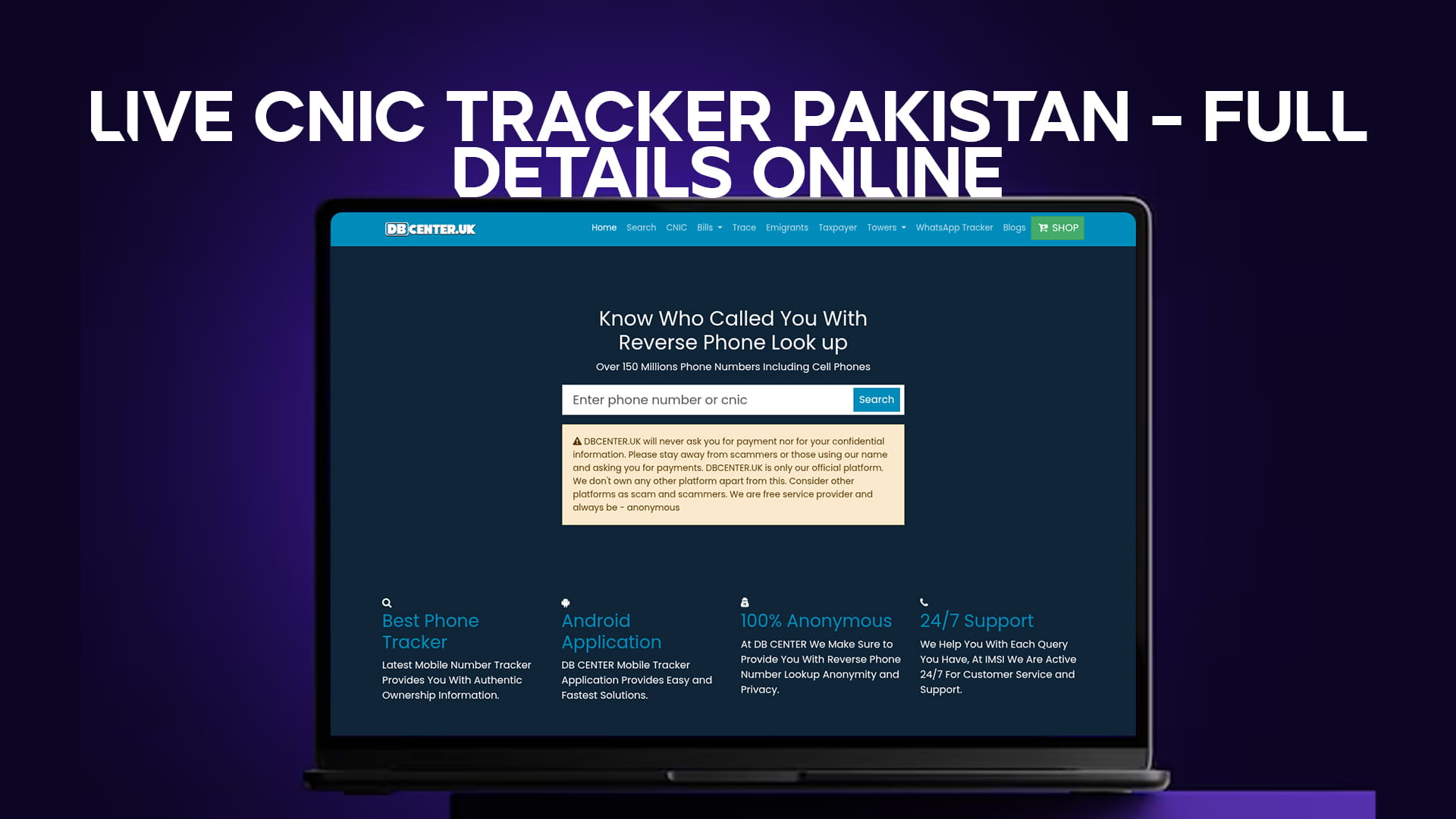
DB Center is a reverse phone lookup platform that maintains a database of over 150 million phone numbers, including mobile phones. When you enter a number into the search, it queries the database for any associated information — name, location, and user-submitted reports about the number's history.
In Pakistan, where every SIM card is biometrically registered against a valid CNIC, the link between a phone number and a real identity is formally established at activation. That link does not give the public access to NADRA records, but it means the data ecosystem around Pakistani phone numbers is richer and more traceable than in countries without mandatory SIM registration. This feeds into the kind of aggregated, public-source data that services like DB Center incorporate.
For Pakistani users, DB Center is practical in several specific situations:
Checking an unknown number before calling back. Calling back an unknown number confirms your number is active and may invite further contact. Running the number on DB Center first takes sixty seconds and may tell you immediately whether it belongs to a known scammer, spam caller, or someone whose name you recognize.
Verifying a contact's phone number. Someone gives you their name and phone number. Checking the number on DB Center tells you whether the name associated with it matches what you were told. A consistent result adds confidence. A mismatch raises a question worth clarifying before you proceed.
Screening marketplace contacts. Pakistan's online buying and selling platforms have a real fraud problem. Before meeting a stranger to buy something or transferring money to an account, checking their contact number on DB Center adds a fast, low-effort layer of due diligence.
Identifying repeat nuisance callers. A number that calls repeatedly without explanation may appear in DB Center with reports from other users who have experienced the same thing. Knowing whether others have flagged it as harassment or fraud changes how you handle the situation.
The platform does not require registration or submission of personal information to run a basic search. It is accessible from any device with an internet connection and is straightforward to use.
Protecting Your Own CNIC from Misuse
A discussion of CNIC tracking is incomplete without covering the other direction — making sure no one is tracking or misusing your CNIC without your knowledge.
Run the 668 check regularly. Most Pakistanis have never done this. Sending an SMS to 668 takes under a minute and tells you exactly how many SIMs are registered under your CNIC right now. If you find numbers you did not register, treat it as an emergency: contact your carrier and PTA immediately.
Be selective about where your CNIC copy goes. Every photocopy of your CNIC you hand over is a potential exposure point if the recipient handles it carelessly. Legitimate institutions ask for CNIC verification; they do not always need a physical copy to keep. Where you can avoid leaving copies, do.
Do not confirm CNIC details over the phone. No legitimate bank, government office, or service provider calls you and asks you to verbally confirm your 13-digit CNIC number as a security step. This is a social engineering tactic. Real institutions have your CNIC on file from when you enrolled. If a caller asks for it, hang up and call the institution directly using the number from their official website.
Keep your NADRA records current. When you move, update your address with NADRA. Outdated records create complications if fraud is discovered later and you need to document your whereabouts or prove a transaction was not yours. They also mean correspondence from NADRA or linked agencies may go to an old address.
Watch for signs of financial fraud. If someone has your CNIC, they may attempt to open a bank account, apply for a mobile wallet, take out a personal loan, or apply for a utility connection in your name. Unexplained loan application notices, credit inquiries, or new account confirmations you did not initiate are warning signs worth investigating immediately.
Use strong authentication everywhere. Your phone number is linked to your CNIC. If both are compromised through a SIM swap or device theft, an attacker may be able to access mobile banking through OTPs sent to a number they now control. Two-factor authentication using an authenticator app rather than SMS, combined with strong PINs and biometric lock on your phone, reduces this risk significantly.
Common Scams That Exploit CNIC Information
Understanding what scams look like in the context of CNIC data makes them easier to recognize in real time, before any damage is done.
The NADRA suspension scam. A call or message claiming your CNIC has been flagged for suspicious activity or used in a criminal case. You are told to press a number, call back, or pay a fee to resolve it. NADRA does not contact citizens this way. Ignore and block.
The bank security call. Someone calls claiming your account has been flagged and asks you to confirm your CNIC number "for identity verification." Banks already have your CNIC on file. They do not call you to re-confirm it. This is a social engineering attempt to harvest your details. Hang up.
Fake government compensation. A text or call informing you of government funds, disaster relief, or a prize that requires submitting your CNIC details to claim. These are data collection scams. Official government disbursements do not work through cold calls or random text messages.
Fraudulent online job applications. A job advertisement that asks for a CNIC photo as part of the initial application before any interview or verification process. Fake listings designed to collect CNIC copies are documented in Pakistan. Verify the employer through official channels before submitting any identity document.
SIM replacement fraud. A criminal visits a telecom outlet with a forged CNIC and requests a SIM replacement for your number. Once they have your SIM, they receive your OTPs and can access your mobile banking. If your SIM suddenly stops working without explanation, call your carrier from another phone immediately.
In any situation involving an unknown phone number, DB Center gives you a first line of defense — check the number before engaging with the call or message at all.
What the Law Says About CNIC Data Access
Pakistani law is clear about authorized versus unauthorized access to identity information.
The Prevention of Electronic Crimes Act (PECA) 2016 criminalizes unauthorized access to computer systems and databases. Attempting to access NADRA's database without authorization, purchasing scraped CNIC data, or using someone else's CNIC details to commit fraud are all prosecutable offences under PECA. Penalties include fines and imprisonment.
The NADRA Ordinance governs data sharing by NADRA. Formal institutional access — banks, telecoms, government departments — operates under licensed agreements with defined terms. Everything outside those agreements is unauthorized.
PTA subscriber regulations mean telecom companies cannot release your personal information without legal process, regardless of who is asking.
For ordinary citizens, this means the legitimate toolkit is: NADRA's 8009 SMS service, PTA's 668 check, NADRA's official portal for your own records, provincial vehicle registries for ownership verification, and reverse phone lookup platforms like DB Center for phone number identification. These tools operate within legal boundaries and cover the vast majority of real-world verification needs.
Any service claiming to offer complete, unrestricted access to NADRA's full records for a fee should be treated with serious skepticism. Such services either overstate what they can deliver or are accessing data through channels that are not authorized — neither of which is a safe or reliable way to get information.
A Practical Checklist for CNIC Verification in Pakistan
When you need to verify identity details, here is a straightforward sequence that covers most situations:
For confirming a CNIC number is genuine and the name matches — SMS the number to 8009. The reply is immediate, free, and official.
For checking whether a CNIC has been used to register unknown SIM cards — SMS 668. Do this periodically, not just when something seems wrong.
For vehicle ownership verification before a purchase — use your province's online MTMIS or Excise portal. Enter the registration number and confirm the owner details match the seller's identity.
For managing your own CNIC details, renewals, or address updates — use the Pak Identity app or nadra.gov.pk directly.
For identifying an unknown phone number or screening a contact you met online — use DB Center. Enter the number, review any associated information and user reports, and make your decision before engaging further.
For anything involving legal proceedings, formal employment checks, or financial authorization — go through proper institutional channels with NADRA's business verification services.
Final Thoughts
Tracking CNIC details in Pakistan is not a single, unified process. It is a combination of official SMS checks, government portals, and supplementary tools that together cover the range of real-world situations where identity verification matters.
NADRA's infrastructure is robust and continues to expand. The integration between identity records, phone registrations, vehicle data, and financial systems makes Pakistan's national identity system one of the more sophisticated in South Asia. For formal, institutional verification, it works well.
For everyday situations — an unknown caller, a suspicious transaction, a contact you are not sure about — DB Center fills the gap with a database of over 150 million phone numbers that delivers results quickly and without bureaucratic friction.
Used together, these tools give Pakistani citizens something genuinely useful: the ability to check who they are dealing with before something goes wrong, rather than only finding out after. In a country where phone fraud and identity misuse are documented, ongoing problems, that matters.