There are over nine million Pakistanis living and working abroad. Every one of them has ongoing ties to Pakistan — family, property, bank accounts, remittances, and legal affairs. Managing those ties from abroad means constantly navigating a gap: the need to verify identities, documents, and records remotely, without the ability to simply walk into a government office.
The verification challenges are real on both sides. An overseas Pakistani wanting to confirm their own NADRA records, check a CNIC status for a property transaction, or verify a family member's identity before handling legal affairs on their behalf needs fast, reliable tools. Back in Pakistan, landlords, lawyers, banks, and government offices dealing with overseas clients have the same need in reverse.
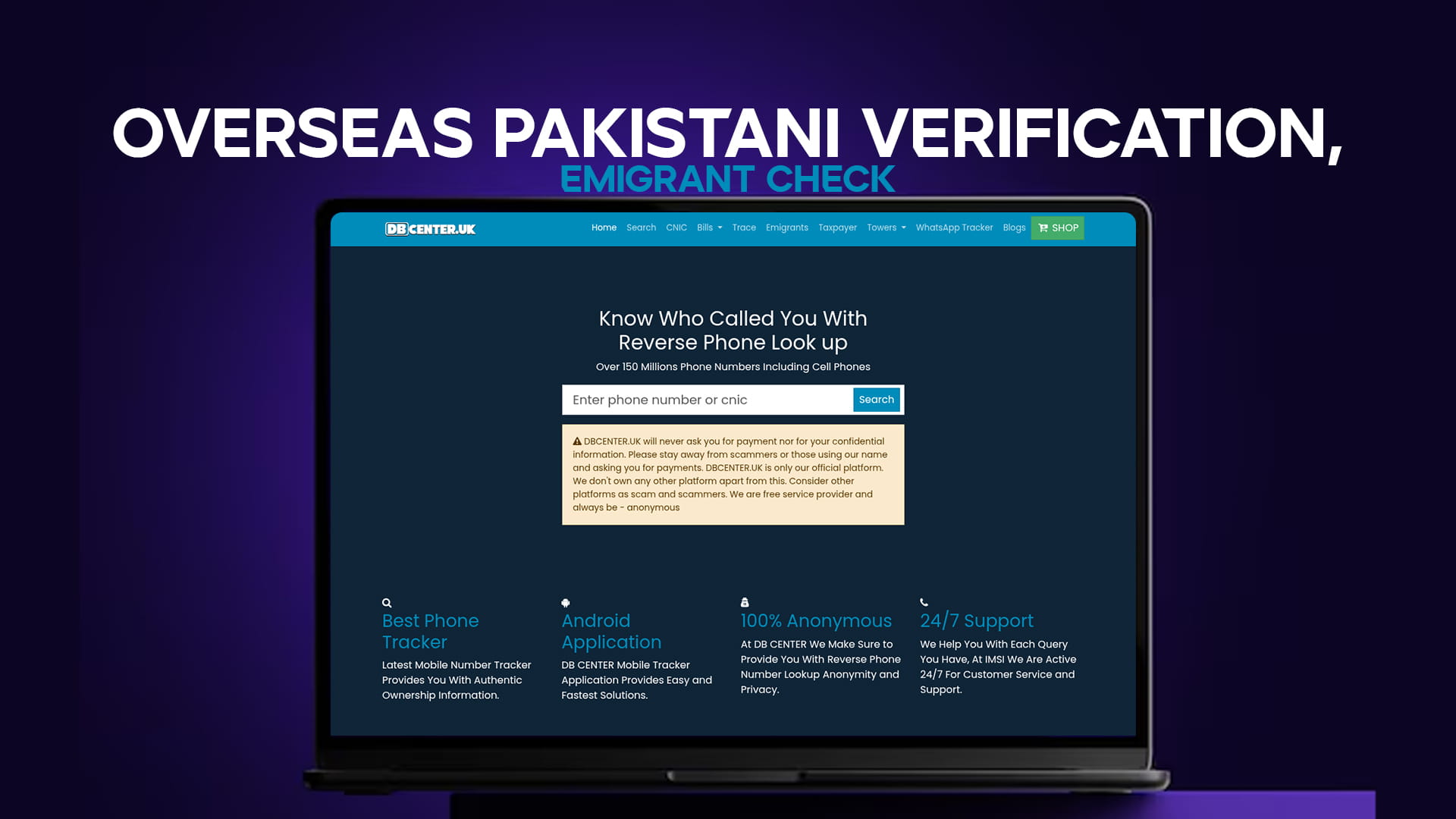
DB Center's emigrants verification tool is built for exactly this use case — a free, no-login check for overseas Pakistani identity verification that works from anywhere in the world.
Access note: If the site does not load from your location, connect via any free VPN — Proton VPN or Windscribe both work — and it opens instantly.
Understanding the Key Documents: CNIC vs NICOP vs POC
Before running any verification, it helps to know which document you are dealing with.
CNIC — Computerised National Identity Card
The standard national identity card for Pakistani citizens residing in Pakistan. Valid for ten years. Used for almost all domestic official transactions. Overseas Pakistanis who retain a CNIC alongside their foreign residence must renew it on the same schedule.
NICOP — National Identity Card for Overseas Pakistanis
Issued by NADRA specifically for Pakistani citizens living abroad. It carries the same 13-digit number structure as a CNIC and serves as identity proof for most Pakistani government and legal purposes. NICOP is also required for biometric verification when buying property in Pakistan from abroad. It carries no expiry concern for nationality proof, though it does have a physical card validity period.
POC — Pakistan Origin Card
Issued to foreign nationals who were previously Pakistani citizens or have Pakistani heritage. POC holders are not Pakistani nationals but have rights to property ownership, business registration, and simplified visa processes in Pakistan.
For verification purposes, CNIC and NICOP share the same NADRA database and can both be checked through the same tools.
How to Verify an Overseas Pakistani Identity Online
Method 1: DB Center Emigrants Tool
The emigrants verification tool at DB Center is the fastest free option. Enter the relevant CNIC or NICOP number and the tool returns the current verification status. It works globally — from the UAE, UK, USA, Saudi Arabia, Canada, or anywhere else — and needs no registration.
Method 2: CNIC Status Check
For basic identity verification of any Pakistani national — overseas or domestic — the CNIC checker confirms whether a CNIC number is active, expired, or blocked in NADRA's system. For overseas Pakistanis managing property on behalf of family back home, verifying the family member's CNIC status before executing a power of attorney is a sensible precaution.
Method 3: NADRA's Official Portals
NADRA provides online services through nadra.gov.pk, including NICOP status checking, renewal applications, and family registration certificate requests. Overseas Pakistanis can apply for NICOP renewal and new applications through the portal or through Pakistani embassies and consulates in their country of residence.
Method 4: FBR Taxpayer Status for Property Transactions
Any property transaction in Pakistan involving an overseas Pakistani requires checking whether both parties are FBR filers, since the withholding tax rates differ significantly. The taxpayer verification tool confirms ATL status for any CNIC from abroad in seconds, and is an essential step before signing property papers.
Sending Money to Pakistan: Remittance Verification
Pakistan receives billions of dollars in annual remittances, and verifying the recipient's identity before a large transfer is basic due diligence. Whether you are using a bank transfer, Western Union, Wise, or any other remittance channel, confirming that the CNIC or account number belongs to who you think it belongs to prevents misdirection and fraud.
The CNIC check covers the identity side. For cross-referencing a mobile number if that is part of the transfer method, DB Center's number trace tool can assist with associated information lookup.
Property Matters from Abroad
Property ownership is the most common reason overseas Pakistanis need verification services. Whether you are buying, selling, gifting, or inheriting property in Pakistan while living abroad, several verification steps are unavoidable:
Verify the counterparty's CNIC status before signing any agreement. Check both parties' FBR filer status — filer versus non-filer status affects the withholding tax calculated on the transaction value. Confirm your own NICOP is valid and not expired, since you will need it for biometric verification at the time of deed registration. Ensure any power of attorney you are granting is being given to a person whose identity you have verified through official channels.
Running these checks online before engaging a lawyer or registrar saves time, avoids surprises, and closes the most common gaps through which property fraud operates.
Overseas Pakistanis and Tax Filing
Overseas Pakistanis with taxable income in Pakistan — from property rent, business income, or investments — are required to file tax returns. The process is entirely online through IRIS at iris.fbr.gov.pk, using a NICOP number in place of a CNIC and email OTP verification where a Pakistani mobile number is unavailable.
Foreign salary and remittances sent through official banking channels are not taxable in Pakistan. Filing creates a tax identity and protects you from non-filer surcharges on local transactions — particularly relevant for property purchases and banking.
Renewing NICOP from Abroad
NICOP renewal is handled through Pakistani embassies and consulates, or through NADRA's online portal. Processing times for overseas renewals are generally longer than domestic renewals — four to eight weeks is typical, though this varies. Apply well before your card expires to avoid a gap in your official identity documentation.
The Short Version
For overseas Pakistani identity verification, DB Center's emigrants tool is the fastest free check — works globally, no login, no fee. For CNIC status checks on family or counterparties back home, use the CNIC checker. For property transactions, always verify FBR filer status via the taxpayer tool before signing. And for your own NICOP renewal or formal NADRA services, go through nadra.gov.pk or your nearest Pakistani embassy.