In today's digital world, mobile phones are an essential part of everyday life in Pakistan. With over 190 million mobile subscribers across the country, SIM cards are used by nearly every household. But with this massive number of active SIMs also comes a serious problem — unknown callers, spam calls, fraud, and unregistered numbers.
Whether you are receiving suspicious calls, want to verify who owns a particular number, or need to check SIM registration details for safety reasons, Pakistan has a number of tools and platforms available to help you. In 2026, this process has become easier and more reliable than ever before.
This article covers everything you need to know about SIM tracking in Pakistan, how to verify SIM registration, how to use reverse phone lookup services, what the legal framework looks like, and how DB Center can help you identify unknown callers with a database of over 150 million phone numbers.
What Is a SIM Tracker and Why Does It Matter in Pakistan?
A SIM tracker, in simple terms, is a tool or service that allows you to find out who owns a specific phone number and what SIM card is associated with it. In Pakistan, SIM cards are issued by five major telecom operators: Jazz, Telenor, Zong, Ufone, and SCO. Each SIM must be registered with a valid CNIC (Computerized National Identity Card) under rules set by the Pakistan Telecommunication Authority (PTA).
Because SIM registration is linked to national identity, it is possible to verify who a phone number belongs to using official and authorized platforms. This is important for several reasons:
- Protection from scams and fraud: Fraudsters often use unregistered or fake SIMs to cheat people online. Being able to verify a number helps you stay safe.
- Identifying unknown callers: Receiving calls from unknown numbers is frustrating and sometimes scary. Knowing who is calling gives you peace of mind.
- Parental monitoring: Parents want to know who their children are talking to. SIM verification tools offer a layer of safety.
- Business verification: Businesses in Pakistan regularly verify customer phone numbers to avoid fraudulent transactions.
- General personal safety: If someone is harassing or threatening you via phone, verifying their number can be the first step toward taking action.
How SIM Registration Works in Pakistan (2026)
Pakistan has one of the most structured SIM registration systems in South Asia. The PTA, working alongside NADRA (National Database and Registration Authority), ensures that every SIM card sold in the country is tied to a verified identity.
Here is how the process works:
- CNIC-Based Registration: Every SIM card in Pakistan must be registered using a valid CNIC. Biometric verification is required at the point of sale.
- Maximum SIM Limit: Each person is allowed a limited number of SIMs per CNIC across all networks combined.
- PTA Verification Portal: The PTA provides an online portal where users can check how many SIMs are registered against their CNIC.
- Biometric Verification: Retailers use fingerprint scanners to confirm identity before issuing a SIM card.
In 2026, these rules are even stricter, with real-time databases being updated every time a SIM is activated, deactivated, or transferred. This makes it easier than ever to track and verify SIM ownership within the legal framework.
How to Check SIM Registration in Pakistan
There are a few officially recognized ways to check SIM registration in Pakistan. These methods are legal, straightforward, and widely used by millions of Pakistanis every day.
1. Using the PTA SMS Service
The easiest method is to use the PTA's official SMS verification service. You simply send a text message with your CNIC number to 668, and you will receive a reply showing how many SIMs are registered against your identity and on which networks.
Steps:
- Open your SMS app
- Type your 13-digit CNIC number (without dashes)
- Send it to 668
- Wait for the reply showing registered SIMs
This service is free of charge and works on all networks in Pakistan.
2. Visiting the PTA Website
The PTA has an online verification portal where you can enter your CNIC and check the SIM registration status. This is particularly useful if you want a more detailed breakdown of registered numbers.
3. Visiting Your Network Provider
All major telecom companies in Pakistan — Jazz, Telenor, Zong, Ufone, and SCO — have walk-in service centers where their staff can help you verify SIM ownership and registration status using your CNIC and biometric information.
4. Using Third-Party Reverse Phone Lookup Services
This is where DB Center becomes incredibly useful. While the PTA services focus on your own SIMs, third-party phone lookup tools allow you to identify who owns a specific number that has called or messaged you. We will discuss this in detail in the sections below.
What Is Reverse Phone Lookup and How Does It Work?
Reverse phone lookup is a service that allows you to enter a phone number and find information about who owns that number. Instead of searching for a name and finding a phone number (as you would in a phonebook), you do the opposite — you start with the number and find the name.
This is an incredibly useful tool for:
- Identifying missed calls from unknown numbers
- Checking if a number is linked to a known scammer
- Verifying the identity of a business contact
- Confirming whether a number is spam or legitimate
- Investigating numbers that have been used for harassment
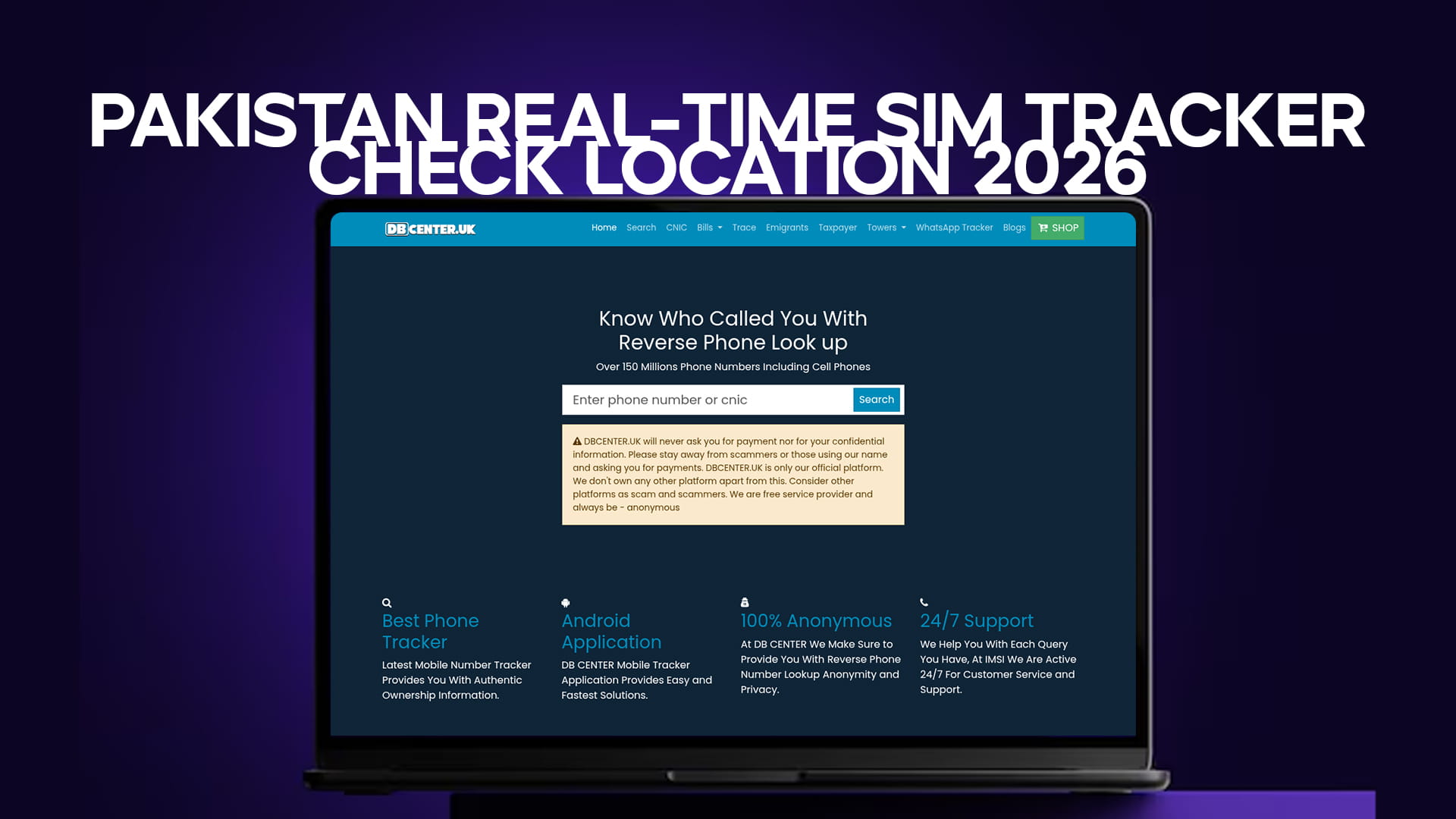
DB Center offers one of the most comprehensive reverse phone lookup databases available, covering over 150 million phone numbers, including mobile (cell phone) numbers from Pakistan and many other countries. This makes it a powerful tool for anyone in Pakistan looking to identify unknown callers quickly and easily.
DB Center – Your Trusted Reverse Phone Lookup Tool
DB Center is a well-established reverse phone lookup platform that helps users across the world find out who called them. With a database of more than 150 million phone numbers — including cell phones — DB Center gives you access to caller information that is otherwise very difficult to find.
Here is what makes DB Center stand out:
Massive Phone Number Database
With over 150 million phone numbers indexed, DB Center covers a huge range of numbers including landlines, cell phones, and business lines. This is one of the largest reverse lookup databases available to the public.
Easy-to-Use Interface
You do not need any technical knowledge to use DB Center. Simply visit the website, type in the phone number you want to look up, and get results instantly. The platform is designed to be clean, simple, and fast.
Cell Phone Number Lookup
One of the most useful features of DB Center is its ability to search cell phone numbers — not just landlines. Since most unknown calls in Pakistan come from mobile numbers, this is a critical capability.
Anonymous Lookup
DB Center allows you to look up numbers without revealing your own identity. You do not need to create an account or provide your personal details just to perform a search.
Regularly Updated Database
Phone numbers change hands frequently. Numbers get deactivated, new ones are issued, and SIM ownership transfers happen all the time. DB Center keeps its database updated so that the information you receive is as accurate and current as possible.
Real-Time SIM Tracking vs. Reverse Phone Lookup: What Is the Difference?
There is often confusion between "real-time SIM tracking" and "reverse phone lookup." It is important to understand the difference between the two, both in terms of what they do and what is legally and ethically acceptable.
Real-Time SIM Tracking
Real-time SIM tracking refers to tracking the live GPS or network location of a SIM card at any given moment. This is a very sensitive capability and is strictly regulated in Pakistan. Only authorized agencies — such as law enforcement, intelligence services, or telecom companies acting under legal orders — have the right to track someone's real-time location using their SIM.
Tracking another person's location without their consent is illegal in Pakistan and is considered a serious violation of privacy under the Prevention of Electronic Crimes Act (PECA) 2016. This applies regardless of the relationship between the two people involved.
If you believe someone is using a phone to commit a crime against you, the correct approach is to file a complaint with the Federal Investigation Agency (FIA) Cyber Crime Wing or local law enforcement. They have the legal authority and tools to track SIM locations when warranted.
Reverse Phone Lookup (Legal and Widely Used)
Reverse phone lookup, on the other hand, is completely legal and widely used for personal safety and information purposes. It does not reveal real-time GPS location but instead provides public information about who owns or has used a particular phone number.
This is the kind of service that DB Center provides — and it is a legitimate, widely accepted tool used by millions of people around the world to identify unknown callers and protect themselves from scams and harassment.
Common Reasons People Look Up Phone Numbers in Pakistan
If you have ever wondered who is calling you from an unknown number in Pakistan, you are not alone. Here are some of the most common reasons why people in Pakistan use phone number lookup services:
1. Spam and Scam Calls Pakistan has seen a significant rise in scam calls in recent years. Fake bank representatives, lottery scams, and fraudulent job offers are extremely common. Checking an unknown number before responding can save you from serious financial loss.
2. Missed Calls from Unknown Numbers Most people in Pakistan receive multiple missed calls from unfamiliar numbers every week. While some may be harmless, others could be important business calls. Looking up the number helps you decide whether to call back.
3. Harassment and Threats Unfortunately, harassment through phone calls is a real problem in Pakistan, especially for women. Being able to identify an anonymous harasser is a critical first step in taking legal action.
4. Verifying Business Contacts Before doing business with someone you met online or through social media, it is wise to verify their phone number. A reverse phone lookup can tell you a lot about whether a contact is legitimate.
5. Reconnecting with Old Contacts Sometimes people receive calls from numbers they do not recognize that turn out to be old friends, colleagues, or family members who have changed their number. A lookup can help confirm the identity before calling back.
6. Property and Rental Scams Pakistan has a growing online property market, and with it comes a rise in rental scams. Looking up the phone number of a potential landlord or property dealer can help you verify their legitimacy.
How to Use DB Center for Pakistan Phone Number Lookup
Using DB Center to look up a Pakistan phone number is extremely simple. Here is a step-by-step guide:
Step 1: Visit DB Center Open your web browser and go to the DB Center website. The homepage has a simple search bar where you can enter any phone number.
Step 2: Enter the Phone Number Type in the phone number you want to look up. For Pakistan numbers, make sure to include the correct country code (+92) or the local format, depending on what the platform accepts.
Step 3: Click Search Hit the search button and wait a few seconds. DB Center will search its database of over 150 million phone numbers and return any matching results.
Step 4: Review the Results The results will show available information about the phone number, which may include the owner's name, location, carrier information, and whether the number has been reported as spam or fraudulent.
Step 5: Take Action Based on the results, you can decide whether to call the number back, block it, or report it to the relevant authorities if it appears to be used for illegal purposes.
Tips for Staying Safe from Phone Scams in Pakistan in 2026
As phone scams become more sophisticated, it is important to take a proactive approach to protecting yourself. Here are some practical tips:
Do Not Share Personal Information Over the Phone Never share your CNIC number, bank account details, OTP codes, or any personal information with anyone who calls you unexpectedly — no matter how official they sound.
Verify Before You Respond If you receive a call from a number you do not recognize claiming to be from your bank, a government agency, or a business, hang up and call the official number directly to verify.
Use Reverse Lookup Services Regularly Make it a habit to look up unknown numbers using DB Center before returning calls or engaging with unknown callers.
Report Spam Numbers Pakistan's telecom operators have spam reporting systems. If you identify a scam or spam number, report it so others can be protected as well.
Keep Your CNIC Information Private Since SIM registration in Pakistan is tied to CNIC, protecting your national identity number is crucial. Never share it with anyone you do not trust completely.
Enable Call Filtering on Your Phone Modern smartphones have built-in tools to filter spam and unknown calls. Enable these features for an extra layer of protection.
Legal Framework for SIM and Phone Tracking in Pakistan
Pakistan has a clear legal framework governing how phone numbers and SIM cards can be tracked and verified. Key legislation includes:
Pakistan Telecommunication (Re-organization) Act 1996 This is the foundational law governing telecommunications in Pakistan, under which the PTA operates and regulates all SIM-related activities.
Prevention of Electronic Crimes Act (PECA) 2016 PECA is a comprehensive law that deals with cybercrime in Pakistan. It includes provisions against unauthorized tracking, hacking, and misuse of electronic data. Tracking someone's phone without their consent or without a legal warrant is a criminal offense under this law.
NADRA Regulations Since SIM cards are linked to CNIC through NADRA, any misuse of this data is also regulated under NADRA's own data protection rules.
Understanding these laws is important for anyone using phone lookup tools. Services like DB Center operate within legal boundaries by providing publicly available or user-contributed information, not by hacking or illegally accessing private telecom records.
Why DB Center Is the Best Choice for Phone Lookup in Pakistan
When it comes to identifying unknown callers and verifying phone numbers in Pakistan, there are several options available. But DB Center stands out for a number of important reasons:
- Largest database: With over 150 million numbers, it has the most comprehensive coverage of any publicly available service.
- Cell phone support: Many lookup tools only cover landlines. DB Center covers mobile numbers too, which is essential in Pakistan where virtually all communication is done via mobile.
- Simple to use: No technical knowledge required. Anyone can use it.
- Fast results: Searches return results almost instantly.
- Trusted platform: DB Center has been used by millions of people and is a recognized name in the reverse phone lookup industry.
Conclusion
In 2026, staying safe in Pakistan's digital environment requires the right tools and knowledge. Whether you want to verify SIM registration, look up an unknown caller, or protect yourself from phone scams, there are legitimate and effective ways to do so.
For individuals who want to check how many SIMs are registered against their CNIC, the PTA's official SMS service to 668 remains the quickest and easiest tool. For identifying unknown callers and doing reverse phone lookup, DB Center is the most reliable and comprehensive platform available, with a database of over 150 million phone numbers including cell phones.
Always remember that real-time location tracking of another person's SIM without consent is illegal in Pakistan. Stick to legal tools and platforms, and if you face serious issues involving harassment or criminal activity via phone, contact the FIA Cyber Crime Wing or local law enforcement for assistance.
By combining official government tools with trusted platforms like DB Center, every person in Pakistan can take control of their phone security and stay protected in an increasingly connected world.