Pakistan runs one of the most structured mobile identity systems in Asia. Every SIM card sold in the country is tied to a national identity number, verified through biometric data, and recorded in a centralized telecom database managed by the Pakistan Telecommunication Authority. This system exists to keep mobile communications traceable and to give the state — and citizens — a way to verify who owns which phone number.
For most people, this system only comes to mind when something goes wrong. A suspicious call. A stranger using a number registered under your name. A relative asking you to find out who keeps calling them. These are everyday situations in Pakistan, and the Pakistan SIM database is the starting point for resolving all of them.
This article explains how Pakistan's SIM database works, what kind of CNIC and owner information it holds, how you can access and verify that information, and how DB Center gives you a practical way to look up caller information that the official systems alone cannot fully provide.
What Is the Pakistan SIM Database?
The Pakistan SIM database is not a single file or website — it is a networked system of records maintained by PTA and individual telecom operators. Together, these records contain the registration details for every active SIM card in the country.
At its core, the database links three pieces of information:
The SIM card — identified by its MSISDN (the phone number) and its IMSI (the internal identifier burned into the SIM card itself).
The telecom operator — Jazz, Telenor, Zong, Ufone, or SCO, depending on which network issued the SIM.
The registered owner — identified by their CNIC number and the biometric fingerprint that was verified at the time of registration.
Every time a SIM is sold and activated in Pakistan, this chain of information is created and entered into the database. The registration links the physical SIM to a real identity through the NADRA biometric verification step.
The database is maintained on an ongoing basis. Deactivated SIMs are removed or flagged. New registrations are added. Changes — such as SIM replacements or number porting — are updated. PTA has oversight of the whole system and each operator maintains its portion of the records.
Why the SIM Database Was Created
Pakistan's SIM database did not appear overnight. It was built over years in response to a growing security problem.
Before mandatory biometric registration, SIM cards in Pakistan were sold loosely. Retailers would activate them with minimal verification — sometimes just a photocopy of a CNIC, sometimes without any documentation at all. This created a massive pool of untraceable mobile numbers that were used for everything from harassment and blackmail to coordination of serious criminal activity.
The government and PTA responded with a national SIM reverification drive starting in 2015. Every SIM holder in Pakistan was required to get their SIM reverified through biometric authentication at a registered retailer. SIMs that were not reverified were deactivated. The drive resulted in hundreds of millions of SIM deactivations across the country — one of the largest telecom cleanup operations in the world at that time.
Since then, all new SIM registrations require real-time biometric verification through NADRA's system. The database that exists today reflects this stricter standard.
The goals of the system are straightforward: make every SIM traceable to a real person, limit the number of SIMs one person can hold, and give regulators the ability to investigate and act when a number is used for illegal activity.
CNIC and Owner Information in the Database
Every entry in Pakistan's SIM database contains information linking the SIM to its registered owner through their CNIC. Here is what that record typically includes:
CNIC Number. The 13-digit national identity number of the registered owner. This is the primary key that links the SIM registration to a specific individual.
Biometric Record Reference. A reference to the biometric verification performed at the time of registration, confirming that the CNIC was verified against the actual fingerprint of the person present.
Network Operator. Which telecom company issued the SIM — Jazz, Telenor, Zong, Ufone, or SCO.
Activation Date. When the SIM was registered and activated.
SIM Status. Whether the SIM is currently active, suspended, or deactivated.
Retailer Information. The registered details of the franchise or retailer who performed the registration. This is important for investigations into fraudulent registrations because it creates accountability at the point of sale.
Citizens do not have direct access to full raw database records. What they can access is the portion of this information relevant to their own CNIC — specifically, how many SIMs are registered under their identity and which operators issued them. Full records, including specific phone numbers, are accessible to law enforcement and operators for investigative purposes.
How to Access Pakistan SIM Database Information for Your CNIC
PTA has made it possible for every Pakistani citizen to query the SIM database for their own CNIC. The process is simple and does not require any technical knowledge.
Send an SMS to 668
This is the official method provided by PTA for citizens to check their SIM registrations.
- Open your SMS or messaging app on any mobile phone.
- Type your 13-digit CNIC number without dashes. Example: 4230145678901
- Send this SMS to 668.
- Within minutes, you receive a reply listing the SIM registrations under that CNIC — including the total count and the telecom operator for each one.
This service is available around the clock, costs nothing, and works on every major Pakistani network. You do not need internet access. Even a basic feature phone handles it without any difficulty.
Use PTA's SIM Information System Online
PTA's official website includes a digital portal known as the SIM Information System, or SIS.
- Visit PTA's official website.
- Find and open the SIM Information System section.
- Enter your CNIC number and complete the required verification.
- The system displays your SIM registration details.
The web portal is useful for getting a slightly more structured view of the information and for accessing it on a computer when you want to keep records. Some people prefer this when preparing documentation for a complaint or dispute.
Visit Your Telecom Operator's Franchise
For the most complete picture — particularly if you need to know the exact numbers registered under your CNIC — visiting a franchise in person is the right step.
Bring your original CNIC. Franchise staff can run a biometric check on the spot, pull up the complete SIM records tied to your identity, and immediately take action on anything that looks unauthorized. This is the most thorough method and the most direct path to resolving issues.
Understanding What the Results Tell You
When you check the Pakistan SIM database for your CNIC, reading the results correctly matters.
Everything matches what you expect. One to five SIM entries, all from operators you recognize and actively use. No action needed.
You see fewer SIMs than expected. A SIM you thought was still active may have been deactivated due to inactivity, non-payment, or an administrative process. Contact the relevant operator to find out what happened if necessary.
You see a SIM from an operator you have never used. This is a clear sign of a problem. A SIM registered under your CNIC by someone else, at some point, using your identity. This needs to be addressed immediately.
The total count is more than five. PTA's limit is five SIMs per CNIC across all networks. More than five indicates either historical data from before the limits were enforced or a fraud bypass of the current system. Either way, report it.
You see a SIM you registered years ago and forgot about. Less urgent but still worth resolving. Old, unused SIMs sitting in the database under your name are a low-level security risk.
The Role of NADRA in SIM Ownership Verification
NADRA — the National Database and Registration Authority — is not a telecom body, but it sits at the center of Pakistan's SIM ownership system because it manages the biometric identity database that makes verification possible.
When a SIM is being registered, the retailer's biometric machine sends the fingerprint data to NADRA's server in real time. NADRA checks whether the fingerprint matches the CNIC being presented and returns a verification result. If it matches, the registration proceeds. If it does not, the registration is blocked.
This real-time connection between the telecom system and NADRA's identity records is what makes Pakistan's SIM registration relatively robust compared to systems that rely only on document checks.
The connection also means that issues with your CNIC at the NADRA level can affect your SIM registrations. If your CNIC has been reported stolen or compromised, NADRA can flag it, which in turn affects the biometric verification step at telecom retailers.
For citizens who suspect their identity has been misused, a report to NADRA alongside the telecom complaint creates a more comprehensive record and helps prevent further unauthorized registrations.
Finding Unknown Callers – Where DB Center Fits In
Pakistan's official SIM database handles one half of the ownership picture: what is registered under your own identity. The other half — finding out who owns the unknown number that just called you — is handled differently.
Official channels do not give ordinary citizens the ability to look up who owns any arbitrary phone number. That kind of reverse query is restricted to law enforcement and regulatory bodies with proper legal authority. For everyone else, there is reverse phone lookup.
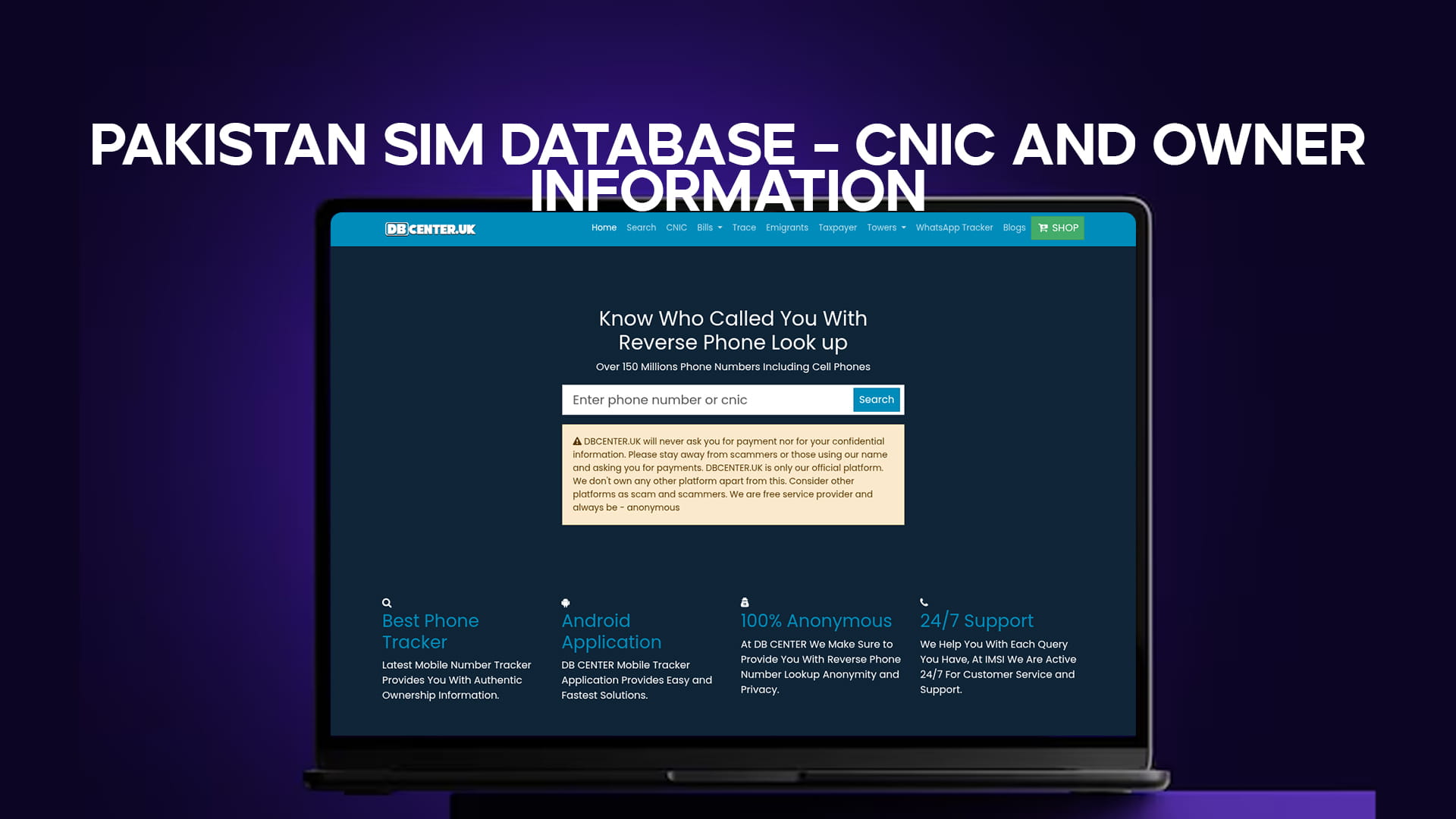
DB Center is one of the most comprehensive reverse phone lookup platforms available, with a database covering over 150 million phone numbers including cell phone numbers. Cell phone numbers are the primary type of number in Pakistan's communication landscape, and they have historically been the hardest to trace through conventional means. DB Center's coverage of mobile numbers directly addresses this gap.
When you receive a call from a number you do not recognize, entering that number into DB Center returns useful information:
Carrier identification. Which Pakistani network the number belongs to — useful context even when no name is available.
Owner or name data. Where publicly available information exists, the platform surfaces who the number is associated with.
Community reports. Other DB Center users who received calls from that number may have flagged it. These flags tell you whether the number has been identified as a scammer, spammer, telemarketer, loan shark, or legitimate business. This collective intelligence is often the most immediately actionable piece of information because it reflects real-world experience with that number.
Call patterns. Some numbers show patterns of behavior across multiple user reports — calling at specific hours, using specific scripts, targeting specific demographics. These patterns make certain fraud operations easy to identify before they reach you.
For Pakistani users who receive a high volume of unknown calls — which is the common experience in both urban and rural areas — DB Center provides a fast and practical first check that requires no official process, no waiting period, and no technical expertise.
SIM Database Misuse – What to Watch For
Pakistan's SIM database is a protective system, but it can also become a target for misuse. Understanding how the database gets exploited helps you stay alert.
CNIC-based unauthorized registrations. The most common form of SIM database fraud. Someone obtains your CNIC — through a photocopy, a stolen wallet, or a data leak — and uses it to register a SIM. Biometric verification is supposed to prevent this, but not all retailers enforce it properly, and past fraud cases from periods of looser enforcement may still appear in the database.
Fake retailer fraud. In some cases, fraudulent or unregistered retailers have activated SIMs outside the official system, creating registrations that appear in the database without proper biometric verification having taken place.
Insider access abuse. In rare but documented cases, individuals with access to telecom systems have misused that access to look up information, transfer numbers, or register SIMs without proper authorization.
SIM swap fraud using social engineering. Rather than directly hacking the database, fraudsters manipulate customer service representatives through convincing impersonation. They claim to be the account holder, report a lost SIM, and request a replacement. If successful, your number is now in their hands.
Knowing these risks does not mean living in constant fear of them. It means checking your own records regularly, noticing when something seems off, and acting on it quickly.
Steps to Take When Your SIM Database Records Are Wrong
If you check the Pakistan SIM database and find something that should not be there, here is what to do in order.
Step one — Document everything. Take a screenshot or write down the details from your 668 reply or PTA portal results. Date, operator, SIM count. This is your initial evidence.
Step two — Contact the telecom operator. Visit the franchise of the operator showing the unauthorized registration. Present your original CNIC. Request immediate blocking and de-registration of the unauthorized SIM.
Step three — File a formal complaint with PTA. Submit a complaint through PTA's consumer support system with your CNIC number and the details of the unauthorized SIM. PTA can investigate and take action against the retailer or party responsible.
Step four — Report to NADRA. If your CNIC identity data was misused, file a report with NADRA. They can flag your record and add additional protective measures.
Step five — Escalate to FIA if criminal activity is involved. If the unauthorized SIM was used for financial fraud, threats, blackmail, or other illegal activity, escalate the matter to the Federal Investigation Agency's Cybercrime Wing through their online complaint system or regional offices.
How to Keep Your SIM Database Records Clean Going Forward
Once you have verified your current records and resolved any issues, maintaining clean SIM database records is mostly a matter of consistent habits.
Check your registrations every few months. The 668 check takes under a minute and keeps you informed of any changes.
Limit CNIC photocopies. Be thoughtful about who you hand your CNIC copy to. When you do share it, write the purpose directly on the copy to prevent repurposing.
De-register unused SIMs properly. Do not just stop using old SIMs — go through the formal de-registration process at a franchise so they are removed from your database record.
Secure your phone and SIM. Use screen locks and SIM PIN codes. If your phone is lost or stolen, call your operator immediately to suspend the SIM before anyone can use it.
Use reverse lookup before returning unknown calls. DB Center's database allows you to check a number before you engage with it. Calling back an unknown number from a missed call is one of the most common ways people confirm their number to scam operations.
Final Thoughts
Pakistan's SIM database, built around CNIC and owner information, is one of the more advanced mobile identity systems in the region. It has real teeth — PTA enforces it, NADRA backs it biometrically, and telecom operators are required to maintain accurate records. For citizens who take a few minutes to engage with it, the system provides genuine protection.
The 668 check tells you what is registered under your identity. Tools like DB Center tell you who is behind numbers calling you. Official complaint channels exist for every type of problem you might find. The infrastructure is there.
What makes the difference is using it. Check your SIM database records today, know what is tied to your CNIC, and make reverse lookup a habit for unknown numbers. These are not complicated steps, but they are the ones that keep your identity and your communications secure in a mobile environment that is only getting more connected every year.