The volume and sophistication of phone scams in Pakistan has increased sharply. Fraudsters are no longer making crude requests for bank PINs. They are using real-sounding stories, spoofed caller IDs that appear to come from legitimate banks and government agencies, and urgent emotional pressure to extract money or personal information before the victim has time to think.
Understanding the most common scripts used in 2026 is the single most effective defence. When you recognise the pattern, the urgency evaporates.
The Most Common Phone Scams in Pakistan Right Now
The Fake BISP or Government Prize
A caller announces that your CNIC has been selected for a BISP payment, a Ehsaas programme disbursement, or a government lottery. They ask you to confirm your CNIC, bank account, or JazzCash number to "release the funds." Sometimes they ask for a small "processing fee" to unlock the prize.
Neither BISP nor any government programme operates this way. No government scheme calls you to announce a prize or ask for a processing payment. Hang up immediately.
The Fake Bank or JazzCash Alert
You receive an SMS or call appearing to be from your bank, HBL, UBL, MCB, or from JazzCash or Easypaisa. The message warns of suspicious activity on your account and asks you to confirm your OTP, PIN, or account number to "protect" the account.
Banks and mobile wallets will never ask for your OTP or PIN over a call or message. An OTP is a one-time password that expires in seconds and should never be shared with anyone — not even a person claiming to be bank staff.
The Impersonation Scam
The caller claims to be from NADRA, FIA, PTA, FBR, or even the police. They tell you your CNIC is linked to a criminal case, your SIM is being used for illegal activity, or your bank account is under investigation. They pressure you to "cooperate" by sending money or sharing your personal details to clear your name.
No government agency in Pakistan contacts citizens this way. Real investigations do not begin with a phone call asking for money or personal details. Treat any such call as a fraud immediately.
The Job Offer Abroad
A caller offers you a high-paying job in a Gulf country, Malaysia, or elsewhere with minimal qualifications. All you need to do is pay a visa processing fee, security deposit, or agent fee in advance. The job does not exist. Once the fee is paid, the caller vanishes.
Legitimate recruitment agents are registered with the Bureau of Emigration and Overseas Employment. Any request for payment before a visa is in your hand is a fraud.
The SIM Upgrade or PTA Compliance Scam
A message claims your SIM will be blocked unless you verify your CNIC or biometrics immediately through a link or a call. The link leads to a fake site that harvests your information, or the caller asks for personal details to "complete verification."
PTA and network operators communicate biometric re-verification through official franchise visits, not through random calls or links. If your SIM needs action, visit a franchise in person.
How to Report a Scam Call or Message
Report to PTA via SMS (9000)
This is the fastest and most direct method. Forward the fraudulent message along with the sender's number to 9000:
Format: 0XXXXXXXXXX [paste the scam message]
PTA investigates and permanently blocks confirmed scammer SIMs. Keep the original message as evidence before reporting.
Register on Do Not Call (3627)
To stop telemarketing calls from legitimate businesses altogether: text reg to 3627. This prevents all registered marketing companies from contacting you. It does not stop criminal scammers, but it clears away the noise so real fraud calls are easier to spot.
Report to FIA Cybercrime Wing
For financial fraud — if money was actually transferred to a scammer — the Federal Investigation Agency's Cybercrime Wing is the authority with the power to investigate and recover funds. Contact them at:
Phone: 051-9106384 Email: [email protected] Online: fia.gov.pk/complaint
Act quickly. In mobile-wallet fraud cases, prompt reporting gives the best chance of freezing the recipient account before the money is moved.
Contact State Bank of Pakistan for Banking Fraud
If the scam involved your bank account rather than a mobile wallet:
Email: [email protected]
SBP can direct your complaint to the relevant bank and initiate a formal process for transaction reversal where applicable.
Protect Yourself: The Non-Negotiable Rules
These four rules prevent the vast majority of phone fraud in Pakistan:
Never share your OTP with anyone, regardless of who they claim to be. An OTP is a one-time code that is only for your use — the moment you share it, your account is compromised.
Never pay a fee to claim a prize. Legitimate prizes do not require you to pay anything upfront.
Never click links received via unsolicited SMS, even if the sender appears to be your bank. Type your bank's address manually or use the official app.
When in doubt, hang up and call the institution back on its verified number. A caller who pressures you to stay on the line and not call anyone else is always a scammer.
Use DB Center to Cross-Check Unknown Numbers
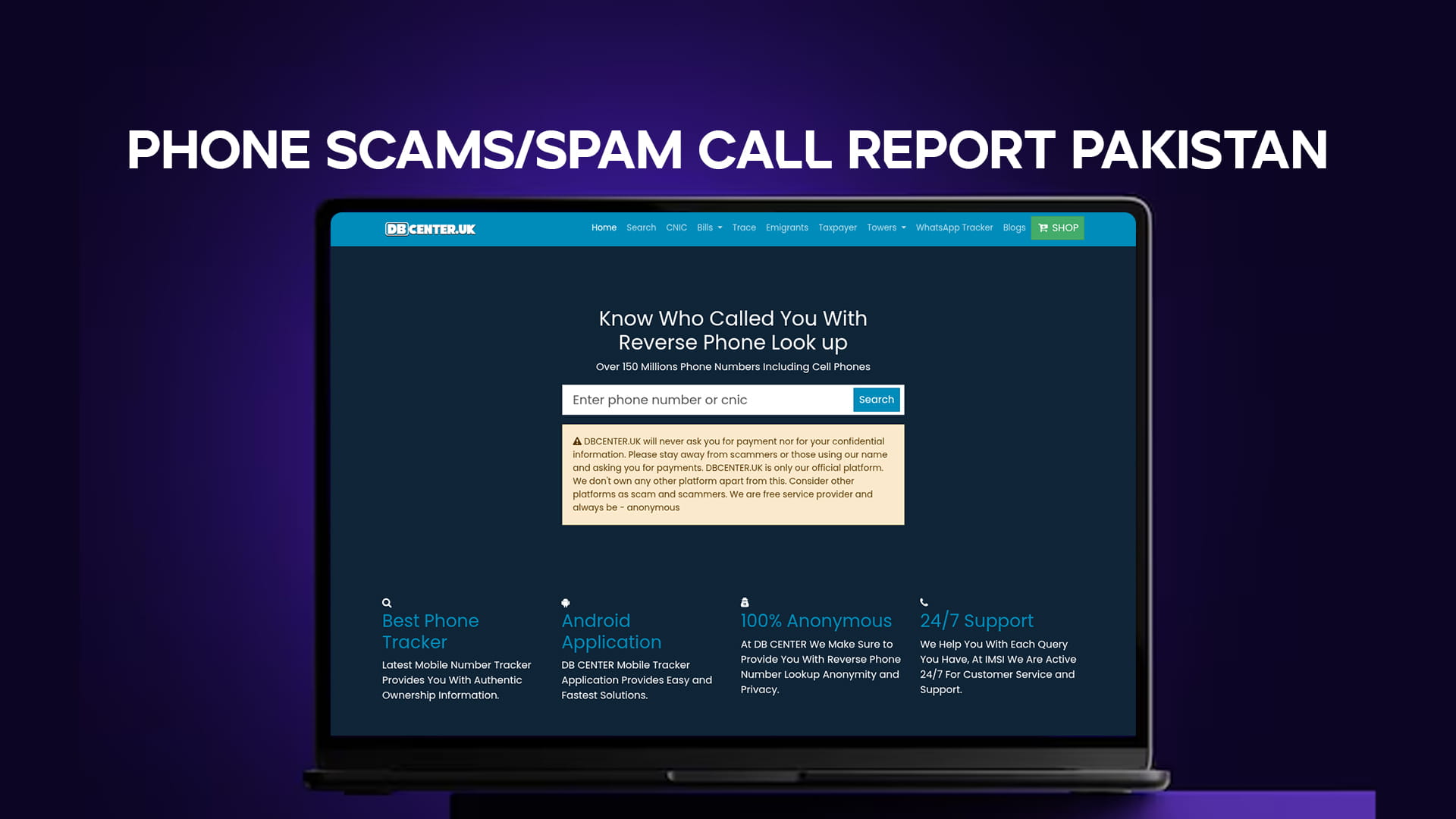
If you received a call from an unknown number and want to look up basic information about it before deciding whether to call back, DB Center's number trace tool can surface associated information for Pakistani mobile numbers. For identity verification when a caller has given you a CNIC number, DB Center's CNIC checker confirms whether that identity is genuine. And if the caller claims to be a registered taxpayer or business owner, the taxpayer verification tool can confirm their FBR filer status instantly.
The Short Version
The most dangerous calls in Pakistan today impersonate government agencies, banks, and mobile wallets. The single most powerful defence is knowing the scripts — no government agency calls to offer prizes or collect fees, and no bank will ever ask for your OTP. Report fraud messages to 9000, file financial fraud complaints with the FIA at 051-9106384, and contact SBP for banking-related fraud. Use DB Center's search tools to cross-check identities and numbers before trusting a stranger's claimed details.