We live in a world where a single phone call or online message from an unknown source can lead to serious consequences. From financial fraud to identity theft, the threats that come through digital communication are real, growing, and increasingly sophisticated. In Pakistan alone, millions of people receive calls daily from numbers they do not recognize, and many of these calls are linked to scams, harassment, or criminal activity.
Two of the most commonly searched tools for digital self-protection are SIM owner detail checks and IP location lookups. Both of these tools help ordinary users understand who or where a communication is coming from. When used correctly and responsibly, they are powerful ways to stay safe in an increasingly connected world.
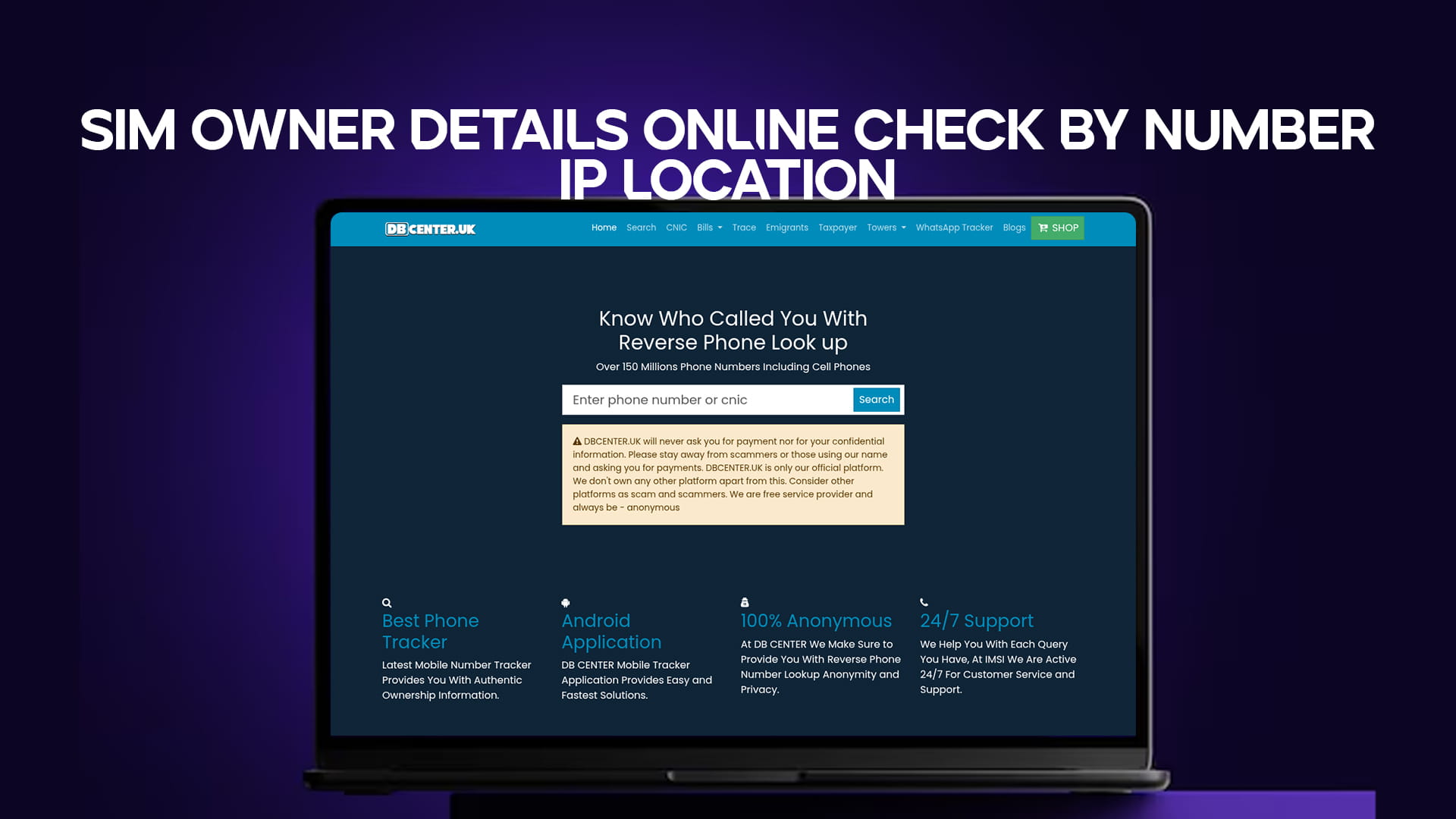
DB Center is one of the most trusted platforms for reverse phone lookup, with a database of over 150 million phone numbers including cell phones. It helps users identify unknown callers, access publicly available number information, and benefit from a community-driven reporting system that flags fraudulent and suspicious numbers in real time.
In this detailed guide, we will cover everything you need to know about checking SIM owner details online by number, how IP location works, what these tools can and cannot tell you, and how DB Center fits into your digital safety toolkit.
What Does "SIM Owner Details Online Check by Number" Mean?
When someone searches for SIM owner details online by number, they are looking for a way to enter a phone number and retrieve information about who that SIM card belongs to. In Pakistan, this is particularly relevant because every SIM card must be registered under a valid CNIC (Computerized National Identity Card) through biometric verification. This means that in theory, every number has an owner.
However, the key distinction to understand is the difference between what is publicly available and what is private. Legitimate reverse lookup platforms like DB Center can provide:
- The name associated with a number from public records
- The telecom network the SIM belongs to
- General geographic information about the number
- Community-reported data about how the number has been used
- Whether the number has been flagged for scam, spam, or fraud
What no legitimate public platform can or should provide is access to someone's private CNIC record, biometric data, home address, or financial information. These are protected by law, and any platform claiming to offer such access is likely operating illegally or is a scam itself.
With that boundary clearly understood, let us explore how checking SIM owner details by number actually works and what you can realistically expect to find.
What Is IP Location and How Does It Relate to Phone Number Tracking?
IP location, also called IP geolocation, is the process of identifying the approximate geographic location of a device based on its IP (Internet Protocol) address. Every device that connects to the internet is assigned an IP address by its internet service provider. This IP address can reveal general information such as the country, region, city, and sometimes the internet service provider associated with the connection.
IP location is commonly used for a variety of legitimate purposes including:
- Verifying the geographic origin of online activity
- Identifying the approximate location of an email or message sender
- Detecting suspicious or fraudulent online transactions
- Network security and cybersecurity investigations
- Understanding where website visitors are coming from
It is important to note that IP location does not provide a precise home address or exact location. It typically narrows things down to a city or district level, and sometimes only to a country. The accuracy depends on the database used and the nature of the IP address.
When people search for "SIM owner details online check by number with IP location," they are usually hoping to combine two pieces of information: the identity behind a phone number and the general location of the person or device behind it. While these two elements can sometimes overlap, they are technically distinct tools.
In Pakistan, IP location can help identify whether a suspicious call or message originated from within the country or from abroad, which can be an important clue when investigating fraud, especially scams that operate from outside Pakistan while targeting Pakistani citizens.
How Reverse Phone Lookup and IP Location Work Together
Reverse phone lookup and IP location are two different tools, but they complement each other well in the context of digital safety and investigation.
A reverse phone lookup, such as the one offered by DB Center, searches a database of phone numbers to return information about the owner and usage history of a number. It answers the question: who is this number registered to, and has it been reported for suspicious activity?
IP location, on the other hand, answers a different question: where is the device or server associated with a particular internet connection located? This is more relevant when dealing with online communication such as emails, WhatsApp messages, social media contact, or VoIP (Voice over Internet Protocol) calls.
When someone contacts you through a VoIP service or an internet-based calling platform, their call may not come from a traditional SIM at all. In such cases, the reverse phone lookup may return limited results, but an IP location check on the associated online account or message header can reveal the geographic origin of the communication.
Together, these tools give you a more complete picture when trying to identify a suspicious contact. For example, if someone calls you from a Pakistani mobile number but the IP location of their associated online account shows a foreign country, this inconsistency itself is a red flag that the number may be a spoofed or redirected call.
How to Check SIM Owner Details by Number Using DB Center
DB Center makes the process of checking SIM owner details by number straightforward and accessible for everyone. Here is a step-by-step guide on how to use the platform:
Step 1: Open DB Center in Your Browser
You do not need to download any application or create an account. Simply open any web browser on your phone, tablet, or computer and visit DB Center. The platform is designed to load quickly and work smoothly on all types of internet connections, including mobile data.
Step 2: Locate the Search Bar
On the main page of DB Center, you will find a prominently placed search bar. This is where you will enter the phone number you want to look up.
Step 3: Enter the Phone Number
Type in the full phone number including the country dialing code if applicable. For Pakistani numbers, this means including the 0 prefix or the international code +92 followed by the ten-digit number. Make sure there are no extra spaces or incorrect digits, as this can affect your search results.
Step 4: Review Your Results
After submitting the number, DB Center will scan its database of over 150 million phone numbers and return whatever information is available. This typically includes the name associated with the number, the telecom network, general location data, and a list of community reports if other users have flagged the number.
Step 5: Check Community Reports Carefully
The community report section is often the most informative part of your results. Look for the number of reports, the type of activity reported (spam, fraud, harassment, marketing), and the dates of the reports. A number with many recent fraud reports should be treated with serious caution.
Step 6: Contribute Your Own Report
If the number called you and you experienced something suspicious, take a moment to leave your own report on DB Center. This helps protect other users who may receive calls from the same number in the future.
Why Pakistan Is Particularly Vulnerable to Phone and Online Scams
To understand why tools like DB Center and IP location checks matter so much in Pakistan, it helps to look at the broader digital safety landscape in the country.
Rapid Growth Without Equal Awareness
Pakistan's mobile and internet user base has grown dramatically over the past decade. However, digital literacy and awareness of online safety practices have not grown at the same pace. Many users are using smartphones and the internet for the first time without a strong understanding of the risks involved. This knowledge gap is exactly what scammers exploit.
High Volume of Telemarketing and Spam Calls
Pakistan ranks among the countries with the highest volume of unsolicited telemarketing and spam calls. Many of these calls come from numbers that are rotated frequently to avoid being blocked. Platforms like DB Center that aggregate community reports across millions of numbers help identify these rotating spam campaigns much faster than any individual user could.
Cross-Border Scam Operations
A significant number of phone scams targeting Pakistani citizens originate from outside the country. International scam networks use Pakistani virtual numbers or spoofed local numbers to deceive victims into thinking they are receiving a local call. IP location tools can help identify the foreign origin of such calls when they come through internet-based channels.
Increasing SIM Fraud
SIM fraud, including unauthorized registration of SIMs under stolen CNICs, remains a persistent problem. Criminals use fraudulently obtained SIMs to make scam calls, conduct financial fraud, and evade detection. By enabling users to check SIM information and report suspicious numbers, platforms like DB Center serve as an important community safeguard.
Practical Use Cases for SIM Owner Checks and IP Location
Here are several practical situations where using these tools can genuinely protect you:
Verifying a Property Deal
Real estate transactions in Pakistan are frequently targeted by scammers who pose as property agents or landlords. Before visiting a property or transferring any advance payment, search the agent's or seller's number on DB Center to verify its legitimacy and check for any fraud reports.
Checking Who Texted You on WhatsApp or Telegram
Sometimes unknown contacts reach out through messaging apps using Pakistani numbers. By searching the number on DB Center, you can check whether the number has been associated with scam or harassment behavior before you respond.
Investigating a Suspicious Email
If you receive a suspicious email and need to trace its origin, IP location tools can help identify the country and city where the email was sent from. If the email claims to be from a Pakistani company but the IP address shows a completely different country, this is a strong indicator of fraud.
Protecting Your Business from Fraudulent Orders
E-commerce sellers in Pakistan frequently deal with fake orders placed with fraudulent contact numbers. Running the customer's number through DB Center before processing an order, especially a large one, adds an easy and fast layer of verification that can prevent significant losses.
Screening Domestic Staff Inquiries
People who hire domestic staff such as drivers, cooks, or guards often receive inquiries from unknown numbers. A quick check on DB Center can reveal any prior complaints or reports associated with a number, adding a useful screening step to the hiring process.
Key Differences Between Legitimate and Illegitimate SIM Lookup Services
Because the demand for SIM owner information is high in Pakistan, there are unfortunately many fake or illegal platforms that claim to offer full CNIC details, exact home addresses, and personal financial information in exchange for money or personal data. It is critical to know how to tell the difference between a legitimate service and a harmful one.
Legitimate services like DB Center display only publicly available information and community-reported data. They do not ask you to pay to access basic search results. They do not promise access to private government databases. They operate transparently with clear terms of use and privacy policies. They do not require you to share your own personal information or upload documents to perform a search.
Illegitimate or fraudulent services, on the other hand, often promise access to private CNIC records, bank account details, or exact location data. They typically ask for payment upfront. They may ask for your own personal information before showing any results. They often operate through unofficial websites with poor design and no verifiable contact information. Using such services puts both your money and your personal data at serious risk.
Always stick to reputable, established platforms like DB Center when performing any kind of phone number or identity verification search online.
How to Protect Your Own Number from Being Misused
While it is important to know how to check other numbers, it is equally important to take steps to protect your own number and identity from being misused by others.
Register your number under your own CNIC only and never lend your CNIC to anyone else for SIM registration purposes. Regularly check the SIMs registered under your CNIC by sending your CNIC number via SMS to 668. Never share your OTP, CNIC details, or bank information over the phone with anyone claiming to be from a telecom company, bank, or government agency. Enable two-factor authentication on all your social media and online accounts to prevent unauthorized access. Report any misuse of your number or identity to PTA, NADRA, and the FIA Cyber Crime Wing immediately.
Being proactive about your own digital security is just as important as using tools to investigate others.
The Role of DB Center in Building a Safer Digital Community
Beyond its utility as an individual tool, DB Center plays an important role in building a collectively safer digital ecosystem. Every report submitted by a user adds to a shared intelligence pool that benefits millions of other users around the world, including in Pakistan.
Think of it this way. When one person in Lahore reports a fraud number on DB Center, someone in Karachi, Islamabad, or even overseas who receives a call from that same number benefits immediately from that report. The platform transforms individual experiences into community protection. This is why using DB Center and contributing reports is not just about protecting yourself. It is about contributing to a broader culture of digital safety and accountability.
With over 150 million phone numbers in its database and a growing community of users reporting and flagging problematic numbers, DB Center continues to expand its usefulness as both a lookup tool and a safety network.
Conclusion
The ability to check SIM owner details online by number and understand IP location information has become a genuinely important skill in today's digital environment. In Pakistan, where mobile phone usage is massive and phone-based scams are increasingly sophisticated, having access to tools that help you identify unknown callers and verify the origin of suspicious communication is not optional. It is essential.
DB Center offers a reliable, accessible, and community-powered solution. With over 150 million phone numbers in its database, a simple web-based interface that works on any device, and a growing pool of user-contributed reports, it stands as one of the most practical tools available for anyone in Pakistan who wants to stay safe online and on the phone.
Use DB Center to check unknown numbers before returning calls. Use IP location tools to verify the geographic origin of suspicious online contacts. Report fraud numbers to protect your community. And stay informed about the limits of what these tools can tell you, so you always know when to escalate to official channels.
In the fight against phone fraud and digital deception, knowledge is your most powerful weapon. DB Center puts that knowledge in your hands, one search at a time.