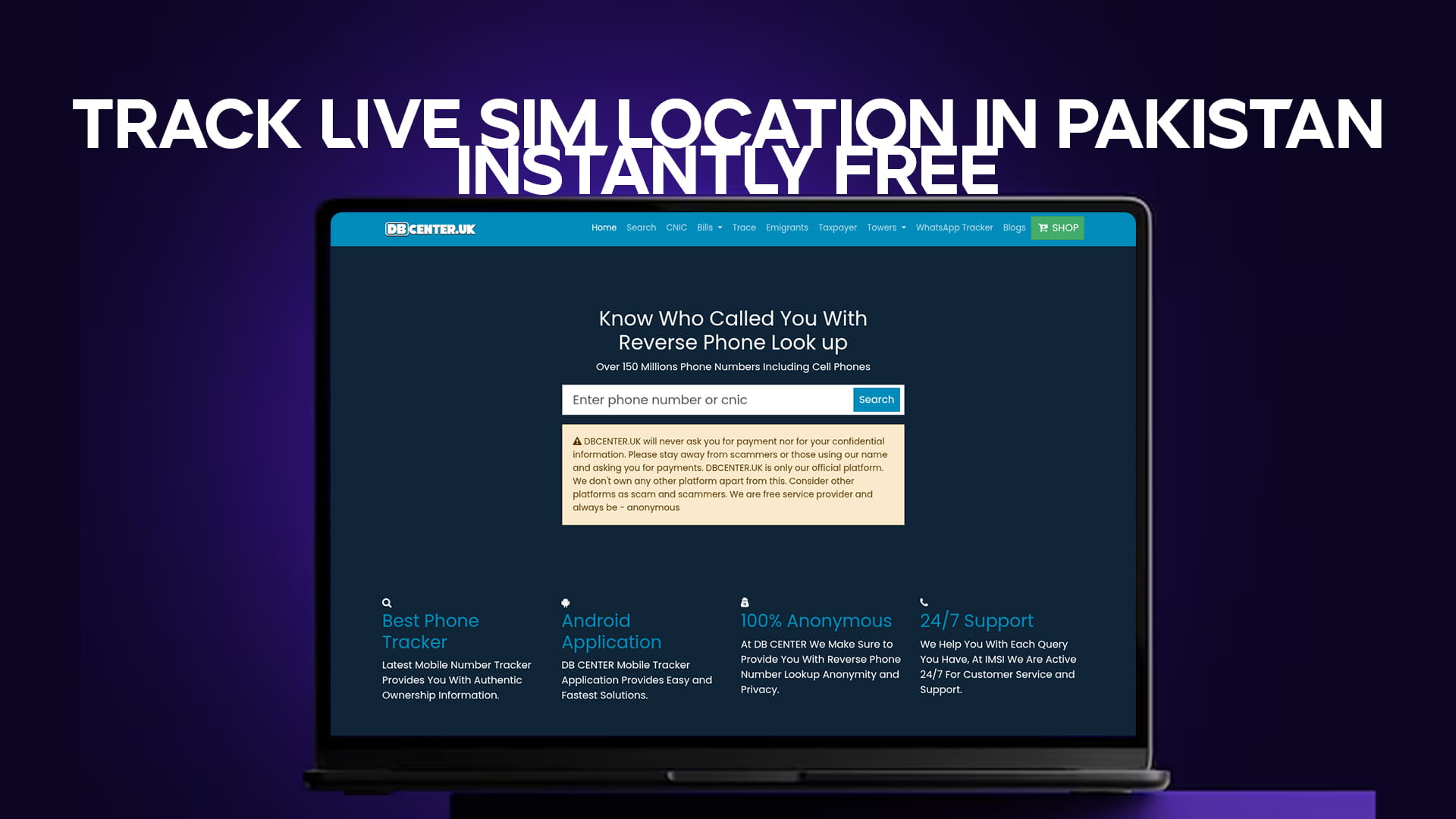
Pakistan is one of the most mobile-connected countries in South Asia. With nearly 200 million mobile subscribers and millions of new SIM activations every year, the country's telecom landscape is enormous and constantly growing. Mobile phones are used for banking, business, family communication, online shopping, and social media — making them one of the most central tools in everyday Pakistani life.
But this level of connectivity also brings with it a serious and growing problem. Unknown calls, spam numbers, phone scams, fraudulent SIM usage, and harassment via mobile are issues that thousands of people in Pakistan deal with every single day. In response to this, many people go online searching for ways to track a SIM location, verify who owns a number, or identify an unknown caller.
This article is your complete, honest, and practical guide to understanding what is possible when it comes to SIM tracking in Pakistan, what is legal and what is not, what free tools are genuinely available to you, and how platforms like DB Center — with its database of over 150 million phone numbers — can help you stay safe without breaking any laws.
Why People Search for SIM Location Tracking in Pakistan
Before diving into the tools and methods, it is worth understanding why so many people in Pakistan are looking for SIM location tracking services in the first place. The reasons are varied, but they mostly come down to personal safety, financial protection, and the need for basic information about who is contacting them.
Rising Phone Scams Pakistan has seen a dramatic increase in phone-based fraud in recent years. Criminals disguise themselves as bank employees, government officers, or telecom company representatives and try to trick people into handing over their account details, OTP codes, or even cash. Many of these calls come from numbers that appear completely unfamiliar.
Harassment Through Unknown Numbers A large number of harassment cases in Pakistan involve phone calls and text messages from unknown numbers. Women in particular frequently face unwanted calls from strangers. Being able to identify who is behind a particular number is a critical step in addressing this problem.
Missing Family Members Parents and family members sometimes want to know the location of a loved one who is not responding to calls. While this is understandable, it is important to note that tracking someone's location via SIM without their consent is regulated by law, which we will address in full detail below.
Verifying Contacts Before Transactions Pakistan's growing online marketplace — from property deals to car sales to freelance work — means that people regularly need to verify whether a phone number belongs to a real, trustworthy person before proceeding with a transaction.
Reconnecting with Lost Contacts Old friends, colleagues, and relatives sometimes call from unfamiliar numbers. Knowing who is behind a number can save you from missing an important reconnection.
What Does "Track Live SIM Location" Actually Mean?
This phrase gets searched thousands of times every day in Pakistan, but there is a great deal of misunderstanding about what it means and what is actually possible through freely available online tools.
Let us break it down clearly.
True Real-Time GPS-Based SIM Location Tracking
This refers to pinpointing the physical, GPS-based location of a SIM card or mobile device at any given moment in real time. This level of tracking is technically possible — but it requires access to the internal systems of a telecom network, and it is strictly controlled by law in Pakistan.
Under Pakistani law, specifically the Prevention of Electronic Crimes Act (PECA) 2016 and regulations enforced by the Pakistan Telecommunication Authority (PTA), tracking the live location of another person's SIM card without their knowledge or consent is illegal. It is considered a serious invasion of privacy and can result in criminal charges.
The only entities legally permitted to conduct real-time SIM location tracking in Pakistan are:
- Law enforcement agencies operating under a valid court order or legal directive
- Licensed telecom operators acting under regulatory or emergency instructions
- Intelligence agencies authorized under national security legislation
Any free website or app that claims it can show you the live GPS location of any SIM card in Pakistan instantly is making a false claim. These tools do not have access to telecom network data. They are scams designed to trick you — and using or promoting such tools can even get you into legal trouble.
What IS Freely and Legally Available: SIM Ownership Lookup and Reverse Phone Lookup
What you can legitimately and freely do is check the ownership information of a SIM card and perform a reverse phone number lookup. This means using publicly available data and community-driven databases to find out who owns a particular phone number, what carrier it is registered with, what general region it is from, and whether it has been flagged as spam or fraud by other users.
This is exactly what DB Center provides — and it is one of the most powerful and reliable tools available for this purpose.
Official Methods to Check SIM Information in Pakistan
Pakistan has several official, government-backed methods for verifying SIM-related information. These are the tools that every Pakistani citizen should know about.
1. PTA SIM Verification via SMS (Send to 668)
The most widely used and officially endorsed method is the PTA's SMS-based SIM verification service.
How it works:
- Open your messaging app on any mobile device
- Type your 13-digit CNIC number (without dashes or spaces)
- Send the message to 668
- Within seconds, you will receive a reply listing all SIM cards registered against your CNIC, along with the network operator for each
This service is completely free and works across all mobile networks in Pakistan including Jazz, Telenor, Zong, Ufone, and SCO. It is the official way to check how many SIMs are registered in your name.
2. PTA's Online Verification Portal
The PTA also operates an online portal where citizens can log in and verify their SIM registration status. This is useful for people who want a more detailed view of the numbers registered to their CNIC.
3. Visiting Telecom Customer Service Centers
Every major telecom operator in Pakistan has customer service centers across the country. You can visit any of them with your original CNIC to check SIM ownership and registration details in person.
4. NADRA Verification Services
Since all SIMs in Pakistan are linked to CNICs via NADRA's biometric system, NADRA itself offers certain identity verification services that can be accessed through official channels.
These official tools are excellent for managing your own SIMs. But what if you want to find out who owns a number that called you? For that, you need a reverse phone lookup service — and that is where DB Center comes in.
DB Center – Pakistan's Trusted Reverse Phone Lookup Platform
DB Center is a well-established and widely trusted reverse phone lookup service that helps people identify unknown callers using a database of over 150 million phone numbers, including cell phones. Here is a detailed look at what it offers and why it is the right tool for anyone in Pakistan trying to identify an unknown number.
What Is DB Center?
DB Center is a platform built on a simple but powerful idea: everyone deserves to know who is calling them. With phone scams, harassment, and fraud increasing every year, having access to a reliable phone number database is a genuine public safety tool.
When you enter a phone number into DB Center, it searches its massive database to find any publicly available or user-contributed information associated with that number. This can include the owner's name, the carrier the number is registered with, the region it originates from, and critically — whether the number has been reported as spam, a scam, or fraudulent by other users.
Why 150 Million Numbers Matters
The usefulness of any reverse phone lookup service depends entirely on how many numbers are in its database. A small database means you will frequently get "no results found" — which is frustrating and unhelpful. With over 150 million numbers indexed, DB Center has one of the largest and most comprehensive databases in the world, giving it a much higher chance of returning useful information for any given search.
Cell Phone Coverage Is Critical
Many older phone lookup services only covered landlines. In Pakistan, the vast majority of calls come from mobile numbers. DB Center specifically includes cell phone numbers in its database, which makes it far more practical for Pakistani users who deal almost exclusively with mobile-to-mobile communication.
Free to Use
DB Center offers its core reverse phone lookup functionality for free. You do not need to create an account, pay a subscription fee, or provide your personal details to perform a basic search. This accessibility is a key reason why so many people trust it.
Spam and Fraud Number Database
Beyond just identifying owners, DB Center also tracks numbers that have been flagged by the community as spam or fraud. If a number has been reported by multiple users as suspicious, this warning appears in the search results, giving you an immediate heads-up even before you dig deeper.
How to Use DB Center to Identify an Unknown Pakistan Number
The process is very simple and takes less than a minute. Here is exactly how to do it:
Step 1: Open Your Browser Launch any web browser on your phone or computer. DB Center works on all devices without needing any app download.
Step 2: Visit DB Center Go to the DB Center website. You will see a clean, simple homepage with a search bar at the center of the page.
Step 3: Enter the Phone Number Type in the full phone number you want to search. For Pakistan numbers, include the country code. Pakistan's country code is +92, so a local number starting with 0300 would be entered as +923000000000 (replacing the leading 0 with +92).
Step 4: Start the Search Click the search button and give the platform a few seconds. It will scan the database of over 150 million numbers for a match.
Step 5: Review the Results The results page will show whatever information is available for that number. This could include the caller's name, the telecom operator, the geographic origin of the number, and any spam or fraud reports from other users.
Step 6: Make an Informed Decision Armed with this information, you can decide whether to return the call, block the number, or report it to your telecom operator or the relevant authorities.
Warning: Avoid Fake SIM Location Tracker Websites
This section is critically important. Because the search phrase "track live SIM location Pakistan free" is so widely searched, there are hundreds of fake and fraudulent websites that have been created specifically to exploit people who are looking for this information.
These fake websites are dangerous for several reasons, and you need to know how to spot them.
Signs of a Fake SIM Tracking Website
They Promise Real-Time GPS Location for Free As explained earlier, no free website can legally or technically provide the real-time GPS location of a SIM card in Pakistan. Any site claiming to do this is lying. Period.
They Make You Complete Surveys or Download Apps A very common scam pattern is this: you enter a phone number, the site pretends to "calculate" the location with a fake loading bar, and then asks you to complete a survey or download an app to "unlock" the results. The results never come. But your device may now have malware on it, or your personal data may have been harvested.
They Ask for Unusual Permissions Legitimate phone lookup websites do not need access to your camera, location, microphone, or contacts. If a site requests these permissions, close it immediately and do not return.
They Have No Privacy Policy Reputable platforms like DB Center have clearly written privacy policies explaining exactly how your data is used. Fake sites often have no privacy policy at all, or they have one that is copied from another site and makes no sense.
They Use Exaggerated Language Phrases like "Track Any Number Anywhere in the World Instantly" or "100% Free and Untraceable SIM Location Hack" are clear warning signs. Legitimate services describe what they actually do in plain, clear language.
They Charge You After Claiming to Be Free Some fake sites lure you in with "free" promises, collect your credit card details for "verification," and then charge you repeatedly without delivering any real service.
Stick to trusted, established platforms like DB Center, which clearly explains what it offers, has a genuine database, and does not make false promises about capabilities it does not have.
What to Do If You Are Being Harassed Via Unknown Numbers in Pakistan
If you are receiving harassing, threatening, or abusive calls from unknown numbers in Pakistan, here is the step-by-step approach you should take:
Step 1: Do Not Engage Responding to harassing calls — even to tell the caller to stop — often encourages them to continue. Silence is more powerful. Let unknown or suspected harassment calls go to voicemail.
Step 2: Look Up the Number Use DB Center to search the number. Even if you do not get a full name, you may get carrier information, geographic data, or spam reports that help build a picture of who is behind the calls.
Step 3: Block the Number All modern smartphones allow you to block specific numbers. Block the number immediately to prevent further direct contact.
Step 4: Document Everything Keep a record of all harassing calls — date, time, duration, and any messages received. This documentation will be important if you need to involve law enforcement.
Step 5: File a Complaint with FIA Cyber Crime Wing Pakistan's Federal Investigation Agency (FIA) Cyber Crime Wing handles cases of phone-based harassment, threats, and fraud. You can file a complaint online through their official website or visit a physical FIA office. They have the tools and legal authority to trace the number and take action.
Step 6: Contact Your Telecom Operator All major Pakistani telecom operators have processes for reporting harassment and spam numbers. Report the number to your carrier as well so they can investigate and potentially block it from their network.
The Role of PTA and Pakistani Telecom Regulation in SIM Safety
Pakistan's telecommunications sector is governed by the PTA, which plays an active role in protecting consumers from SIM-related fraud, illegal SIM usage, and unregistered numbers. In 2026, the PTA's regulatory framework is more robust than ever.
Biometric SIM Verification All SIM sales in Pakistan require biometric fingerprint verification at the point of sale. This means every SIM is tied to a verified identity, making anonymous SIM usage significantly harder than it used to be.
SIM Block for Unreported Theft If your phone is stolen, you can contact your telecom operator to have your SIM blocked immediately, preventing misuse. The PTA also facilitates IMEI blocking for stolen devices.
Strict Limits on SIM Per CNIC The PTA has set strict limits on how many SIM cards can be registered per CNIC across all networks. This limits the ability of fraudsters to register large numbers of fake SIMs in one person's name.
Active Monitoring of Spam Networks Pakistani telecom operators work with the PTA to monitor and shut down networks of numbers used for mass spam calling and SMS fraud.
These regulatory measures make Pakistan's SIM ecosystem one of the more controlled in the region, and they work in tandem with tools like DB Center to help consumers protect themselves.
How SIM Safety Applies to Families and Businesses in Pakistan
The need for phone number verification and SIM safety is not just an individual concern — it affects families and businesses too.
For Families Parents in Pakistan increasingly want to ensure their children are only communicating with known and trusted contacts. While direct SIM tracking of a minor requires parental consent and agreement with the child, using DB Center to verify unknown numbers that appear in a child's call log is a completely legal and sensible safety measure.
For Small Businesses Pakistan's growing entrepreneur and SME sector deals with hundreds of new contacts every month. Verifying that a customer, supplier, or business partner's phone number is legitimate before entering into any agreement is a smart business practice. DB Center makes this quick and free.
For E-Commerce Sellers Online sellers on platforms like Daraz or through social media regularly receive orders from numbers they do not know. A quick lookup can help verify whether a buyer is genuine or has a history of fraudulent activity.
Conclusion
Tracking the live SIM location of another person in Pakistan without their consent is illegal, and any free website claiming to offer this service is either misleading you or actively trying to scam you. This is the most important thing to take away from this article.
What IS freely, legally, and genuinely available to you — right now — is reverse phone number lookup. And for this purpose, DB Center is the best tool available, offering access to a database of over 150 million phone numbers including cell phones, with spam flagging, carrier information, and regularly updated records.
Whether you are trying to identify a mysterious caller, verify a business contact, protect yourself from a scammer, or check the ownership of a suspicious number, DB Center gives you fast, free, and reliable information that helps you make informed decisions about who you communicate with.
Pakistan's official tools — like the PTA's SMS service to 668 and NADRA-linked biometric SIM registration — handle the regulatory side of SIM safety. DB Center handles the practical, everyday side: helping you figure out who called you and whether you should trust them.
Use both. Stay legal. Stay safe. And next time an unknown number calls, check it on DB Center before you decide what to do next.