There are moments in daily life in Pakistan when you genuinely need to verify who someone is. A new tenant asking to rent your flat. A seller on an online marketplace asking for upfront payment. A caller claiming to represent a bank or government office. A job applicant whose credentials you want to confirm before making a hire.
In all of these situations, the CNIC — Pakistan's Computerized National Identity Card — is the anchor of identity. It is the document every adult citizen carries, the number tied to every SIM card, every bank account, every registered vehicle, and every vote cast. If you want to verify someone's identity in Pakistan, the CNIC is where that process begins.
This article covers everything you need to know about checking CNIC information online — what you can check, how to check it, which tools are legitimate, and where services like DB Center fill in the gaps that official systems leave open. It also covers how to protect your own CNIC from misuse, because searching for information and protecting your own are two sides of the same coin.
What the Pakistani CNIC Actually Is
The Computerized National Identity Card replaced Pakistan's older paper-based National Identity Card in 2000. The upgrade was not just cosmetic. The switch brought biometric data into the system — fingerprints and photographs — and created a centralized digital registry managed by NADRA, the National Database and Registration Authority.
Today, every Pakistani citizen aged 18 and above is required by law to hold a valid CNIC. Children are registered through the Bay Form system, which automatically links to a future CNIC when they come of age. Overseas Pakistanis hold the NICOP, which is functionally equivalent but designed for non-resident citizens.
The 13-digit number on the card is not arbitrary. It is structured. The first five digits identify the province and district of registration. The next seven digits form a unique personal sequence. The final digit is a check digit — odd for males, even for females in NADRA's current format.
That single 13-digit number connects a person to their birth record, family registration, address history, SIM registrations, passport, vehicle ownership in some provinces, and electoral details. It is the most important number a Pakistani citizen has, which is exactly why verifying it matters — and why protecting it matters just as much.
Why People Want to Check CNIC Information Online
Before going into the how, it helps to be honest about the why. People search for CNIC information online for a range of reasons, and most of them are completely legitimate.
Renting property is one of the most common. Landlords in Pakistan routinely ask for CNIC copies before signing a lease. The more careful ones go a step further and verify the number to make sure the document has not been altered or fabricated. A fake CNIC is not impossible to produce, and landlords who have been on the wrong end of a fraudulent tenant know why verification matters.
Business transactions come up frequently. When money is involved — especially larger amounts, or transactions with strangers met through online platforms — a CNIC check adds a layer of accountability. If the person you are dealing with is who they say they are, verification confirms it. If they are not, it is better to know before the transaction goes through.
Employment screening is standard practice for many Pakistani employers, particularly for positions involving financial access, private information, or working in homes and businesses. Verifying that a CNIC is real and matches the person in front of you is basic due diligence.
Unknown caller identification is a different kind of problem. Here, you do not have a CNIC number to check — you have a phone number and a name someone gave you, or no name at all. The question is not whether their CNIC is valid but who they actually are. This is where reverse phone lookup tools like DB Center come in, and we will get to that in detail.
Protecting your own identity rounds out the list. Sometimes you want to check CNIC information not to verify someone else but to confirm your own records are accurate and have not been used without your knowledge.
Official Ways to Check CNIC Information in Pakistan
NADRA does not give the general public direct access to its full database. That is by design and entirely reasonable — unrestricted access to a national identity database would be a privacy disaster. But there are several official tools that give citizens meaningful access to specific, legitimate checks.
NADRA SMS Verification — 8009
The most accessible tool. From any mobile phone in Pakistan, send the 13-digit CNIC number as an SMS to 8009. NADRA's system will reply almost immediately with a confirmation of whether the number is valid and the name registered against it.
What you get: confirmation that the CNIC number exists in the system and the name it is registered under.
What you do not get: address, date of birth, photograph, or any extended record.
For most practical identity checks — confirming a name matches a CNIC, or verifying a number is genuine before accepting it — this is enough. It is free, it works on any mobile network, and it does not require an internet connection.
Pak Identity App and NADRA Online Portal
NADRA's official app and web portal at nadra.gov.pk allow citizens to manage their own records. You can check your CNIC application status, renew an expiring card, update your address, request a family registration certificate, and pay renewal fees online.
These services are for your own records only. They are not designed for looking up information about other people, and attempting to misuse them for that purpose would violate NADRA's terms and potentially Pakistani law.
e-Sahulat Centers
NADRA's e-Sahulat network operates thousands of service points across Pakistan, including in areas where formal NADRA offices are not accessible. These centers can assist with CNIC renewal, issuance, and verification services for individuals and small businesses.
PTA SIM Verification — 668
Send an SMS to 668 from any number to find out how many SIM cards are currently registered under your own CNIC. The reply lists active SIM registrations tied to your identity.
This is important because Pakistan requires biometric SIM registration against a valid CNIC. Every phone number in the country is theoretically linked to a real identity. If you find numbers on your list that you do not recognize, those SIMs may have been fraudulently registered using your details, and you should report them to your telecom operator and PTA without delay.
Punjab MTMIS Vehicle Registry
At mtmis.punjab.gov.pk, you can enter a vehicle registration number and see the registered owner's name and CNIC number. This is a publicly accessible tool specifically designed to help people verify vehicle ownership before purchasing a used car or motorcycle — reducing fraud in the second-hand vehicle market.
Sindh has a similar system, and other provinces have varying levels of online vehicle verification capability.
Where Official Tools Fall Short
These official channels are useful, but they have clear limits.
The 8009 SMS check gives you a name and a number match. It does not tell you whether someone is using a real CNIC that belongs to someone else. It does not help if you have a phone number and no CNIC at all. It does not identify unknown callers. It does not flag whether a person has a history of fraud complaints.
NADRA's online portal is entirely self-service for your own records. It is not a tool for researching other individuals.
The SIM check tells you about your own registrations, not anyone else's.
This leaves a real gap for the most common everyday security situation: you receive a call or message from an unknown number and you want to know who it is before deciding whether to engage.
How DB Center Fills the Gap
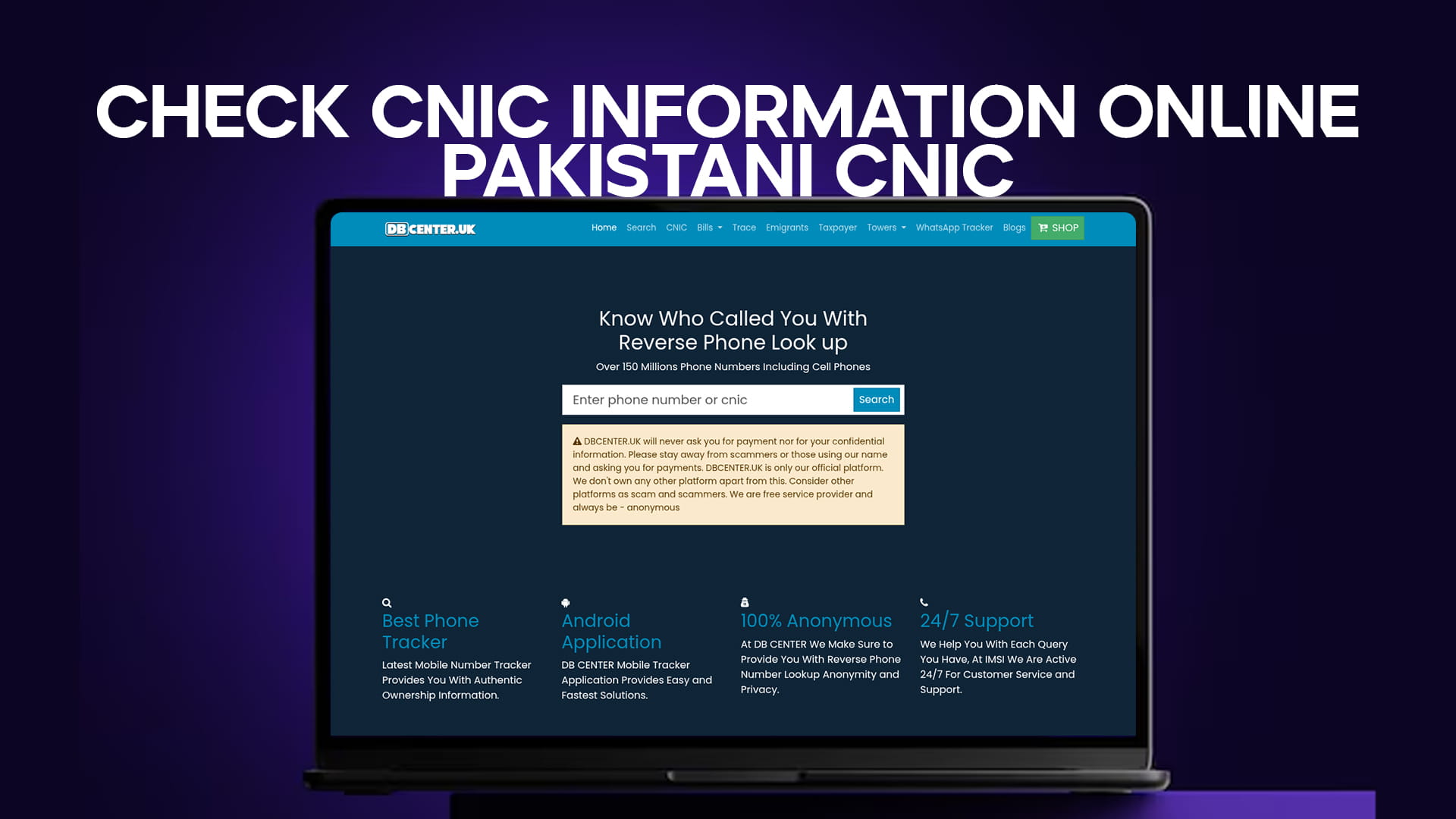
DB Center is a reverse phone lookup service. You enter a phone number and the platform searches its database for any associated information — name, location, and user-reported data about whether the number has been flagged as a scammer, telemarketer, or suspected fraudster.
The database covers over 150 million phone numbers, including cell phones. In a country like Pakistan where SIM registration is mandatory and biometric, phone numbers have a traceable connection to identities that feeds into publicly accessible and user-reported data sources.
For Pakistani users, DB Center is practically useful in several specific situations:
Unknown incoming calls. You receive a call from a number you do not recognize. Before calling back or dismissing it, you run the number through DB Center. If it comes back associated with a name that matches what the caller told you, that adds credibility to their claim. If it comes back flagged by multiple users as a scam number, you know not to engage.
Verifying a contact's number. Someone gives you a phone number along with their name as part of a transaction. You check the number on DB Center. If the name in the database matches what they gave you, the information is consistent. If a completely different name appears, that is worth investigating before you proceed.
Checking suspicious messages. A text arrives claiming to be from a company or institution, including a callback number. Running that number can tell you whether it is actually associated with the organization claimed, or whether other users have reported it as a fake.
Pre-transaction screening. Before sending money to a seller you met online, or before meeting someone for a transaction, checking their contact number on DB Center gives you a fast, low-effort background layer.
DB Center does not require you to create an account or submit personal information to run a lookup. The process is fast, accessible from any device with an internet connection, and covers a database large enough to return meaningful results for a substantial share of Pakistani phone numbers.
The Connection Between CNICs and Phone Numbers in Pakistan
This connection is important and often under-appreciated.
When Pakistan made biometric SIM registration mandatory — requiring every SIM to be activated through fingerprint verification against a valid CNIC — it created a direct, documented link between phone numbers and national identity records. Every active SIM in Pakistan is registered to a real person. The telecom company, PTA, and NADRA all hold records of this link.
This does not mean the information is publicly visible. Telecom companies are not allowed to share subscriber information without legal authorization. But it does mean that the data exists, and it explains why reverse lookup databases for Pakistani numbers can surface names associated with numbers. That information flows into public sources, user reports, and shared databases over time.
It also has a security implication for ordinary citizens: your phone number is connected to your identity in official records. If someone gains control of your number — through a SIM swap, through a fraudulent replacement request, or through a stolen phone — they gain access to a thread that connects to your CNIC, your bank OTPs, and your digital identity more broadly.
How to Protect Your Own CNIC from Online Misuse
Knowing how CNIC information flows and where it can be exposed makes it easier to protect yourself. Here are the practical steps.
Check your SIM registrations regularly. SMS 668 takes thirty seconds. If there are SIMs registered under your CNIC that you did not activate, report them immediately. Unrecognized SIMs are the most common early sign of identity theft in Pakistan.
Do not submit CNIC copies to unverified parties. Online job advertisements sometimes ask for CNIC photos as part of an initial application. Fake job listings specifically designed to harvest CNIC data are documented in Pakistan. Verify that any employer or institution asking for your CNIC is legitimate before submitting anything.
Never confirm CNIC details to incoming callers. Banks and government offices do not call citizens and ask them to verbally confirm their CNIC number over the phone. If a caller asks for this, it is a scam, regardless of how convincing they sound or how much personal information they appear to already have.
Keep your NADRA records updated. When you move, update your address with NADRA. Outdated address records can create complications if you ever need to dispute a fraudulent application made in your name. They can also result in important official correspondence going to someone else's door.
Monitor your bank accounts for unusual activity. Someone with your CNIC details may attempt to open a new account, apply for a mobile wallet, or take out a small loan in your name. Unexplained credit applications or new account notifications are warning signs worth investigating quickly.
Use strong authentication on all accounts. If your phone number and CNIC are both compromised, attackers may attempt to access your mobile banking or digital wallets. Two-factor authentication, strong PINs, and transaction alerts give you a fighting chance to catch unauthorized access before serious damage is done.
Common Scams That Use CNIC Information
Understanding what scams look like makes them easier to recognize in real time.
The CNIC suspension call. You receive a call claiming your CNIC has been flagged for suspicious activity or used in a criminal case, and you must press a number or call back immediately to resolve it. This is always a scam. NADRA does not contact citizens this way.
The bank verification call. A caller claims to be from your bank, says there is a problem with your account, and asks you to verify your CNIC number, account details, or OTP "to confirm your identity." Banks do not ask for this information from incoming calls. Hang up and call your bank directly using the number on the back of your card or their official website.
Fake CNIC check websites. Websites designed to look like NADRA portals offering "free CNIC verification" are often data harvesting operations. They collect the CNIC numbers and personal information entered by users. Always verify that you are on nadra.gov.pk before entering any information.
The prize or compensation scam. You receive a message claiming you have won a prize or are entitled to government compensation, but must submit your CNIC details to claim it. This is a data collection scam. Government disbursements do not work this way.
If you receive a suspicious call from an unknown number involving any of these scenarios, running the number through DB Center before engaging — or instead of engaging — is a practical first step. If the number has been reported by other users as a scam, the database will reflect that.
Checking CNIC Information Legally — What the Law Says
Pakistan has legal frameworks that govern how CNIC data can be accessed, stored, and used.
The Prevention of Electronic Crimes Act (PECA) 2016 specifically criminalizes unauthorized access to computer systems and databases. Attempting to access NADRA's database through unofficial means, purchasing scraped identity data, or using CNIC information to commit fraud all fall within the scope of offences under PECA. Penalties include fines and imprisonment.
The NADRA Ordinance governs how NADRA itself can share data and with whom. Official partnerships with banks, telecoms, and government agencies operate under this framework. Unauthorized sharing or access falls outside it entirely.
PTA's subscriber data regulations mean your telecom company cannot give out your personal information without legal authorization, regardless of who is asking.
For citizens and businesses, the legal approach to CNIC verification is straightforward: use official channels for formal verification, use publicly available tools like DB Center for phone number lookups, and avoid any service that claims to give full unrestricted access to NADRA records for a fee. Those services are either misleading about what they can provide or operating illegally, and either way, they are not worth the risk.
Practical Summary — What to Use for What
It helps to have a clear picture of which tool is right for which situation.
For confirming a CNIC number is valid and checking the name against it, NADRA's 8009 SMS service is the right tool. It is free, official, and immediate.
For checking how many SIMs are registered under your CNIC, PTA's 668 service covers it directly.
For verifying vehicle ownership before a purchase, Punjab's MTMIS portal or the equivalent in your province is the correct resource.
For managing and updating your own CNIC details, NADRA's Pak Identity app and portal handle everything you need.
For identifying an unknown phone number, checking whether a caller is who they claim to be, or screening a contact before a transaction, DB Center's reverse lookup database is the practical tool — fast, accessible, and covering over 150 million Pakistani and international phone numbers.
No single tool does everything. Used together, these resources give ordinary Pakistani citizens a meaningful ability to verify identities, protect their own information, and stay ahead of the fraud attempts that are, unfortunately, a regular part of life in a country with 180 million mobile users and a growing digital economy.
Final Word
Checking CNIC information online is not about invasion of privacy or accessing systems you are not supposed to access. Done through legitimate channels, it is about protecting yourself, confirming the identities of people you are doing business with, and catching fraud before it costs you money, time, or peace of mind.
Use official NADRA and PTA tools for formal verification. Use DB Center for phone number lookups and unknown caller identification. Protect your own CNIC the same way you protect your bank details — carefully, consistently, and with attention to where it is going and who is asking.
That combination of official tools and practical platforms gives you a real level of protection in everyday Pakistani life. In a country where identity is everything and fraud is common, that is not a small thing.