Three missed calls. Same number. No voicemail.
If you are in Pakistan, this happens more often than it should. Unknown numbers calling at odd hours, numbers that ring once and cut, numbers that keep appearing after you ignore them. Sometimes it is nothing. A wrong number. A delivery person who already moved on. But sometimes it is something you need to know about — a scammer running a script, someone using a throwaway SIM for reasons that are not good, or occasionally someone you actually need to talk to.
The old approach was simple: call back and see. That still works sometimes. But calling back a number you know nothing about carries risk. You do not know if it is a premium-rate line designed to charge you the moment you connect. You do not know if calling back confirms to a scammer that your number is active. You do not know anything until you already made the call.
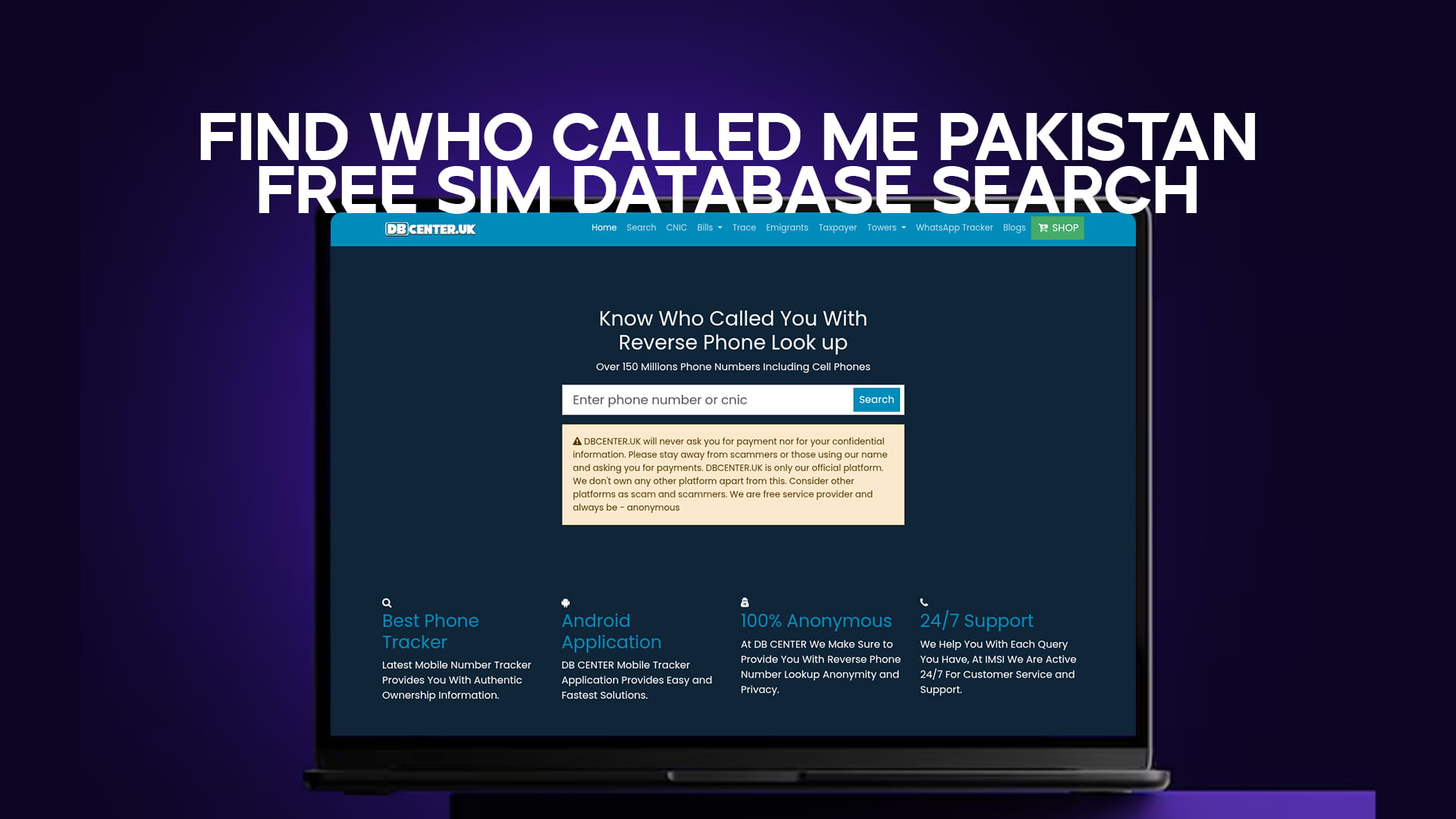
The smarter approach is to search the number first. DB Center is a reverse phone lookup platform with over 150 million numbers in its database, including Pakistani mobile numbers from all major carriers. You type in the number. You find out what the database knows — the name, the carrier, the region, and what other users have said about it. Then you decide whether to call back, block it, or report it.
This article covers everything you need to know about finding who called you in Pakistan using a free SIM database search — how the process works, what you will find, and how to use that information wisely.
Why "Who Called Me" Is Such a Common Question in Pakistan
Pakistan crossed 190 million active mobile subscriptions some time ago and the number keeps climbing. Almost every adult has a phone. A huge number of people have two or more active SIMs. The sheer scale of mobile usage means the volume of unknown calls is enormous.
Some of those unknown calls are genuinely harmless. Marketing calls from legitimate businesses. Automated reminders from hospitals or clinics. Follow-ups from service providers. But a meaningful proportion of unknown calls in Pakistan are not harmless at all.
Phone fraud is a documented and growing problem. The FIA's Cybercrime Wing processes thousands of phone-related fraud complaints every year. The PTA receives reports of spam and scam calls in the hundreds of thousands annually. These are not rare events. They are daily occurrences affecting people across every province, every income level, and every age group.
The fraud is not random either. Scammers target people deliberately. They use public information, social media data, and purchased contact lists to find numbers. They run scripts designed to create urgency, fear, or excitement. They have specific goals: extracting money, extracting personal information, or both.
Against that backdrop, wanting to know who called you is not paranoia. It is common sense. And having a free, fast tool to find out makes that common-sense check available to anyone with a phone and an internet connection.
How a Free SIM Database Search Works
The term "SIM database search" is used broadly but what it actually describes is a reverse phone lookup — starting from a number and working toward identity rather than the other way around.
DB Center maintains a compiled database of phone numbers drawn from carrier records, public registrations, and community-submitted data. When you enter a Pakistani number, the system checks it against that database and returns whatever is on record for that number.
The database covers over 150 million numbers, including cell phones across all five Pakistani carriers: Jazz, Telenor, Zong, Ufone, and SCOM. It also covers landlines. For Pakistani numbers, results typically include the registered name if that data has been compiled, the carrier, the general region, the number type, and community reports from other users.
The community reporting layer is worth understanding separately. Users who receive calls from a number can leave ratings and notes on the platform. If a number has been used for scam calls, those reports accumulate. By the time a new user searches that number, they may find fifty existing flags all saying the same thing. That crowdsourced layer reflects current behaviour in a way that a static database cannot. Numbers that were clean six months ago but turned fraudulent recently will show up in community reports before they ever appear in a compiled registry update.
The whole search process is free. No account is needed. No subscription is required. You enter the number and you get the results.
Step-by-Step: How to Search Who Called You on DB Center
Start by noting the full number. When an unknown call comes in, the number usually appears on your screen in one of two formats. If the caller is within Pakistan, you will see it in the domestic format starting with 03. If the call came from outside Pakistan, you may see it starting with +92. Note the full number exactly as it appeared.
Go to DB Center. Open any browser on your phone or computer and navigate to the site. No download is required. The search bar is visible immediately when the page loads.
Enter the number in international format. For Pakistani numbers, the country code is +92. Drop the leading zero from the domestic format and add +92 instead. So 0311-9988776 becomes +923119988776. This format tends to return the most complete results, though the system recognises domestic format too.
Run the search. Hit the search button and wait a few seconds. The system processes the query against the database and generates the results page.
Read through all available information. The results page shows the registered name (when available), the mobile carrier, the country and region, the number type, and any community ratings or comments. Do not skip the community section — it is often the most current and specific information on the page.
Cross-reference if needed. If the name returned matches someone you know, that confirms the identity. If it does not match what you expected, that discrepancy is worth noting. If the number has multiple fraud flags, you have a very clear answer.
Take action based on what you found. Call back if it seems legitimate. Block if it seems suspicious. Report if the evidence points to fraud.
The process from opening the browser to reading results takes under two minutes in most cases. For the value it provides, that is time well spent.
Reading the Results: What Each Piece of Information Means
When results come back, they contain several distinct data points. Each one tells you something different.
Registered name. This is the name linked to the SIM registration. For personal numbers, it is the individual's name as provided during registration. For business numbers, it may be the company or individual who registered the corporate SIM. If this name matches who you think called you, that is confirmation. If it does not match, that is a reason to be cautious.
Mobile carrier. Pakistan has five active mobile carriers. Jazz, Telenor, Zong, Ufone, and SCOM. Knowing the carrier is useful context. A number presenting itself as a large corporate customer service line but registered on a standard personal SIM is immediately suspicious. Legitimate businesses use registered business lines, not personal SIMs.
Region. The general location of where the SIM was registered. This is typically a city or province. If someone told you they are calling from Karachi but the number is registered in a different city, that inconsistency means something.
Number type. The result will indicate whether the number is a mobile SIM, a landline, or a VoIP (Voice over Internet Protocol) number. VoIP numbers are registered virtually and can originate from anywhere in the world. They are cheaper and easier to obtain, which makes them popular with scammers. A VoIP number calling you about a local matter should raise immediate questions.
Community flags and ratings. Other users who have dealt with this number have left their assessments. The rating shows how many people flagged it as spam, fraud, or nuisance versus useful or legitimate. The comments describe what happened when they received the call. This real-world data is often more informative than the registration data alone.
Call count and report history. Some results show how frequently a number has been searched and how many reports it has accumulated. A number searched tens of thousands of times with consistently negative ratings is not a number you need to call back.
The Most Common Unknown Caller Types in Pakistan
Not all unknown calls are the same. They fall into a few broad categories, and recognising which type you are dealing with changes how you respond.
Telemarketing calls. Businesses — banks, insurance companies, telecoms, real estate developers — run outbound calling campaigns. The callers use call centres and dial from numbers you would not have saved. These calls are often annoying but not dangerous. If the search returns a legitimate business name, that is probably what you are dealing with.
Delivery and logistics calls. Courier services, food delivery platforms, and ride-hailing drivers all call from numbers you have not saved. These are among the most common sources of unknown calls for people who shop or order online. A quick search usually reveals the carrier and sometimes the name, confirming a delivery context.
Government and utility calls. WAPDA, SNGPL, NADRA, and various government departments do make outbound calls for legitimate purposes — bill reminders, appointment confirmations, service notifications. However, scammers heavily impersonate these entities. The difference lies in what the call asks of you. A legitimate government call confirms an appointment or reminds you of a bill. It does not demand immediate payment via mobile wallet, ask for your PIN, or threaten arrest.
Scam and fraud calls. These are the calls you need to identify quickly. They follow scripts designed to bypass your critical thinking through urgency, fear, or excitement. They want your money, your personal details, or both. A SIM database search will often surface existing community reports from people who received the same script from the same number.
Harassment calls. Repeated calls from the same number, silent calls, threatening messages — these need to be identified and reported formally. A reverse lookup gives you the carrier and potentially the name, which is useful information when filing a police or FIA complaint.
Wrong numbers. Sometimes it genuinely is just a wrong number. Someone was trying to reach someone else and dialled one digit off. A quick search that returns a name bearing no relation to your life, with no fraud flags, usually means this is what happened.
Knowing which category a call falls into tells you what to do with it.
What to Do After You Find Who Called You
The lookup is the information-gathering step. What comes after depends on what you found.
If the call was legitimate and you need to respond: Call back or send a message. You now have context for the conversation and you know who you are talking to.
If the call was telemarketing and you want it to stop: Block the number. Your phone's native call-blocking feature handles this permanently. You can also contact the company through its official channels and ask to be removed from their calling list. Under PTA guidelines, businesses are required to honour opt-out requests.
If the call had multiple fraud flags: Do not call back. Block the number immediately. If money has already been lost or personal details have been shared, file a report with the FIA Cybercrime Wing as soon as possible. Time matters in fraud cases — earlier reports give investigators more options.
If the call appears to be harassment: Document everything before you block. Take a screenshot of the call log showing the number and the times of calls. Note any messages received. Save community report results as evidence. Then report to the nearest police station or to the FIA Cybercrime Wing with the full record. A pattern of repeated calls from a known number is taken seriously by both agencies.
If the result was inconclusive: Some numbers return minimal results. If the database does not have strong data for the number and there are no community flags, the risk is lower — but not zero. Trust your instinct. If the call felt off, there is no obligation to call back.
Staying One Step Ahead of Phone Scammers
Scammers adapt. The scripts change. The numbers change. But the mechanics are consistent, and understanding them makes you much harder to fool.
They create urgency. "Your account will be suspended in two hours." "Your SIM will be deactivated today." "You have 30 minutes to claim your prize." Urgency is designed to stop you from thinking. The moment you feel pressure to act immediately, slow down and verify.
They impersonate authority. NADRA, the FIA, your bank, the PTA. They use the name of a legitimate institution to borrow its credibility. Real institutions do not cold-call you with ultimatums. If you are unsure, hang up and call the institution back on a number from their official website.
They ask for information you should never share. OTP codes, bank PINs, full CNIC numbers, account passwords. No legitimate caller ever needs these. Ever. Not your bank, not your telecom, not the government.
They use emotion. A relative in an accident. A child in trouble. These calls target your protective instincts. Before reacting, verify through a separate channel — call a family member directly on a number you already have.
They use new numbers. Scammers cycle through SIMs quickly once a number gets flagged and blocked. But they often run the same script from a new number. If a call feels identical to a known scam type, treat it that way regardless of whether that specific number is flagged yet.
A reverse lookup stops many of these approaches before they get started. It gives you information before you engage, which changes the entire dynamic.
Using DB Center From Outside Pakistan
A significant portion of people searching "who called me Pakistan" are not in Pakistan at all. The Pakistani diaspora spans the UK, the Gulf countries, the United States, Canada, and Australia. Overseas Pakistanis receive calls from Pakistan numbers regularly — family, old contacts, doctors, lawyers, property agents.
They also receive scam calls targeting them specifically. Fraud operations that know overseas Pakistanis send money to family regularly will use that knowledge. A call claiming a relative is in hospital and needs immediate funds is a script that works precisely because it is plausible.
DB Center is built for exactly this use case. The site is UK-based and accessible from anywhere in the world. Pakistani numbers in the +92 format are searchable from any country. A person in Birmingham or Dubai receiving a call from an unknown Pakistan number can run the same lookup in the same time as someone in Lahore.
For diaspora users, the same rules apply. Search before you engage. Check the community reports. Verify through a separate channel before sending money or sharing personal details.
Why the Community Data Grows More Valuable Over Time
One feature of a well-run reverse lookup platform is that it gets better as more people use it. Each time someone searches a number and leaves a report, that data is available to everyone else who searches the same number afterward.
In 2026, DB Center's community database has accumulated years of user reports covering Pakistani numbers. Numbers that have been used in fraud campaigns appear in the results with accumulated histories — dozens or hundreds of flags, often with detailed comments describing the exact script used. That depth of community data did not exist five years ago. It is a product of consistent use and reporting by people who found the tool useful enough to contribute back.
This means a number that is actively being used in a fraud campaign right now — a number that might be too new to appear in a compiled registry — can already have community flags within days or even hours of being deployed, if previous targets are reporting it.
For the average user, this is the practical upside: the tool's most current information comes from the most recent user reports, not from a database update that might happen monthly or quarterly. Real-time user behaviour is reflected in real-time community data.
Final Thoughts
Unknown calls are a fact of life in Pakistan. With nearly 200 million active mobile subscriptions and a phone fraud problem that the authorities are fighting but have not yet solved, the question of who called you is one that millions of people ask every single day.
A free SIM database search through DB Center takes less time than it takes to decide whether to call back. It returns the registered name, the carrier, the region, the number type, and the accumulated reports of everyone who has dealt with that number before you. That information is often enough to tell you exactly what you are dealing with.
Over 150 million phone numbers. No account needed. No cost. Just the number and a search bar.
The next missed call does not have to stay a mystery.