You get a call from a number you have never seen before. No name, no context, just digits on a screen. Do you pick up? Call back? Ignore it?
Most people in Pakistan face this situation several times a week. And most of the time, there is no easy way to know what to do. Calling back a scammer confirms your number is active. Ignoring a real call means missing something that might matter. Googling the number sometimes works and often does not.
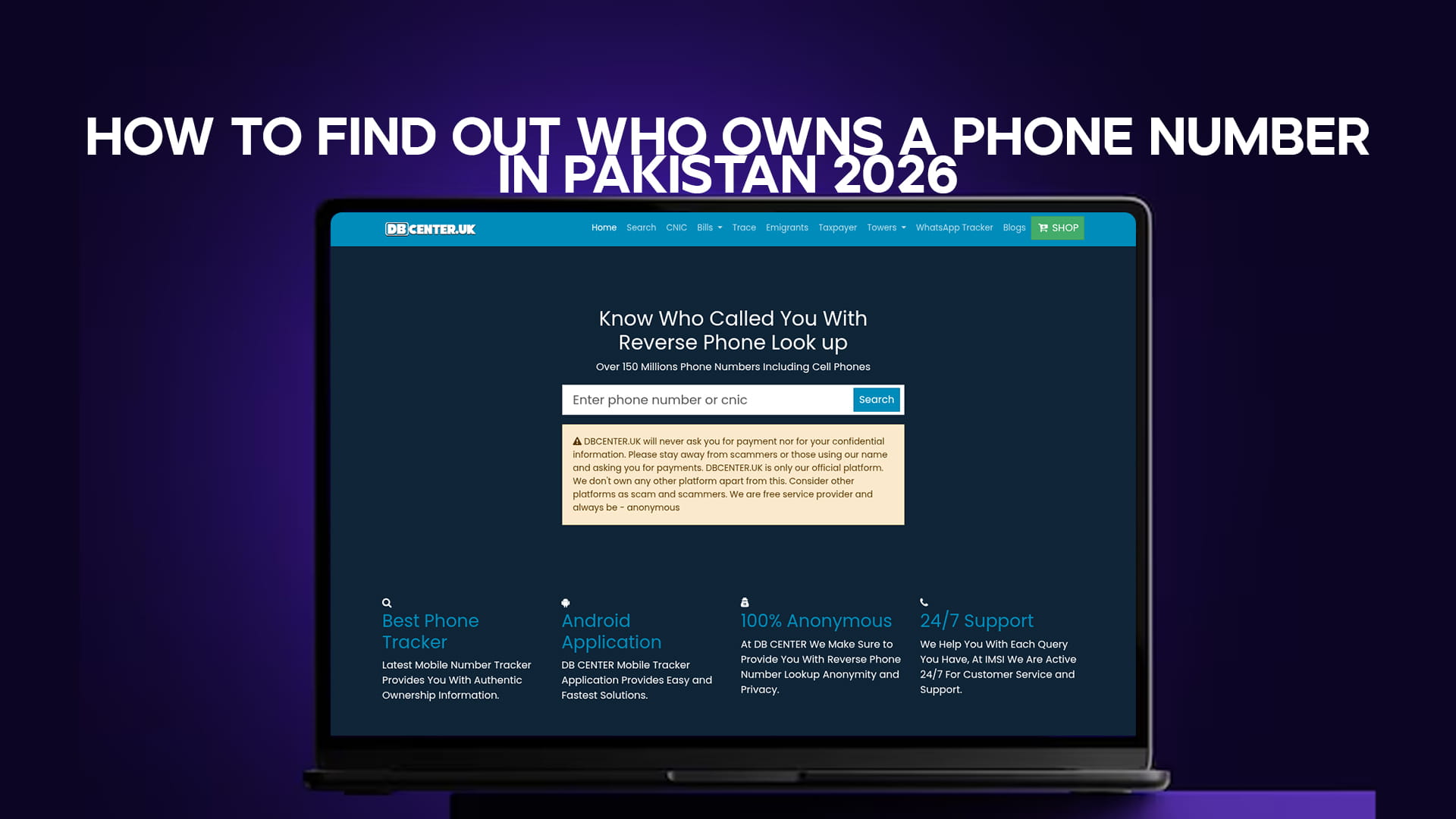
There is a better option. Reverse phone lookup lets you search a number and find out who it belongs to before you decide what to do. DB Center gives you access to over 150 million Pakistan phone numbers, including mobile numbers across all major networks. This guide explains how it works, when to use it, and what you can find.
Why Identifying Unknown Numbers Matters in Pakistan
Pakistan crossed 195 million active SIM connections in 2025. That is more SIMs than there are adults in the country. With that many active numbers in circulation, it is no surprise that unknown calls are a daily reality for most people.
The reasons behind unknown calls vary widely. Some are harmless. A delivery rider calls from a personal number. A school calls from a new office line. A relative calls from a new SIM after losing their old one. These are calls you want to return.
Others are not harmless at all. Phone scams targeting people in Pakistan have increased sharply over the past few years. Bank impersonation calls, fake job offers, SIM swap attempts, and prize scams all start with a phone call from an unknown number. By the time most people realise they are talking to a scammer, the damage is already done.
The difference between a harmless unknown call and a dangerous one is information. Knowing who owns the number before you engage changes everything. It takes about thirty seconds with the right tool.
What Reverse Phone Lookup Actually Does
Reverse phone lookup is exactly what the name says. Instead of searching a name to find a number, you search a number to find a name.
When you enter a phone number into DB Center, the service searches a database of over 150 million records. These records include information collected from public directories, telecom registrations, user-submitted reports, and business listings. If the number is in the database, you get results. If other users have already reported the number as spam or a scam, that information appears too.
The process is not complicated. You do not need to download an app. You do not need to create an account. You type the number, run the search, and read what comes back.
What you get depends on the number. For many numbers, especially businesses and older registered lines, the results include a name and a location. For mobile numbers, you will at minimum see the telecom operator and sometimes the registered owner's details. For numbers flagged by other users, you will see community reports that tell you whether the number has been identified as a scammer, telemarketer, or harasser.
How to Search a Pakistan Phone Number on DB Center
The process is simple and takes under a minute once you know the steps.
Get the Full Number
Write down the complete number that called you. Pakistan mobile numbers are eleven digits long and start with 03. Landline numbers include a city code followed by the subscriber number. If the call came from abroad, it may include a country code at the start.
Enter the Number in the Search Box
Go to DB Center and enter the number in the search field. You can use either local format (03xx xxxxxxx) or international format (+92 3xx xxxxxxx). Both work. Do not add spaces or dashes.
Read the Results
DB Center returns whatever it has on the number. This can include the registered name, the telecom operator, the city, business details if it is a registered business number, and any reports left by other users who searched the same number before you.
Make Your Decision
Once you have the information, you are in a much better position. You can call back confidently, block the number, or report it yourself so that other users in Pakistan benefit from what you found out.
What the Search Results Can Tell You
Not every search returns the same level of detail. What you see depends on what is in the database for that particular number. Here is a breakdown of what DB Center can show.
Registered Owner Name
For numbers that are linked to a named individual or organisation in public records or telecom databases, the name appears in the results. This is especially common for business lines, older landlines, and numbers that have been publicly listed.
Telecom Operator
Every Pakistan mobile number is assigned to a specific network. DB Center identifies whether the number belongs to Jazz, Telenor, Zong, Ufone, or another operator. This alone can sometimes tell you a lot. A call from a network that is primarily used in a specific region, combined with an area code or prefix you do not recognise, can help you place where the call is coming from.
City or Region
Landline numbers in Pakistan carry a city code that makes the originating city clear. Lahore numbers start with 042, Karachi with 021, Islamabad and Rawalpindi share 051, Faisalabad uses 041, and Peshawar uses 091. DB Center reads this automatically and can show you the city without you needing to look up the code yourself.
Community Reports
This is one of the most useful features in any reverse lookup service. When users search a number on DB Center and leave a rating or comment, that information is stored and shown to future searchers. A number that has been flagged ten times as a telemarketer or scammer by other users tells you something very specific. You do not need to figure it out yourself because someone else already did.
Business Information
Many businesses in Pakistan list their phone numbers publicly. Hospitals, banks, courier services, government offices, and shops register contact numbers that end up in public directories. DB Center pulls from these sources, so if the number that called you belongs to a registered business, you will likely see the business name and category in the results.
Understanding Pakistan's Phone Number System
Knowing how phone numbers are structured in Pakistan helps you read unknown numbers more intelligently before you even run a search.
Mobile numbers in Pakistan are eleven digits and always start with 03. The first four digits tell you which network the number belongs to. Jazz and Warid (now merged) use prefixes starting with 0300, 0301, 0302, 0303, 0304, 0321, 0322, and 0323. Telenor uses 0340, 0341, 0342, 0343, and 0345. Zong numbers start with 0310, 0311, and 0312. Ufone covers 0331, 0332, and 0333.
Landline numbers vary by city. The city code comes first, followed by a seven or eight digit subscriber number. Common city codes include 021 for Karachi, 042 for Lahore, 051 for Islamabad and Rawalpindi, 041 for Faisalabad, 091 for Peshawar, 061 for Multan, and 081 for Quetta.
If a number calling you does not fit either of these patterns cleanly, it may be a VoIP number, an international number routed through a local gateway, or a spoofed number. VoIP numbers are increasingly common in Pakistan and are often used by call centres, both legitimate and fraudulent.
The Most Common Scam Calls in Pakistan Right Now
Understanding what scammers are doing makes it easier to recognise a scam call before it goes anywhere. These are the most active phone scam types in Pakistan in 2026.
Bank Fraud Alert Scams
A caller claims to be from your bank's security or fraud team. They say suspicious activity has been detected on your account and ask you to verify your identity by sharing your card number, account number, PIN, or the OTP that was just sent to your phone. Real bank staff never ask for these details over the phone. Ever.
Prize and Lottery Scams
You are told you have won a prize in a draw run by a mobile network, a government body, or a well-known company. To receive your prize, you need to pay a processing fee or share your CNIC number and bank details. There is no prize.
Job Offer Scams
A caller offers you a well-paying job, often overseas. The job sounds legitimate and specific. At some point, they ask you to pay a registration fee, medical test fee, or visa processing fee. After the payment, contact stops.
SIM Swap Scams
The caller pretends to be from your telecom operator. They say your SIM is about to expire or has been flagged and ask you to confirm a code that was just sent to your phone. That code lets them transfer your number to a SIM they control, giving them access to any accounts linked to that number.
Fake Government Calls
Callers claim to be from NADRA, FBR, or another government body. They say there is an issue with your CNIC, your taxes, or a legal case and demand payment or personal information to resolve it. Government agencies do not contact citizens this way.
Running any of these numbers through DB Center before engaging tells you whether the number has already been reported. If it has, you can end the call and block the number without wasting another second on it.
Reverse Phone Lookup for Business Use in Pakistan
Reverse phone lookup is not just a personal tool. Businesses across Pakistan use it regularly for practical reasons.
Verifying Suppliers and Clients
Before entering into a business deal with someone who reached out cold, checking their phone number takes thirty seconds. If the number is flagged as fraudulent or is registered to a person in a completely different city from where the supposed business operates, that is information worth having before you transfer money or share sensitive documents.
HR and Recruitment
Job applications sometimes come from numbers that candidates cannot easily explain. Employers use DB Center to verify that contact numbers on CVs and application forms match the information provided.
Freelancers and Independent Workers
Freelancers in Pakistan who deal with new clients regularly face uncertainty about who they are working with. A quick number check before starting a project adds a layer of confidence that the person on the other end is who they say they are.
Landlords and Property Rentals
Rental inquiries arrive from unknown numbers. Checking those numbers before meeting a stranger at a property is a basic safety step that more landlords in Pakistan are starting to take seriously.
Online Marketplace Transactions
People buying and selling on platforms like OLX in Pakistan deal with strangers constantly. Before meeting someone in person to exchange goods or money, verifying their contact number reduces the risk of a bad outcome.
What to Do After You Identify an Unknown Caller
Once you have run a search and read the results, you have a few clear options depending on what you found.
Call Back If the results show a legitimate business or a name you recognise, calling back is the obvious move. You now know who you are calling before the call connects.
Ignore and Monitor If the results are inconclusive but there are no red flags, you might choose to wait and see if the caller leaves a voicemail or sends a message explaining who they are.
Block the Number If the number has been flagged as spam or a scam, block it immediately. On Android phones, you can usually block a number directly from the recent calls list by tapping the number and selecting block. iPhones have the same option under the information screen for a recent call.
Report the Number If you identified a scam call and the number is not yet in the database with a warning, adding a report yourself helps other users in Pakistan who might receive calls from the same number later. It takes a minute and costs nothing.
File a Complaint with PTA Pakistan's telecom regulator, the Pakistan Telecommunication Authority, accepts complaints about fraudulent and harassing calls. If you have evidence of a scam call, filing a complaint with PTA creates an official record and may contribute to action against the number.
Why DB Center Works Well for Pakistan Numbers
Several tools exist for reverse phone lookup, but not all of them cover Pakistan comprehensively. Most large international services are built around US, UK, or European numbers. Pakistani numbers are either missing entirely or appear with very limited data.
DB Center is built specifically to include Pakistan numbers at scale. The database holds over 150 million phone numbers, including mobile numbers across Jazz, Telenor, Zong, and Ufone, as well as PTCL landlines. The coverage includes both urban centres and smaller cities across all four provinces.
The service is web-based, which means there is nothing to install and nothing to configure. You do not hand over your contact list to run a search. You type a number, read the results, and move on. That simplicity matters when you just want a quick answer before deciding whether to call someone back.
Community reports add a layer of real-world intelligence that no static database can match on its own. When Pakistani users search numbers and leave feedback, that data becomes part of what future searchers see. A scam number that gets reported once becomes less dangerous for everyone who searches it after.
Staying Safe from Phone-Based Fraud in 2026
Technology makes communication easier, but it makes fraud easier too. Scammers in Pakistan are better organised and more convincing than they were five years ago. The calls sound more professional. The stories are more specific. The pressure is more intense.
The best defence is still information. You cannot be deceived by a scammer whose identity you already know before they finish their first sentence. You cannot be pressured into sharing bank details if you already know the number calling you has been flagged twenty times for exactly that script.
DB Center does not solve every problem. It cannot stop scammers from calling you. What it does is give you the information you need to make a smart decision in the thirty seconds between seeing an unknown number and deciding what to do with it.
Over 150 million Pakistan numbers are in the database. The next unknown call you receive is probably one of them.