You get a call from an unknown number. You do not pick up. Five minutes later, it calls again. Sound familiar? Most people in Pakistan have been in this exact situation more times than they can count. The question is always the same — who is this, and why are they calling me?
That question used to go unanswered. Today, it does not have to.
With DB Center, checking who owns a phone number takes seconds. Whether you want to verify SIM ownership, confirm a CNIC-linked number, or simply find out who has been calling you, online lookup services have made the process accessible to everyone. No paperwork. No waiting. No confusion.
This guide covers everything you need to know about CNIC and SIM ownership checking online — how it works, why it matters, and how DB Center helps you find answers fast.
What Is a CNIC and Why Does It Matter for SIM Ownership?
A CNIC — Computerized National Identity Card — is the official government-issued identity document for Pakistani citizens. It is a 13-digit number unique to every individual. Beyond serving as a national ID, your CNIC is tied to almost everything official in Pakistan, including your registered mobile SIM cards.
When you buy a SIM card in Pakistan, telecom companies are required by PTA (Pakistan Telecommunication Authority) regulations to register it against your CNIC. This was introduced to reduce fraud, stop anonymous calling, and make it easier to track criminal activity conducted over unregistered numbers. Each CNIC is officially allowed a limited number of active SIMs across all networks.
The problem is that people's CNICs are sometimes used without their knowledge. Someone could register a SIM under your identity through a stolen copy of your ID card. That SIM can then be used for fraud, harassment, or even criminal activity — and because it is linked to your CNIC, you could be the one held responsible.
This is exactly why checking what SIMs are registered against a CNIC has become so important. It is not just curiosity. It is a matter of protecting yourself.
The Rise of Online Phone and SIM Lookup Tools
A few years ago, the only way to check SIM ownership or verify a phone number was to walk into a telecom franchise or submit a formal request. The process was slow, bureaucratic, and honestly not worth the effort for most people.
The internet changed that completely.
Today, a growing number of online platforms offer reverse phone lookup services that let you search a number and find out who it belongs to. These databases pull from publicly available records, telecom data, user-reported information, and other sources to build profiles of phone numbers across the world.
DB Center is one of the most reliable of these platforms. With over 150 million phone numbers in its database — including mobile numbers — it gives users a fast and accessible way to find out who is calling them. The platform works globally, but its depth of data makes it particularly useful for tracing mobile and landline numbers across regions like South Asia, including Pakistan.
How DB Center's Reverse Phone Lookup Works
DB Center is built around one core idea: you should be able to know who called you without having to guess.
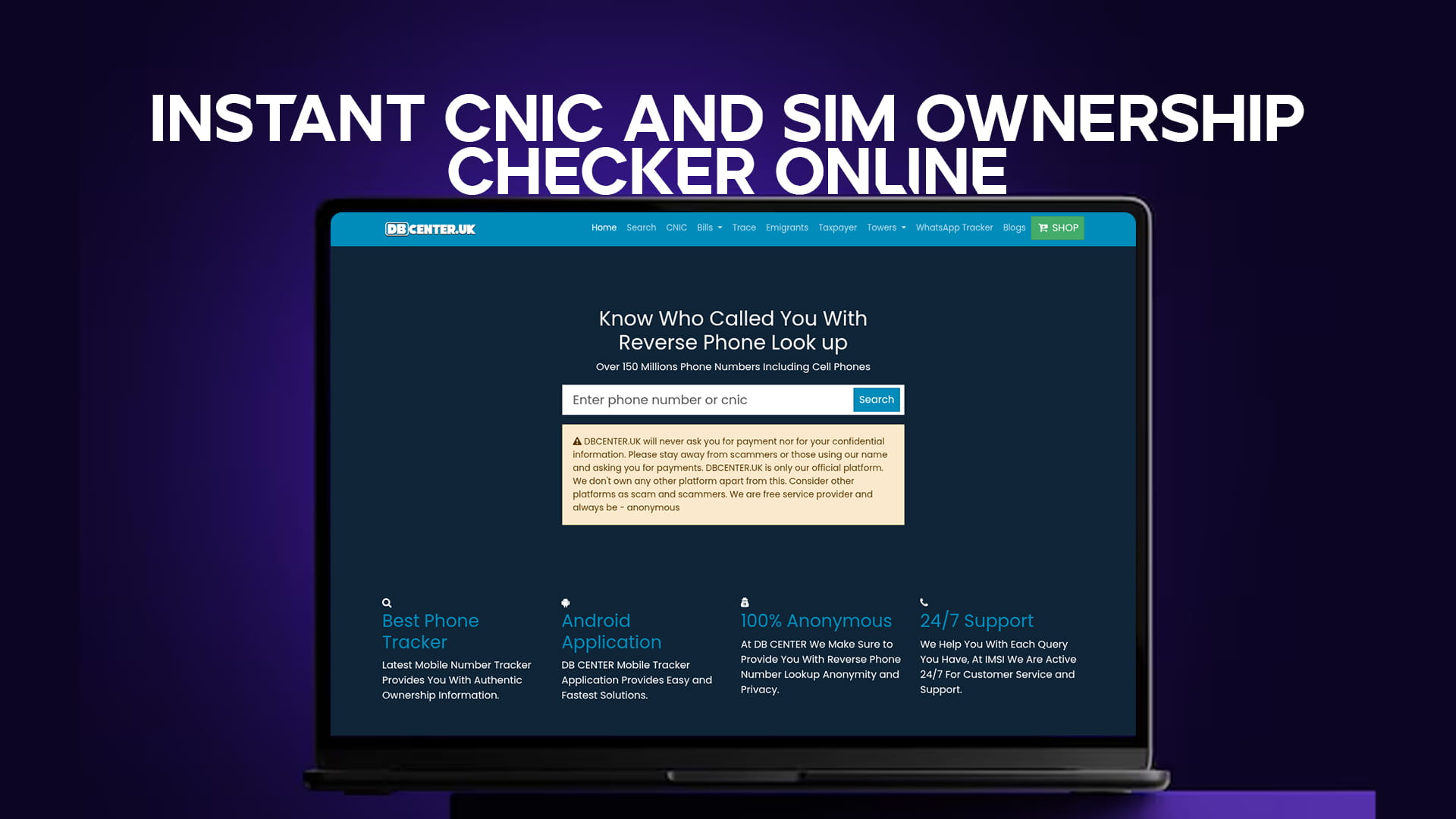
The process is straightforward. You go to the DB Center website, enter the phone number you want to look up, and the system searches its database for associated information. This can include the name linked to the number, the network or carrier, the region or city of registration, and any other details that are part of the public record.
Unlike some lookup tools that only cover landlines or only work in specific countries, DB Center covers over 150 million numbers including cell phones. That matters a lot in Pakistan and other South Asian countries where mobile numbers dominate and landlines are largely irrelevant.
The results come back fast. No lengthy loading screens. No forms asking for your personal information before showing you anything. You type the number, you get what is available.
Checking SIM Ownership Against a CNIC: What You Need to Know
One of the most searched things online by Pakistani users is how to check which SIMs are currently registered against a specific CNIC. This is important for a few different reasons.
First, it helps you protect your own identity. If someone has misused your CNIC to register SIMs without your consent, those SIMs show up under your name in PTA records. That creates legal exposure for you. Knowing what is registered under your CNIC lets you report and block fraudulent SIMs before any damage is done.
Second, it helps verify the identity of people you deal with. If someone gives you a mobile number and claims a certain identity, cross-checking that number against available records can either confirm or raise a red flag about what they told you.
Third, it matters for fraud prevention. Many scam calls come from SIMs registered fraudulently. When you look up a number and find it is not tied to any clear identity, that alone is useful information.
DB Center supports this kind of lookup by letting you search numbers and see what information its database holds on them. For Pakistan-specific CNIC verification through official channels, the PTA also maintains its own self-verification portal, but for general reverse lookup of who owns or is using a given mobile number, DB Center provides one of the fastest and most comprehensive databases available.
Why People Search for CNIC and SIM Checkers
The demand for these tools is real and growing. Here is a breakdown of who uses them and why.
Individuals who receive unknown calls. This is the most common use case. You missed a call from a number you do not recognize. Before calling back, you want to know if it is a real person, a business, or a scammer. A quick lookup on DB Center tells you what others have reported about that number or what name is associated with it.
People who suspect SIM fraud. If your mobile account shows unusual activity, or if you receive messages about SIMs you did not activate, it is worth checking whether someone is misusing your CNIC. This is more common than most people realize, especially when identity documents are photocopied during routine transactions like hotel check-ins or property rentals.
Small business owners verifying customers. Before entering into financial or business agreements, many small business owners do a quick background check on the numbers provided to them. If a number is linked to complaints, scam reports, or suspicious activity, that information could prevent a significant loss.
Parents monitoring unknown contacts. Parents who want to verify who their children are in contact with use lookup tools to check unfamiliar numbers that appear in call logs or messaging apps.
Journalists and researchers. Investigative reporting often involves tracing phone numbers back to individuals. Lookup tools like DB Center are part of the open-source intelligence toolkit that many journalists use when verifying sources or tracking down individuals linked to a story.
What DB Center Offers Beyond Standard Lookup
Most reverse lookup tools stop at showing you a name and a location. DB Center goes further.
The platform aggregates data from multiple sources, which means the information you get is not just pulled from one directory. It reflects a broader picture of how that number has been used, what other people have said about it, and where it appears online.
For callers who have been reported as scammers, telemarketers, or harassment numbers, DB Center shows community-submitted reports alongside the basic number data. This is genuinely useful because it means the tool gets smarter over time as more people use it and report calls.
The database includes over 150 million numbers, which gives it far more coverage than most free lookup tools. This is especially important for mobile numbers, which rarely appear in traditional phone directories but are the primary way people communicate today.
Is It Legal to Check Someone's CNIC or SIM Ownership Online?
This is a reasonable question and deserves a direct answer.
Checking whether a phone number is legitimate, or whether a SIM is registered to the CNIC you expect it to be registered to, is not illegal. In Pakistan, PTA itself encourages citizens to verify their own CNIC registration to prevent identity misuse. Using officially available tools and platforms to conduct that verification is entirely within your rights.
For reverse phone lookups through platforms like DB Center, the data used comes from publicly available sources. You are not accessing private government records, hacking into telecom systems, or doing anything that crosses a legal boundary. You are searching a database that aggregates publicly available phone information, the same way you might search for a business in a directory.
What is illegal is using information obtained through a lookup to harass, stalk, threaten, or defraud someone. The tool itself is neutral. How you use the information determines whether your actions are appropriate.
How to Use DB Center for a Phone Number Lookup
Using DB Center does not require any technical knowledge. Here is how a typical search works.
Go to the DB Center website. On the homepage, there is a search bar where you enter the phone number you want to look up. Make sure you include the country code if you are searching for a number outside your home country. For Pakistani numbers, that would be +92 followed by the rest of the number.
Once you submit the number, DB Center searches its database and returns whatever information is available. This might include the name associated with the number, the carrier or network, the registered region, and any user-reported data about the number.
If the number has been flagged by other users as a scam or spam number, that information will appear in the results. You can also add your own report if you have relevant information about a number you searched.
The whole process takes under a minute. There is nothing to install and no account required for basic searches.
Tips for Protecting Your CNIC from SIM Fraud
Since CNIC-linked SIM fraud is a real problem, it makes sense to take some basic precautions.
Check your SIM registrations regularly. PTA allows Pakistani citizens to check how many SIMs are currently registered against their CNIC by sending a message to 668. The reply shows every active SIM linked to your identity card number. If you see numbers you do not recognize, you can report them immediately.
Be careful with your ID card photocopies. Every time you hand over a copy of your CNIC — to a hotel, a shop, a government office — there is a possibility that copy gets used for something you did not authorize. Stamp photocopies with a purpose note like "For hotel check-in only" to reduce misuse.
Report unknown registrations immediately. If you find SIMs registered under your CNIC that you did not activate, contact the relevant telecom operator and PTA. Getting fraudulent SIMs blocked quickly limits your exposure.
Use lookup tools as a first line of defense. When an unknown number calls you, do not just block it and move on. Look it up. If it has already been reported by others, that information helps the community. If it has not, your own report adds to the database and helps the next person who receives a call from that number.
Why DB Center Stands Out for Pakistan Users
There are dozens of reverse phone lookup services online. Most of them are built primarily for North American or European numbers and offer thin coverage for South Asian numbers, especially mobile ones.
DB Center takes a different approach. Its database of over 150 million numbers includes strong coverage of mobile numbers from regions where mobile-first communication is the norm. That directly benefits Pakistani users, who rely overwhelmingly on mobile rather than landline communication.
The community reporting feature also makes a real difference. When a scam number circulates in Pakistan — targeting people with fake banking calls, prize claim frauds, or SIM upgrade scams — it gets reported across multiple platforms. DB Center aggregates those reports and makes them searchable. That means by the time a new person receives a call from that number, a quick lookup reveals exactly what it is.
The platform also works well on mobile browsers, which matters in a country where most internet access happens on a phone rather than a laptop or desktop.
Final Thoughts
Knowing who owns a phone number used to take effort, connections, or luck. That is no longer the case. Between DB Center's reverse lookup database and PTA's own verification tools, Pakistani citizens have real options when it comes to verifying SIM ownership, checking CNIC-linked numbers, and protecting themselves from phone-based fraud.
The best approach combines both. Use PTA's official channels to check your own CNIC registration and make sure no one has activated SIMs under your identity without your knowledge. Use DB Center when you receive unknown calls and want to find out who is behind them before deciding whether to call back, block, or report.
Neither tool is complicated. Neither requires technical knowledge. Both take less than a minute. For something that directly affects your security and your peace of mind, that is time well spent.
DB Center remains one of the most capable tools in this space — not because it makes bold promises, but because it works. Over 150 million phone numbers, fast results, community-driven reporting, and solid mobile coverage make it a practical first stop whenever an unknown number shows up on your screen.
The next time your phone rings from a number you do not recognize, you do not have to wonder. Check it.