You get a missed call from an unknown number, sometimes an international one you do not recognise. The natural instinct is to call back. Pause — because in many cases, calling back is exactly what the scammer wants. Before you return any unknown call, a few seconds of checking can save you money and protect your information.
This guide shows you how to tell whether a number is likely a scam before you engage with it.
Know the Common Traps First
Recognising the pattern is your best defence. These are the schemes behind most suspicious calls in Pakistan.
The One-Ring (Wangiri) Scam
Your phone rings once and stops, leaving a missed call — often from an unfamiliar international code. Call back and you are connected to a premium-rate number that charges heavily per minute while an automated system keeps you on the line. The entire scheme exists to make you return the call. If an unknown international number rings once and hangs up, do not call back.
The Fake Prize or BISP Call
A caller claims your CNIC has won a prize, a BISP payment, or a lottery, and asks you to confirm your CNIC, bank, or wallet details, or to pay a "processing fee." No government programme or legitimate lottery works this way. It is always a scam.
The Bank or Wallet Impersonation
A call or message appears to come from your bank, JazzCash, or Easypaisa, warning of suspicious activity and asking for your OTP, PIN, or account number. Real banks and wallets never ask for your OTP or PIN. Anyone who does is a fraudster.
The Authority Impersonation
The caller claims to be from NADRA, FIA, PTA, or the police, says your CNIC or SIM is linked to a crime, and pressures you to send money or share details to "clear" it. No agency operates this way. Hang up.
How to Check a Number Before Calling Back
Look Up the Number
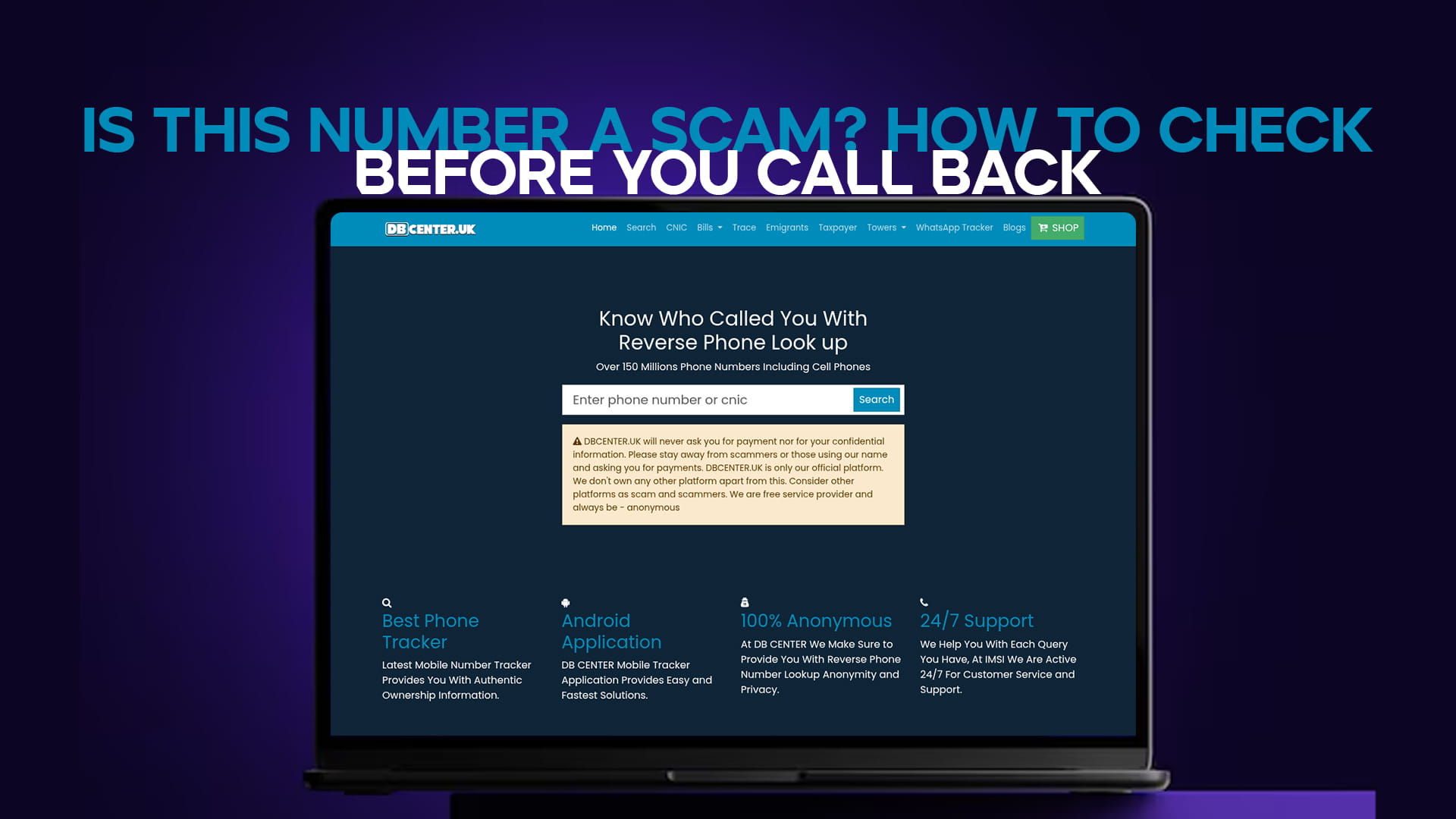
Before returning any unknown call, look it up. DB Center's number trace tool can surface basic associated information for a Pakistani number, and community caller-ID apps like Truecaller show whatever name and spam rating other users have attached to it. A number already flagged by many people as spam is your answer.
Check the Origin
Look at the number's format. An unfamiliar international dialling code on a missed call, when you know no one abroad, is a classic one-ring scam signature. A number spoofed to look like a short official code but arriving as a call asking for money is another red flag.
Verify a Claimed Identity
If a caller claims to be from a specific bank, company, or government office, do not trust the number they called from. Hang up and call that institution back on its official, published number. If they gave you a CNIC to "prove" who they are, confirm whether it is genuine with DB Center's CNIC checker. And if they claim to be a registered business or tax filer, the taxpayer verification tool confirms their FBR status in seconds. A claimed identity that does not check out ends the conversation.
The Golden Rules
Four habits stop almost all phone fraud. Never share your OTP or PIN with anyone, whatever they claim. Never pay a fee to claim a prize. Never call back an unknown international number that rang only once. And when in doubt, hang up and call the institution back on its verified number — a real caller will never object to that.
If You Already Called Back or Shared Information
If you returned a scam call, watch your next bill for unexpected premium charges and report the number to PTA at 9000. If you shared banking details or an OTP, contact your bank immediately to freeze the account, and report financial fraud to the FIA Cybercrime Wing at 051-9106384. Acting fast gives the best chance of limiting the damage. Where you only have a name and number to go on, a broad identity search can help you assemble what little you know before you report.
The Short Version
Before calling back an unknown number, look it up and never return a one-ring call from an unfamiliar international code. No legitimate caller asks for your OTP, PIN, or a prize fee. When someone claims an identity, verify it rather than trusting the number they called from, and when unsure, hang up and call the real institution back. If you have already been caught, report to PTA (9000) and the FIA fast — and be sceptical of any phone tracker service promising to unmask a stranger, since those routinely overpromise.