You receive a WhatsApp message from a number you do not recognize. There is no display picture, no name, just a generic icon and a message asking you to click a link. Or maybe someone is calling your family member repeatedly from a number that keeps changing. Or a business contact gave you a WhatsApp number that does not feel right.
These are not rare situations. They happen every day across Pakistan, and the people on the receiving end usually have the same question: is this number real, and who does it actually belong to?
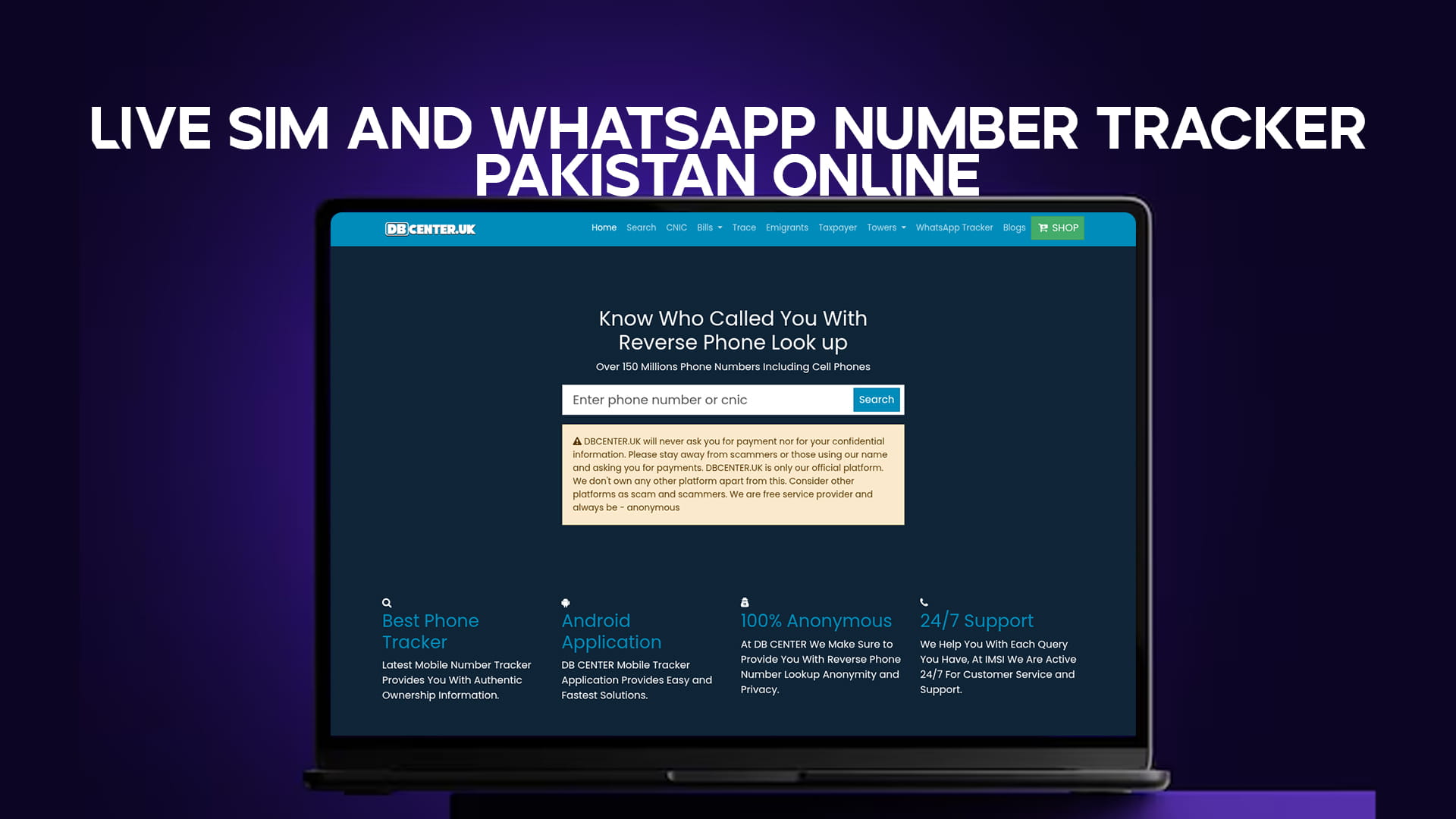
That question drives millions of searches every month. People want tools that help them verify whether a SIM is active, check whether a WhatsApp number is genuine, and look up the identity behind an unknown mobile number. DB Center exists to answer exactly those questions — with a reverse phone lookup database covering over 150 million numbers, including cell phones.
This article covers how SIM and WhatsApp number verification works in Pakistan, why it matters for your personal security, and how tools like DB Center help you make informed decisions about the numbers you interact with every day.
Why Verifying Phone Numbers Has Become So Important in Pakistan
Pakistan has one of the highest mobile penetration rates in South Asia. As of recent years, the country has hundreds of millions of active SIM connections, with WhatsApp being the dominant messaging platform for both personal and business communication. That level of adoption is impressive, but it also creates real problems.
When nearly everyone uses WhatsApp and mobile numbers as their primary form of communication, those channels become prime territory for fraud. Scam calls, fake business numbers, impersonation scams, WhatsApp phishing messages, and unauthorized SIM registrations are all common. The victims are not just naive users — educated, tech-savvy people fall for well-crafted schemes every day.
The problem is made worse by how easy it is to create anonymous communication. A new SIM can be obtained without a legitimate CNIC registration if the process is circumvented. WhatsApp accounts can be created on those SIMs within minutes. That creates a situation where the caller or messenger on the other end has effectively hidden their identity — unless you have a tool that can look past the surface.
That is where phone number verification and reverse lookup services come in.
What "SIM and WhatsApp Number Verification" Actually Means
Before going further, it is worth being specific about what these terms mean and what is actually possible online.
SIM verification refers to confirming that a mobile number is active, what network it belongs to, and — in some cases — what identity information is publicly linked to it. In Pakistan, SIM cards are supposed to be registered against CNICs, which means every legitimate number should have an owner on record.
WhatsApp number checking refers to confirming whether a given mobile number has an active WhatsApp account, and potentially looking up any information that the platform or associated public records make available about that number.
Reverse phone lookup is the broader category that both of these fall under. You take a phone number and search backward — instead of looking up a person to find their number, you start with the number and find out who it belongs to.
DB Center specializes in reverse phone lookup. Its database of over 150 million numbers lets users search any phone number and see what information is publicly associated with it. That includes names, network carriers, reported scam activity, and community-submitted data about how that number has been used.
How DB Center Helps You Verify Unknown Numbers
The process on DB Center is simple enough that anyone can use it, regardless of technical background.
You visit the DB Center website, enter the phone number you want to check, and search. The system runs the number through its database and returns whatever it has. Depending on the number, you might see the name linked to it, the telecom carrier, the region of registration, and any public reports other users have submitted about that number.
This is particularly useful in three common scenarios.
The first is unknown caller identification. If a number calls you and you do not recognize it, a quick search on DB Center can tell you whether it belongs to an individual, a business, or whether other people have reported it as a scam. This saves you the trouble of calling back a number that turns out to be a fraud line.
The second is WhatsApp message verification. When you receive a WhatsApp message from an unknown number, the same lookup applies. Enter the number and see what DB Center knows about it. If the number has been reported for sending spam or phishing links on WhatsApp, that will often show up in community reports.
The third is business number verification. If you are about to send money, share personal documents, or enter into an agreement with someone who gave you a WhatsApp number as their contact, verifying that number beforehand is a simple precaution. A number with no history, no legitimate business association, and no clean record should make you cautious.
The WhatsApp Fraud Problem in Pakistan
WhatsApp fraud in Pakistan takes many forms, and understanding them helps you recognize what to look out for.
Impersonation scams are among the most common. A fraudster creates a WhatsApp account using a fake or stolen photo and a number you do not have saved. They message you pretending to be a family member, a colleague, or even a government official. The message usually creates urgency — there is an emergency, they need money right now, please send it to this account.
Fake job offer messages are another widespread scam. You receive a message promising high-paying work from home opportunities. The message includes a link or asks you to join a WhatsApp group. Once you join, the group admin builds trust for a few days before asking for an upfront payment or your bank details.
Investment fraud has exploded on WhatsApp in recent years. Victims are added to groups where admins post screenshots of their "earnings" and encourage others to invest. Early investors sometimes receive small returns to build confidence before the group disappears entirely with everyone's money.
SIM swap fraud is more technical but increasingly common. A fraudster contacts your mobile network pretending to be you, claiming your SIM was lost or damaged, and gets your number transferred to a new SIM they control. Once they have your number, they can access WhatsApp and any service that uses SMS-based verification.
In all of these scenarios, the ability to verify who is behind a number before trusting it is a meaningful line of defense.
Checking Whether a Number is Active on WhatsApp
One specific thing many people search for is whether a given number actually has an active WhatsApp account. This is useful in several situations.
If someone gives you their WhatsApp number for business purposes, confirming that an active account exists on that number tells you whether the contact is genuine. A number that does not correspond to any WhatsApp account is worth questioning.
If you are trying to determine whether an unknown number that messaged you is a real person or an automated system, checking whether the account has profile activity can be informative.
Within WhatsApp itself, you can do a basic check by adding the number to your contacts and seeing whether a profile loads. However, this has limits — scammers and fraudsters can set up convincing profiles, and WhatsApp's privacy settings mean you cannot always see full profile information.
This is where an external lookup becomes more useful. DB Center and similar platforms can show you whether a number has been associated with complaints, what name appears in public directories or reports linked to it, and whether it has been flagged for suspicious activity. That gives you more context than WhatsApp alone can provide.
PTA's Role in SIM Ownership and Verification
Pakistan's telecom regulator, PTA, plays an important role in the SIM ownership landscape. All SIM cards sold in Pakistan are required by law to be registered against a CNIC. This is meant to ensure accountability — every active SIM should have an identifiable owner.
PTA provides a service that lets Pakistani citizens check how many SIMs are currently registered under their own CNIC. You can do this by sending a message to 668 from any mobile number. The response tells you every active SIM across all networks that is linked to your identity card number.
This service is specifically for checking your own CNIC registrations, not for looking up other people's SIMs. It is designed to help citizens protect themselves from identity misuse — if a SIM was registered under your CNIC without your knowledge, this check reveals it.
For looking up who owns a specific mobile number — especially when you receive an unknown call or message — PTA's service does not help directly. That is where reverse lookup platforms like DB Center fill the gap.
What Information Is Publicly Available About a Phone Number
A common question people have is: what can a reverse lookup tool actually show you? It is worth setting realistic expectations.
The information available depends on the number and what is in the database. For some numbers, you may see a full name, carrier information, location, and community reports. For others, especially new or less-known numbers, the result might be minimal.
DB Center draws from multiple sources: public records, community-submitted data, carrier-level information, and reports filed by users who have received calls or messages from specific numbers. This multi-source approach gives it broader coverage than tools that rely on a single data type.
Community reports are particularly valuable for identifying scam numbers. If a number has been used in a fraud campaign, chances are multiple people have already encountered it and reported it. When you search that number, those reports appear alongside the basic data. This is genuinely useful because it reflects real-world experience rather than just database records.
What DB Center does not do — and what no legitimate tool should claim to do — is track someone's real-time location or access private communications. SIM tracking in the sense of watching where a person is physically located requires law enforcement authority and court orders. Any website claiming to offer real-time GPS tracking of a SIM card without those channels is either misleading you or operating in a way that raises serious legal and ethical questions.
DB Center's value is in identification and verification — finding out who owns a number, what history is attached to it, and whether it has been reported for harmful activity. That is what makes it genuinely useful.
How to Protect Yourself from WhatsApp and SIM Fraud
Beyond using lookup tools reactively, there are proactive steps you can take to reduce your exposure.
Enable two-step verification on WhatsApp. This adds a PIN requirement when setting up WhatsApp on a new device. Even if someone gets access to your phone number through a SIM swap, they cannot activate your WhatsApp account without the PIN. Go to WhatsApp Settings, Account, Two-Step Verification, and enable it.
Never share your OTP with anyone. One-time passwords sent via SMS are frequently the target of social engineering attacks. Someone calls pretending to be a bank, a government agency, or a telecom customer service rep and asks you to read back the OTP you just received. Any legitimate organization will never ask for this.
Check your CNIC registrations periodically. Send a message to 668 and review the list. If you see SIMs you did not register, report them to the relevant network and to PTA immediately.
Be skeptical of urgent WhatsApp messages asking for money. Even if the account appears to belong to someone you know, take a moment to verify through a different channel — call their known number or check with a mutual contact. Impersonation scams rely on urgency to prevent you from thinking clearly.
Look up unknown numbers before calling back or engaging. This takes thirty seconds and can save you from engaging with a scam operation. DB Center makes this quick and easy.
Why DB Center Works for Pakistan Users Specifically
Many reverse phone lookup services are built with North American or European users in mind. Their databases are strong for those regions but thin everywhere else. Pakistani mobile numbers often return no results or vague information on those platforms.
DB Center is built differently. Its database of over 150 million numbers includes strong coverage of mobile numbers from regions where mobile-first communication dominates, including South Asia. Pakistani numbers — across all major networks — are represented in its records far more thoroughly than on most competing platforms.
The community report feature also works particularly well in high-density markets like Pakistan. Because so many people receive calls from the same fraud numbers, those numbers accumulate reports quickly. A scam number that started circulating last week may already have dozens of user reports by the time you search it. That kind of crowd-sourced signal is hard to replicate with database records alone.
The platform also runs well on mobile browsers, which matters enormously in Pakistan where the majority of internet access happens on smartphones rather than computers. You can run a lookup in seconds while the phone is still ringing if you want to — though most people search the number after the fact.
Using DB Center as Part of a Broader Digital Safety Habit
No single tool eliminates the risk of phone-based fraud entirely. DB Center is most effective when it is part of a broader approach to how you handle unknown communications.
Think of it this way: before you open a suspicious email, you scan it. Before you buy from an unknown online seller, you check reviews. Before you trust a WhatsApp contact you do not know, you verify the number. These are all the same habit applied to different channels — a reflex of checking before acting.
DB Center fits naturally into that reflex. It is fast enough that checking does not feel like a chore. The results are clear enough that you do not need to interpret complex data. And with over 150 million numbers in its database, the chances of finding useful information about the number you search are genuinely high.
Over time, as more people use it and contribute reports, the database grows more accurate and more current. A platform that gets better as its user base grows is more useful than one that is static — and that compounding effect is already visible in how community-reported scam numbers accumulate over time.
Final Thoughts
The question of who is behind a phone number has never been more relevant in Pakistan. With mobile fraud, WhatsApp scams, SIM misuse, and impersonation attacks all on the rise, having the means to verify a number quickly is a practical necessity, not just a convenience.
DB Center gives Pakistani users access to a reverse phone lookup database that is broad enough and deep enough to actually be useful. Checking a number takes under a minute. Understanding whether it is safe to engage with takes just a glance at the results. And reporting a bad number takes seconds — adding to a shared database that helps everyone who searches that number after you.
SIM and WhatsApp verification is not about distrust. It is about being careful in a communication landscape where not every number on your screen belongs to who you think it does. DB Center makes that carefulness easy to act on.
The next unknown number you receive on WhatsApp or as a missed call does not have to stay a mystery. Check it, verify it, and decide with actual information rather than a guess.