Your CNIC — the Computerized National Identity Card — is the single most important identity document you will ever hold as a Pakistani citizen. It is the foundation of your legal identity in this country. It connects you to your bank accounts, your property records, your mobile SIM cards, your tax profile, your passport application, and dozens of other critical life functions. Without it, you cannot open a bank account, register a business, buy property, or even get a mobile SIM.
Given how central the CNIC is to everyday Pakistani life, it is no surprise that millions of people search online every day for ways to check CNIC information, verify identity details, and confirm whether a CNIC number is genuine. Whether you are a business owner trying to verify a new employee, a landlord checking a potential tenant, or a citizen wanting to confirm your own CNIC status, having accurate and reliable information matters enormously.
This guide will walk you through everything you need to know about checking CNIC information in Pakistan online, the official and legitimate ways to do it, how to protect your own CNIC data from misuse, and how DB Center's reverse phone lookup service connects to the broader picture of identity safety in Pakistan.
Why CNIC Information Matters More Than Ever
Pakistan has undergone a dramatic digital transformation over the past decade. Government services, banking, telecommunications, and commerce have all shifted significantly toward digital platforms. In this new environment, your CNIC has become more valuable than ever — and unfortunately, also more vulnerable to misuse.
Identity-related fraud has become one of the fastest-growing forms of crime in Pakistan. Criminals use stolen or fake CNIC details to register mobile SIM cards, open fraudulent bank accounts, take out loans in other people's names, and commit a wide range of financial crimes. Victims often do not discover that their identity has been misused until significant damage has already been done.
This is why knowing how to check and verify CNIC information through legitimate channels is an essential digital life skill for every Pakistani citizen today. It allows you to monitor your own identity status, verify others when needed, and catch potential misuse before it spirals out of control.
What Information Is Linked to a Pakistani CNIC
Before diving into how to check CNIC information, it is helpful to understand what data is actually associated with a CNIC in Pakistan's national database managed by NADRA — the National Database and Registration Authority.
A Pakistani CNIC holds and links to the following core information:
Full Legal Name The complete name of the cardholder as registered with NADRA, matching their birth records and family tree data.
Date of Birth The official date of birth of the cardholder, verified at the time of registration.
Father's or Husband's Name Pakistani CNICs include the name of the cardholder's father, or in the case of a married woman, the option to include her husband's name.
Gender The registered gender of the cardholder.
Home Address The permanent residential address linked to the CNIC at the time of registration or last update.
CNIC Number Every CNIC carries a unique 13-digit number in the format XXXXX-XXXXXXX-X. The first five digits represent the district and registration area, the next seven are a unique individual identifier, and the final digit indicates gender.
Biometric Data NADRA stores fingerprints and facial photographs linked to every CNIC, used for biometric verification across various services.
Expiry Date CNICs are issued with an expiry date and must be renewed periodically. The card's validity status is an important part of its official record.
It is critical to understand that this level of detailed personal data is protected by law. Unauthorized access to, distribution of, or use of another person's CNIC details without their consent is illegal under Pakistan's Prevention of Electronic Crimes Act (PECA) 2016 and other relevant legislation. The only legitimate ways to access this data are through official government channels or with the explicit consent of the person involved.
Official Ways to Check CNIC Information in Pakistan for Free
The good news is that NADRA provides several official, free, and legitimate channels through which Pakistani citizens can check and verify CNIC-related information. These are the only truly reliable and legally sound methods available.
1. NADRA's Official Website — Verisys
NADRA operates an official online verification portal called Verisys, which allows authorized users to verify CNIC details for legitimate purposes. This service is primarily designed for businesses, banks, and institutions that need to verify the identity of their clients or employees.
For individual citizens, NADRA's website also offers self-service features that allow you to check the status of your own CNIC application, renewal, or update request.
To use NADRA's official online services, visit the NADRA website and navigate to the verification section. You will be required to enter your CNIC number and, in some cases, your date of birth or other identifying information to confirm that you are looking up your own record.
2. SMS-Based CNIC Verification
NADRA provides a simple SMS service that allows Pakistani citizens to check basic CNIC status using their mobile phone. This is one of the most accessible methods because it does not require internet access.
To use this service, compose a text message with your CNIC number and send it to the designated NADRA short code. The service will return a confirmation of whether the CNIC is registered, valid, and active in the national database. This method is particularly useful for quickly verifying whether a CNIC number is genuine when someone presents their card during a transaction.
3. NADRA e-Sahulat Centers
Across Pakistan, NADRA operates and authorizes thousands of e-Sahulat centers, which are essentially point-of-service centers that provide access to government digital services in local communities. At these centers, citizens can have their CNIC status checked, apply for renewals, and access a range of NADRA services with the help of trained staff.
This is a good option for people who are not comfortable navigating online systems independently, as the staff at these centers are trained to assist with CNIC-related queries.
4. NADRA Offices
For more complex queries, disputes, or situations where you suspect your CNIC has been misused, visiting a NADRA office directly is the most reliable approach. NADRA has offices in every major city across Pakistan, and its staff can access the full database to address your concerns, make corrections, or flag your CNIC for protection against further misuse.
5. Pakistan Citizen's Portal
The Pakistan Citizen's Portal, launched under the government's digital transformation initiative, allows citizens to register complaints and make inquiries about a range of government services, including NADRA-related issues. If you have concerns about your CNIC status or suspect identity fraud, this portal provides another official channel for seeking help.
How to Verify a CNIC Number During Business Transactions
One of the most common legitimate use cases for CNIC verification is in business transactions. Landlords, employers, lenders, and traders often need to confirm that the person they are dealing with is who they claim to be. Here is how to do this properly through official channels:
For Landlords When renting property, ask the prospective tenant for a copy of their CNIC. You can then verify the CNIC number using NADRA's SMS service or the Verisys portal to confirm its validity. This does not give you access to all of their personal data — it simply tells you whether the CNIC number is registered and active, which is sufficient for most practical purposes.
For Employers During the hiring process, asking candidates for their CNIC and running a basic verification check is standard practice in Pakistan. Most businesses use the Verisys service for this purpose. Some larger organizations also integrate NADRA's verification API directly into their HR systems.
For Online Marketplace Transactions If you are buying or selling something of significant value through platforms like OLX or Facebook Marketplace, asking for the other party's CNIC is a reasonable precaution. Combined with a phone number verification using DB Center's reverse lookup service, this can give you a reasonably clear picture of whether the person is genuine before you commit to a transaction.
Protecting Your Own CNIC Information from Misuse
Knowing how to check CNIC information is only one side of the equation. Equally important — perhaps even more important — is knowing how to protect your own CNIC data from being misused by others.
Identity theft involving CNIC details is a real and growing threat in Pakistan. Here are the most important steps every citizen should take to protect their identity:
Never Share Your CNIC Number Carelessly Your CNIC number is not something to share freely. Be very selective about who you give it to. Only share it with institutions that have a legitimate legal need for it, such as banks, government offices, telecom operators, and registered businesses.
Check Your SIM Card Registrations Regularly One of the most common forms of CNIC misuse in Pakistan involves someone registering mobile SIM cards in your name without your knowledge. NADRA and the Pakistan Telecommunication Authority (PTA) provide services that allow you to check how many SIM cards are registered against your CNIC. If you find any SIM cards you did not register, report it to your telecom operator and PTA immediately.
Monitor Your Bank Accounts and Credit Activity Fraudsters who obtain CNIC details sometimes try to open bank accounts or take loans in the victim's name. Regularly reviewing your bank statements and checking with financial institutions about any accounts or credit lines registered in your name is an important protective habit.
Be Careful with Photocopies Pakistanis are frequently asked to provide photocopies of their CNIC for various administrative purposes. Always write the purpose on the photocopy before handing it over — for example, "For rental agreement only" or "For employment verification." This prevents the photocopy from being misused for other purposes.
Report a Lost or Stolen CNIC Immediately If your CNIC is lost or stolen, report it to NADRA immediately. NADRA can flag the card in its database to prevent it from being used fraudulently while a replacement is being processed.
Be Suspicious of Calls Asking for Your CNIC Details Scammers frequently call Pakistani citizens pretending to be from NADRA, banks, telecom companies, or government agencies, asking for CNIC numbers, dates of birth, and other personal data. No legitimate government institution or regulated business will call you to ask for your CNIC number over the phone. If you receive such a call, hang up and report it.
The Connection Between CNIC Safety and Phone Number Verification
This brings us to an important and often overlooked connection — the link between your CNIC safety and your phone number activity.
In Pakistan, every mobile SIM card is registered to a CNIC. This means that your phone number and your national identity are directly connected. When a scammer gets hold of your CNIC details, one of the first things they may try to do is register SIM cards in your name. And when they use those SIM cards to carry out fraud, the victims of their crimes may try to trace the number — potentially leading back to your name and identity.
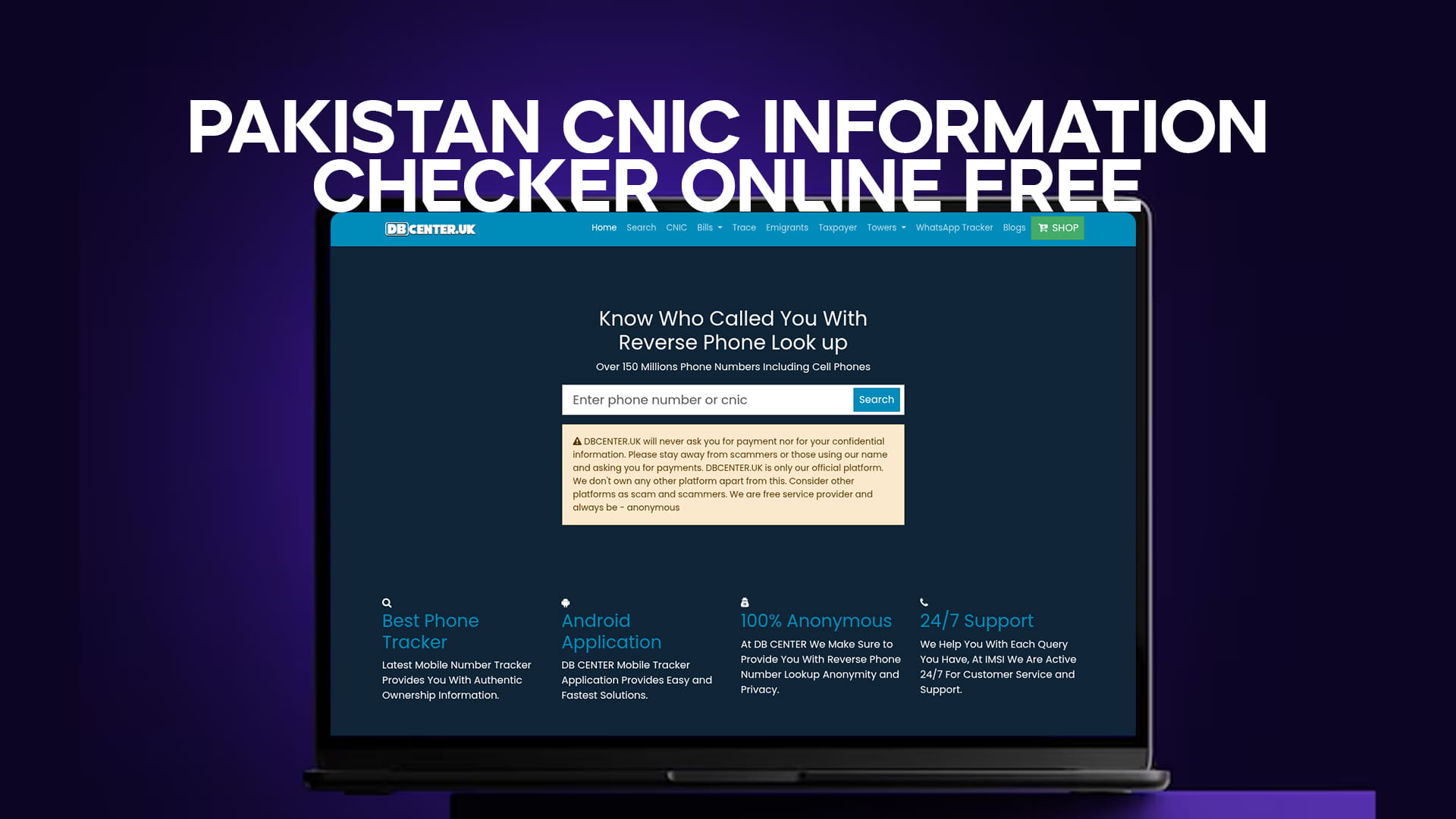
This is where DB Center plays a genuinely important role in the broader ecosystem of identity protection. DB Center's reverse phone lookup service allows anyone in Pakistan to check who a phone number is registered to, what community reports exist about that number, and whether it has been flagged for suspicious activity.
If someone is using a fraudulently registered SIM card tied to your CNIC, there is a chance that reports about that number will appear on DB Center, alerting you or others to suspicious activity. Similarly, if you are verifying the identity of someone who has contacted you, checking their phone number on DB Center alongside verifying their CNIC through official channels gives you a much more complete picture.
With over 150 million phone numbers in its database including mobile and cell phone numbers, DB Center provides fast, free, and comprehensive information about callers in Pakistan and worldwide. It is the most practical tool available for the average citizen who wants to verify who is contacting them before engaging further.
What to Do If You Suspect Your CNIC Has Been Misused
Despite taking precautions, there may come a time when you suspect or discover that your CNIC details have been misused. Here is a clear action plan for what to do:
Step One — Check Your SIM Registrations Use PTA's service to see how many SIM cards are registered under your CNIC. If there are any you do not recognize, contact the relevant telecom operator and the PTA to have them blocked and investigated.
Step Two — Visit NADRA Go to your nearest NADRA office and report the suspected misuse. NADRA can flag your CNIC in its system to prevent further unauthorized registrations or transactions.
Step Three — File a Complaint with FIA Pakistan's Federal Investigation Agency has a dedicated Cyber Crime Wing that handles identity theft cases. File a formal complaint with them, providing as much detail as possible about the misuse you have discovered.
Step Four — Inform Your Bank Contact your bank's fraud department and alert them that your identity details may have been compromised. Ask them to place additional verification requirements on your accounts.
Step Five — Check the Phone Numbers Involved If you have any phone numbers associated with the fraud — numbers that were used to make calls, conduct transactions, or register services in your name — run them through DB Center. The community reports on those numbers may give you additional information about who is behind the misuse and how they have been operating.
Building a Culture of Identity Awareness in Pakistan
Pakistan's digital future depends on its citizens becoming more aware of how their personal data is used, who has access to it, and what steps they can take to protect themselves. CNIC security is at the heart of this awareness.
The good news is that the tools and channels available to Pakistani citizens are improving. NADRA continues to expand its digital services. The PTA provides SIM monitoring capabilities. The FIA's Cyber Crime Wing is growing its capacity to handle digital identity crimes. And community-powered platforms like DB Center help fill the gap by giving ordinary people a free and instant way to verify unknown callers and report suspicious activity.
Together, these resources create a more transparent, safer, and more trustworthy mobile and digital environment for everyone in Pakistan.
Final Thoughts
Checking CNIC information in Pakistan online is absolutely possible and important — but it must be done through the right channels. NADRA's official services, the SMS verification system, e-Sahulat centers, and authorized portals are the legitimate and legally sound ways to verify identity details in this country.
At the same time, protecting your own CNIC from misuse, staying alert to identity-related scams, and using tools like DB Center to verify unknown callers are all essential parts of staying safe in Pakistan's rapidly evolving digital landscape.
Whether you are verifying a business contact, checking the status of your own identity documents, or trying to figure out who is calling you from an unknown number, the right combination of official NADRA services and DB Center's powerful reverse phone lookup database gives you everything you need to stay informed and protected.
Stay vigilant, use official channels, and remember — your identity is your most valuable asset. Guard it accordingly.