Pakistan has one of the largest mobile user bases in Asia. With over 190 million active SIM connections and a population of more than 230 million people, mobile phones are central to everyday life here. Banking, shopping, government services, school registrations, job applications — nearly everything today runs through your phone number.
That is exactly why knowing how SIM cards are tied to CNICs (Computerized National Identity Cards) matters so much. When your phone number is linked to your national identity, anything that goes wrong with your SIM has real consequences. Fraudulent registrations, identity theft, unknown callers — these are not just minor inconveniences. They can affect your finances, your legal standing, and your safety.
This guide covers everything you need to know about searching SIM and CNIC details in Pakistan. How the registration system works, how to check what is registered under your identity, how to deal with unauthorized registrations, and how reverse lookup tools like DB Center can help you identify unknown numbers fast.
The Connection Between SIM Cards and CNICs in Pakistan
Before diving into how to search SIM and CNIC details, it helps to understand why they are connected in the first place.
Pakistan's telecom regulator, the Pakistan Telecommunication Authority (PTA), made biometric SIM verification mandatory back in 2015. The move came after years of security concerns — SIM cards were being sold and activated without proper identity verification, which allowed criminals, terrorist networks, and fraud rings to operate using untraceable numbers.
Under the current system, every SIM sold in Pakistan must be registered to a valid CNIC using biometric fingerprint verification. The retailer scans the buyer's fingerprint, matches it against the NADRA (National Database and Registration Authority) database, and activates the SIM only after a successful verification.
The result is a system where every SIM card — whether from Jazz, Telenor, Zong, Ufone, or SCO — is supposed to be tied to a real person with a verified identity.
This is a good thing in theory. In practice, the system has gaps. Biometric machines can be bypassed. CNICs get stolen. Retailers have, in some cases, registered SIMs without proper consent. And millions of SIMs remain in circulation that were registered years ago under conditions that would not meet today's standards.
That is why the ability to check your SIM and CNIC details yourself remains so important. You cannot rely entirely on the system to protect you — you need to verify things on your own.
Why People Search SIM and CNIC Details in Pakistan
There are quite a few different situations where someone in Pakistan needs to look up SIM or CNIC-related information.
Verifying your own registered SIMs. You may have registered a SIM years ago and forgotten about it. Or you may have lost a phone and never had the SIM properly deactivated. Checking what is registered under your CNIC gives you a clear picture of your current telecom footprint.
Detecting unauthorized registrations. This is one of the most alarming issues in Pakistan's telecom space. Many people have discovered that SIMs were registered under their CNIC without their knowledge or consent — often because a photocopy of their CNIC ended up in the wrong hands. If those SIMs are used for illegal activity, the trail leads back to the CNIC holder.
Identifying unknown callers. Whether it is a harassing call, a suspected scam, or just an unknown number that has been calling repeatedly, knowing who is behind that number is useful. Reverse phone lookup tools handle this side of the problem.
Post-theft SIM security. If your phone or CNIC is lost or stolen, the first concern should be whether someone is using those to register new SIMs or access services tied to your existing number.
Resolving telecom disputes. Sometimes a SIM registered under your name causes billing disputes, legal notices, or tax issues. Having documentation of what is and is not registered under your CNIC helps resolve these faster.
How to Check SIMs Registered on Your CNIC in Pakistan
PTA provides a free and simple method for any Pakistani citizen to check what SIM cards are registered under their CNIC number.
SMS Method – Send to 668
This is the fastest and most accessible method.
- Open your phone's messaging app.
- Type your 13-digit CNIC number without any dashes or spaces. For example: 3520212345678
- Send this message to 668.
- You will receive an automated reply within a few minutes showing the total number of SIMs registered under that CNIC and which telecom operator each SIM belongs to.
This service works on all major Pakistani networks. You do not need internet access or a smartphone. Even a basic feature phone can use this method.
One important note: the SMS reply shows you the count and the operators — it does not show the actual phone numbers themselves. For that level of detail, you would need to go through a more formal process with PTA or the relevant telecom operator directly.
PTA SIM Information System – Online Portal
PTA also has a web-based SIM Information System (SIS) where you can check registrations.
- Visit PTA's official website and navigate to the SIM Information section.
- Enter your CNIC number and complete the verification process.
- The system displays the SIM registrations linked to your CNIC.
The online portal is useful when you want a more detailed record or need to access the information from a computer rather than a mobile device.
Visiting a Telecom Franchise
If you want to go beyond just seeing the count and actually identify specific numbers or resolve an issue, visiting a franchise of the relevant telecom operator in person is the way to go. Bring your original CNIC and, in most cases, your biometric data will be verified on the spot. The franchise staff can show you what is registered under your identity and help you block or de-register unauthorized SIMs.
The 5-SIM Limit and What It Means
PTA has set a maximum of 5 SIM cards per CNIC across all networks combined. This means if you have SIMs from different operators, the total cannot exceed five. Exceeding this limit is not possible under normal retail registration channels.
This limit was introduced to discourage bulk SIM registration fraud. Before such limits were enforced, some individuals and criminal networks had hundreds or even thousands of SIMs registered under a single identity — or under fabricated identities using stolen CNIC data.
If the SMS to 668 comes back showing more than five SIMs, that is an immediate red flag. It means either the limit was bypassed through illegal means or the information in the database contains errors that need to be corrected.
For corporate or business users who need more than five numbers, PTA has a separate business registration process that allows higher limits under monitored conditions.
What Happens When Unauthorized SIMs Are Found
Discovering that SIMs are registered under your CNIC without your knowledge is stressful. But it is also something you can act on directly.
Step one: Confirm the information. Use the SMS to 668 method and note exactly which operators have SIMs registered under your CNIC. If you only have SIMs from Jazz but the list shows a Telenor SIM you never registered, that is unauthorized.
Step two: Contact the relevant operator. Go to the franchise of the network showing the unauthorized SIM. Present your original CNIC and request that the SIM be blocked and de-registered. Operators are required by PTA regulations to take this kind of complaint seriously and act on it.
Step three: File a complaint with PTA. You can submit a complaint directly to PTA through their official complaint portal or helpline. PTA can investigate and take action against the retailer or party responsible for the unauthorized registration.
Step four: Consider a complaint with NADRA. If you believe your CNIC data was stolen and misused, a complaint with NADRA is also appropriate. NADRA can flag your CNIC and add an additional layer of verification to prevent further misuse.
Step five: Report to FIA Cybercrime Wing if needed. If the unauthorized SIM was used for fraud, financial crime, or harassment, the Federal Investigation Agency's Cybercrime division handles these types of cases. You can file online or in person at regional offices.
Searching Unknown Phone Numbers – How Reverse Lookup Works
The PTA-based methods handle the question of what is registered under your own CNIC. But what about when someone else calls you and you do not know who they are?
This is where reverse phone lookup comes in.
Reverse phone lookup is exactly what the name suggests. Instead of looking up a person's number by searching their name, you enter a number and find out who it belongs to. The information available through a reverse lookup typically includes the name associated with the number, the telecom carrier, the registered region, and in many cases, reports from other users about that number's behavior.
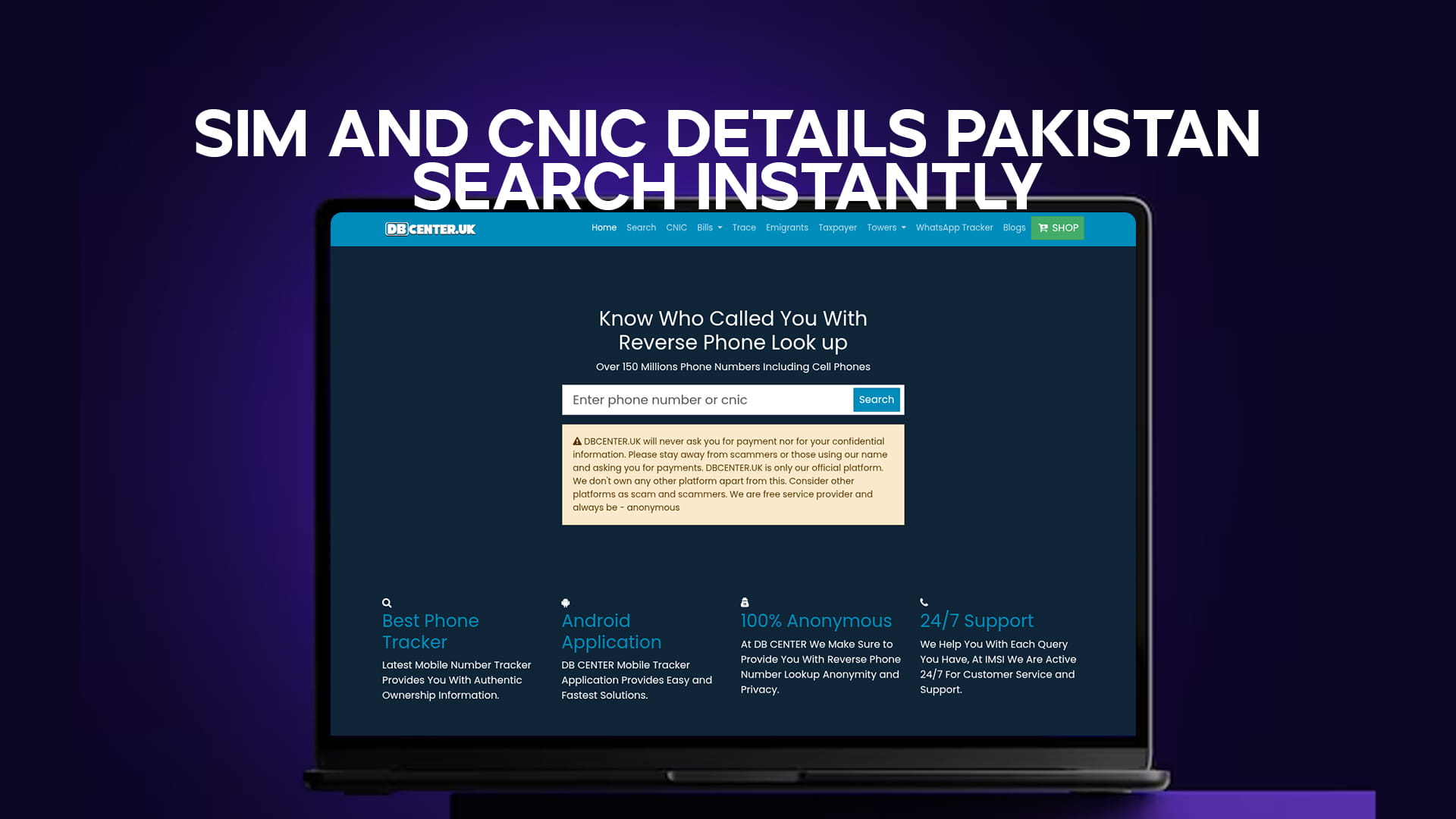
DB Center is built around this concept. With over 150 million phone numbers in its database — including cell phones, which are notoriously harder to trace than landlines — DB Center gives users a practical way to identify unknown callers without needing to be a technical expert or go through official channels.
For people in Pakistan, this is particularly useful given how common spam calls, scam attempts, and phone harassment have become. Instead of either ignoring the call or calling back blindly, you can run a quick search and make an informed decision.
The process through DB Center is simple. Enter the number in the search bar, and the system pulls up available information for that number. This can include who the number belongs to, whether it has been flagged by other users as spam, the carrier it belongs to, and other relevant details.
How SIM-Related Fraud Happens in Pakistan
Understanding how SIM and CNIC fraud actually works helps you stay alert. The methods used by fraudsters are more straightforward than most people realize.
CNIC Photocopies. When you hand over a photocopy of your CNIC — to a property dealer, an employer, a school, or even a shop — that copy can find its way to someone who uses it to register a SIM. The biometric verification step is supposed to prevent this, but corrupt or careless retailers have found workarounds.
SIM Swapping. This involves contacting a telecom network and convincing them to transfer your number to a new SIM. The criminal pretends to be you, claims they lost their SIM, and requests a replacement. Once they have your number, they can intercept OTPs and access your bank accounts and other services.
Pre-Activated SIM Reselling. Some retailers activate SIMs in bulk using fabricated or stolen identities and then sell these pre-activated SIMs to buyers who do not want their identity tied to the number. This grey market has been persistent despite crackdowns.
Spoofed Caller IDs. Some scam calls appear to come from legitimate Pakistani numbers — even from numbers that look like bank or government agency lines — but are actually generated using VoIP or caller ID spoofing technology. The number shown on your screen may belong to a real person who has no idea their number is being used this way.
Being aware of these tactics is the first step toward not becoming a victim.
DB Center for Pakistani Users – What You Can Actually Find
If you are based in Pakistan and someone calls you from an unknown number, the immediate question is whether that number has any traceable history.
DB Center's reverse phone lookup database covers more than 150 million numbers including cell phones. For Pakistani users, the platform can pull up:
Carrier information. Which network the number belongs to — Jazz, Telenor, Zong, Ufone, or otherwise.
Geographic information. Which city or region the number is associated with, when this information is available.
User reports. If the number has been flagged by other people as a spam caller, telemarketer, scammer, or harasser, those reports show up. This crowd-sourced data is often the most practical indicator of whether a number is safe or suspicious.
Call pattern data. In some cases, the platform surfaces data about how a number has been reported across different users, giving you a broader picture of whether this is an isolated call or part of a pattern.
For cases involving persistent unknown calls, potential fraud, or harassment, this kind of background check before responding is the smartest approach.
Practical Tips for Protecting Your SIM and CNIC
A few consistent habits can significantly reduce your exposure to SIM and CNIC-related fraud.
Run the PTA check regularly. Sending an SMS to 668 takes about 30 seconds. Doing this every few months means you will catch unauthorized registrations early, before they cause damage.
Guard your CNIC photocopies. Be selective about who you give your CNIC copy to. When you do give it out, write the purpose on the copy itself — for example, "for house rental only" — so it cannot be reused for SIM registration or other purposes.
Never share OTPs. One-time passwords sent to your phone are the key to your bank accounts, email, and other services. No legitimate bank, government agency, or telecom company will ever ask you for an OTP over the phone. If someone does, it is a scam.
Report lost or stolen CNICs immediately. If your CNIC or your phone is lost or stolen, contact NADRA and your telecom operator as soon as possible. A quick response prevents most downstream misuse.
Check unknown numbers before calling back. DB Center makes this fast and free. Before you return a call from an unknown number, look it up. If it comes back flagged as spam or fraud, you have saved yourself a potential problem.
Keep your SIM count in check. If you no longer use a SIM, get it formally de-registered rather than just abandoning it. An unused SIM still registered under your CNIC can be exploited without your knowledge.
The Role of NADRA in SIM and CNIC Security
While PTA manages the telecom side, NADRA is the body that manages your national identity. These two organizations work together when it comes to SIM verification — NADRA's biometric database is what PTA uses to verify fingerprints at the point of SIM registration.
When your biometric data is verified correctly, it is a strong layer of protection. The problem comes when:
- A retailer bypasses the biometric step entirely (which has happened).
- Someone with similar fingerprint patterns manages to pass verification (rare but documented).
- The CNIC itself was fraudulently obtained from NADRA in the first place.
NADRA has improved its processes significantly over the years, and the rate of fraudulent CNIC issuance has dropped. But the older stock of fake or misused CNICs remains in circulation, which is why checking your own SIM registrations continues to be necessary even for people who have done nothing wrong.
Filing Complaints and Getting Help
If you are dealing with SIM-related fraud, harassment, or unauthorized registrations, here is a quick reference for where to go.
PTA Consumer Support: PTA has a dedicated helpline and an online complaint portal for telecom-related issues including unauthorized SIM registrations, spam calls, and network complaints.
FIA Cybercrime Wing: For financial fraud, blackmail, or criminal activity linked to a phone number, the FIA Cybercrime Wing handles cases through their website and regional offices.
Your Telecom Operator: Jazz, Telenor, Zong, and Ufone all have fraud reporting mechanisms. Most have helplines, franchise offices, and in some cases dedicated fraud support teams.
NADRA: For issues related to CNIC misuse or identity theft at the national level, NADRA has a helpline and complaint registration process.
DB Center: For identifying unknown numbers or flagging suspicious callers, DB Center allows users to look up numbers and contribute reports that help protect others in the community.
Final Thoughts
Your SIM card and your CNIC are two of the most important pieces of your identity in Pakistan today. They are connected at the system level, and problems with one almost always spill over into the other.
The good news is that the tools to check, verify, and protect this information are genuinely accessible. The PTA SMS check is free, fast, and available to anyone with a phone. DB Center gives you an instant way to look up unknown callers without any technical background. And formal complaint channels exist for every type of issue.
The people who get hurt by SIM and CNIC fraud are mostly those who did not know these tools existed. If you read this far, you now have a clear picture of how to search SIM and CNIC details in Pakistan and what to do when something does not look right.
Start with the 668 check today. It takes less than a minute and tells you exactly where you stand.