There is a moment most people in Pakistan know well. Your phone rings. The number is unfamiliar. You hesitate. You answer or you do not, but either way, a question lingers: who was that?
For a long time, answering that question meant calling back and hoping for the best. Now it does not. A SIM information checker can tell you the name linked to a number, the network it belongs to, the general region it was registered in, and whether other people have already flagged it as trouble. All of that, for free, in under a minute.
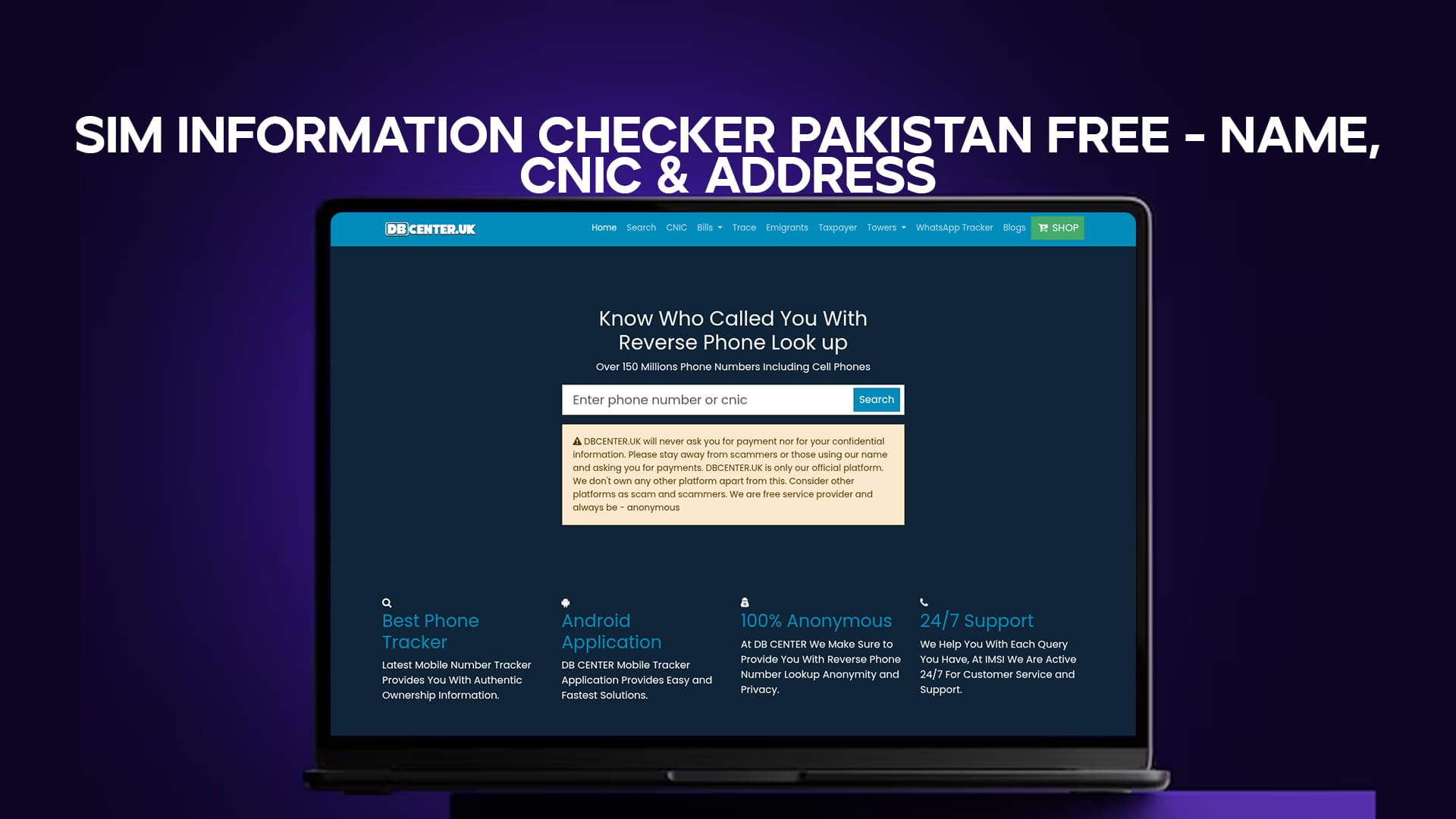
DB Center is a reverse phone lookup platform covering more than 150 million phone numbers, including Pakistani mobile and landline numbers. The database is large enough to return useful results for most Pakistani numbers — name, carrier, region, and community-based flags from users who have already dealt with that number. You search a number, you get information. That is the whole thing.
This article explains how SIM information lookup works in Pakistan, what kind of details you can actually find, what the realistic limits are, and why having access to this kind of tool matters for everyday safety and decision-making.
What a SIM Information Checker Does
A SIM information checker, at its core, is a reverse lookup tool. You provide a phone number and the tool searches its database for associated records. Those records can include the registered name of the SIM owner, the carrier network, the geographic region, and any public-facing data tied to that number.
The phrase "name, CNIC and address" comes up often in searches, and it is worth being clear about each of these three things.
Name. This is the most commonly available piece of information in a reverse lookup. If the number is in the database and the registration data has been compiled, you will typically see the name of the person or business the SIM is registered to.
CNIC. The Computerised National Identity Card number is a 13-digit unique identifier for Pakistani citizens, managed by NADRA. CNIC numbers are not publicly searchable through any legitimate tool — they are protected personal data. What reverse lookup tools can do is tell you whether a number matches a name you already know, helping you indirectly confirm whether someone is who they claim to be.
Address. Precise home addresses are not returned by public lookup tools. This is a deliberate limitation and the right one — a tool that handed out home addresses to anyone who typed in a phone number would create real safety risks. Some lookup tools return a general region or city, which is useful context without being a privacy violation.
So the honest picture is this: a free SIM information checker in Pakistan can return the name and carrier reliably for many numbers, give you a general location, and show you community data about how that number has been used. That is genuinely useful, even if it stops short of the full picture that government and carrier databases hold.
How SIM Registration Works in Pakistan and Why It Matters
To understand what SIM information lookup can return, it helps to understand how SIM registration works in Pakistan.
The Pakistan Telecommunication Authority requires every SIM card to be registered biometrically. When a person buys a SIM — from any of the five main carriers — they must scan their thumbprint at the point of sale. That print is matched against NADRA's national biometric database. If it matches the CNIC the buyer presents, the SIM is registered under that identity. If it does not match, the SIM cannot be activated.
This process creates a direct, verified link between a phone number and a real person's CNIC. It is one of the more robust SIM registration systems in South Asia. The biometric requirement closed a loophole that had allowed large-scale fraud through bulk SIM purchases under fake or borrowed identities.
There is also a cap on how many SIMs one CNIC can hold across all networks. The PTA has adjusted this cap over the years. The effect is the same in each case: it limits the pool of anonymous or throwaway numbers available for fraud.
For the reverse lookup user, the practical implication is that most active Pakistani numbers — particularly those registered after biometric rules were strictly enforced — have real identity data sitting behind them at the carrier level. That data feeds, indirectly, into compiled databases. So when you search a Pakistani number and get a name back, that name traces to a verified registration. It is not a guess.
How to Use DB Center to Check SIM Information in Pakistan
The process is simple and takes very little time.
Open DB Center in your browser. The site works on any device — Android phones, iPhones, laptops, desktops. The interface is straightforward with a search bar prominently placed.
Enter the number you want to check. Pakistani mobile numbers should be entered in international format for the most complete results. Drop the leading zero and add +92 before the remaining digits. A number like 0333-1122334 becomes +923331122334. If you are unsure, try both formats — the system recognises either.
Run the search. Results come back within seconds. The database covers over 150 million numbers, so most Pakistani mobile numbers return at least some information.
Review the name and carrier. The first thing to look for is the registered name. If it matches the name someone gave you, that is a positive confirmation. If it does not match, that is worth noting. The carrier and number type are also shown — useful for confirming whether the number is a mobile SIM, a landline, or a VoIP line.
Check the community reports. This is often where the most current information lives. Other users who have received calls from that number may have left ratings and comments. Spam flags, fraud warnings, notes about what the caller said — this community data updates continuously and reflects real, recent behaviour.
Make your decision. Block the number, save it as a contact, call back, or report it. You now have more information than you did before. Use it.
Pakistani Mobile Networks and What the Prefix Tells You
One of the pieces of information a SIM checker returns is the carrier network. That information comes directly from the number's prefix — the digits after the initial 03 — and it is publicly available. Knowing it is helpful context when you are evaluating an unfamiliar number.
Jazz is Pakistan's largest mobile network and operates under prefixes 0300 through 0303 and 0320 through 0333. Jazz numbers are common across the country and span both personal and business registrations.
Telenor Pakistan operates under prefixes 0340 through 0346. Telenor has a strong presence in smaller cities and rural areas as well as major urban centres.
Zong, owned by China Mobile, uses prefixes 0310 through 0315. Zong is particularly strong in data coverage and has grown its subscriber base significantly over the past several years.
Ufone, a subsidiary of PTCL, operates primarily in the 0333 through 0337 range. Ufone has a historic presence in smaller cities and towns across Pakistan.
SCOM (Special Communications Organization) uses prefixes 0350 through 0352. SCOM covers Azad Kashmir and Gilgit-Baltistan, areas where other networks have limited reach.
Beyond mobile SIMs, Pakistani landlines use regional area codes. Karachi numbers begin with 021, Lahore with 042, Islamabad and Rawalpindi with 051, Peshawar with 091, Faisalabad with 041, and Quetta with 081. If a landline number appears in your search, the area code tells you the registered city.
Knowing the carrier and region of an unknown number helps you assess whether it makes sense. A company claiming to operate from Islamabad but calling from a number registered in a different region is worth a second look.
What Information You Can Realistically Expect to Find
People searching for SIM information sometimes have higher expectations than the tools can deliver. Being clear about what you will and will not find saves frustration.
What you can typically find through DB Center:
The name of the registered owner or business, if that data is in the compiled database. This is available for a large portion of Pakistani numbers, particularly older registrations and business lines.
The carrier network, derived from the number prefix. This is always available and accurate.
The general region or city of registration, where that data is present. This is typically a city or province, not a specific address.
The number type — whether it is a mobile SIM, landline, or VoIP. This matters because VoIP numbers can be registered from anywhere and are more commonly used in remote-based scams.
Community flags and user comments. This is the most dynamic part of any lookup result. Users leave reports when they receive suspicious calls, and those reports accumulate over time. A heavily flagged number tells you something important even when no name is attached.
What no public tool will return:
Full CNIC numbers. These are protected under privacy regulations and are not exposed in public databases.
Home addresses. Precise residential addresses are not publicly available through any legitimate reverse lookup service.
Real-time location data. No SIM checker tracks where a phone is physically located. That is the territory of law enforcement tools, not public services.
Bank account details or financial records. Completely outside the scope of phone lookup tools.
If someone is promising you all of this for free online, they are either misleading you or running a scam themselves. Legitimate tools have these boundaries, and those boundaries exist for good reason.
Situations Where Checking SIM Information Genuinely Helps
These are not hypothetical. They are the kinds of situations millions of Pakistanis face regularly.
A call from an unfamiliar number while at work. You missed it. The caller did not leave a message. You do not want to call back from your work phone without knowing what it is. You look it up. It turns out to be a delivery company you have an order with. You call back.
A suspicious text about your bank account. Someone texts claiming to be from your bank, saying your account will be suspended unless you verify your details. The number does not match your bank's published contact number. You search it. Forty community reports saying it is a phishing scam. You delete the message and call your real bank to confirm everything is fine.
A vendor giving you a number that does not match. You are buying construction materials. The supplier gave you a contact number. You search it. The name in the database does not match the business name they gave you. That is a conversation worth having before you pay.
An elderly relative who keeps getting calls. Your parent or grandparent has been getting repeated calls from an unknown number. They are confused and a little worried. You take their phone, search the number, and find it has been flagged by other users as a telemarketing call from an unlicensed insurance company. You block it for them.
A person who owes you money is calling from a new number. Someone borrowed money from you months ago and went quiet. Now a new number is calling repeatedly. You look it up. The name in the database matches the person you know. At least now you know it is them.
Verifying a domestic worker's reference. A candidate for a domestic job gave you a reference number. You search it to confirm it is a real, registered number before calling. The name and carrier both look legitimate. You proceed with the call.
Each of these situations is resolved — or at least better understood — with one quick search. The tool does not require any special knowledge or setup. It just requires the number.
Fraud Patterns That a SIM Check Can Help You Avoid
Pakistan's phone fraud landscape has a handful of patterns that repeat so often they have become almost predictable. Knowing them makes you much harder to fool.
Utility bill scams. A caller claims to be from WAPDA, KESC, or SNGPL and says your connection will be cut unless you pay immediately. They ask for payment via Easypaisa, JazzCash, or direct bank transfer. Real utility companies mail notices and do not demand instant phone payments. Look up the number before engaging.
Government agency impersonation. The caller claims to be from NADRA, the FIA, the PTA, or another government body. They say your CNIC is being cancelled, your SIM is flagged for illegal activity, or you are under investigation. They want you to verify personal details or pay a fine. Real agencies send written notices and have official communication channels. These calls are almost always fraud.
Overseas job placement fraud. A call or text offers work in Saudi Arabia, UAE, or another Gulf country. The jobs sound real and the pay sounds good. The catch is a registration fee, visa processing fee, or medical exam fee that has to be paid upfront. Legitimate recruiters deduct costs from future earnings, they do not collect fees from applicants. Look up the number before responding.
Loan offer scams. A text or call offers an instant loan with no documentation needed. They ask for your account details to deposit the money and then charge a processing fee. Once the fee is paid, the caller disappears. Look up the number. These scam lines are almost always reported by multiple previous targets.
Prize and lottery scams. You have won a car, a laptop, or a cash prize. All you need to do is pay a small release fee. The number is unknown. Search it. It will almost certainly have fraud flags from other users who received the same call.
Running an unknown number through a SIM information checker takes 30 seconds. For each of these scam types, that 30 seconds is the difference between catching the fraud before it costs you anything and becoming another statistic in the FIA's annual report.
How to Report a Problem Number Through Proper Channels
If a lookup confirms a number is linked to fraud or harassment, blocking it is the minimum response. Reporting it does more.
The Pakistan Telecommunication Authority accepts complaints about misuse of mobile numbers. You can file a complaint online through their official complaint portal. Include the number, describe what happened, and note dates and times. The PTA can instruct carriers to deactivate numbers used for verified fraud.
The FIA Cybercrime Wing handles phone-based financial fraud, threats, blackmail, and online harassment. They have a complaint portal at their official website. For serious cases — particularly where money has been lost — a formal FIA complaint is the right route. Investigators have the legal authority to trace numbers to their registered CNIC holders and pursue prosecution.
Your mobile carrier also accepts abuse reports. Jazz, Telenor, Zong, and Ufone all have customer service channels where you can flag a number for suspected fraud. Carriers can add network-level blocks to confirmed scam numbers.
DB Center's community reporting complements all of the above. When you flag a number as spam or fraud on the platform, that information is immediately visible to anyone else who searches the same number. You are not just protecting yourself — you are warning the next person before they make the same mistake.
Why Free Access to SIM Information Matters
Paid phone lookup services exist and some of them are good. But charging per search creates a barrier that hits the most vulnerable users hardest. An elderly person in a small town who got a suspicious call is not going to navigate a subscription model to check a number. A young person who just received a threatening message should not have to pay to find out who sent it.
Free tools lower that barrier to zero. DB Center does not ask for payment, does not require an account, and does not hide its results behind a paywall. You type the number, you get what the database has. That accessibility is the point.
For the Pakistani diaspora — large communities in the UK, UAE, Saudi Arabia, the US, and Canada — this free access matters just as much. Overseas Pakistanis frequently receive calls from Pakistan numbers claiming to be from relatives, lawyers, or government officials. Running those numbers through DB Center from anywhere in the world takes the same 30 seconds it takes from within Pakistan.
The tool works on any browser, on any device, without any setup. That is intentional. The fewer obstacles between a suspicious number and an answer, the more useful the tool actually is.
Final Thoughts
Checking SIM information in Pakistan is easier in 2026 than it has ever been. The combination of a stronger national SIM registry — built on biometric verification and CNIC linkage — and publicly accessible reverse lookup tools means most Pakistani phone numbers can be identified, at least partially, within seconds.
DB Center sits at the useful end of what is freely available. With a database of over 150 million numbers, coverage of all Pakistani carriers, and a community reporting system that reflects real current behaviour, it gives you meaningful information before you decide how to respond to an unknown number.
Name, carrier, region, community flags — these are the details that matter in most situations. They are available, they are free, and they are just a search bar away.
The next time an unknown number calls, you do not have to answer blind. Check first.