Your phone rings. The number on the screen means nothing to you. No name, no context, no idea who is on the other end. Do you pick up? Let it ring out? Call back later?
This happens to almost everyone in Pakistan multiple times a week. And most people handle it the same way every time, either answering without thinking or ignoring it completely. Both choices are made in the dark.
In 2026, Pakistan has over 195 million active SIM connections. Scam calls are more sophisticated than they have ever been. Telemarketers are more aggressive. And yet, plenty of unknown calls are completely genuine and worth answering. The problem is telling the difference without any information.
This guide gives you a clear plan for exactly what to do the next time an unknown number calls you in Pakistan.
Step One: Do Not React Immediately
The first thing to do when an unknown number calls is nothing. Do not answer instantly and do not call back the moment you see a missed call. Give yourself thirty seconds to think.
This matters more than it sounds. Scammers and telemarketers rely on impulsive reactions. A missed call that gets returned within seconds is exactly what a bait-and-ring operation wants. A premium rate scam works because the target calls back before stopping to question why a stranger rang once and hung up.
Legitimate callers, on the other hand, are almost always willing to wait. A delivery rider will call back. A doctor's office will leave a voicemail or send a follow-up message. A recruiter will try again. If someone genuinely needs to reach you, thirty seconds of you pausing to check the number will not cost you anything important.
That thirty seconds is enough time to run a search.
Step Two: Search the Number on DB Center
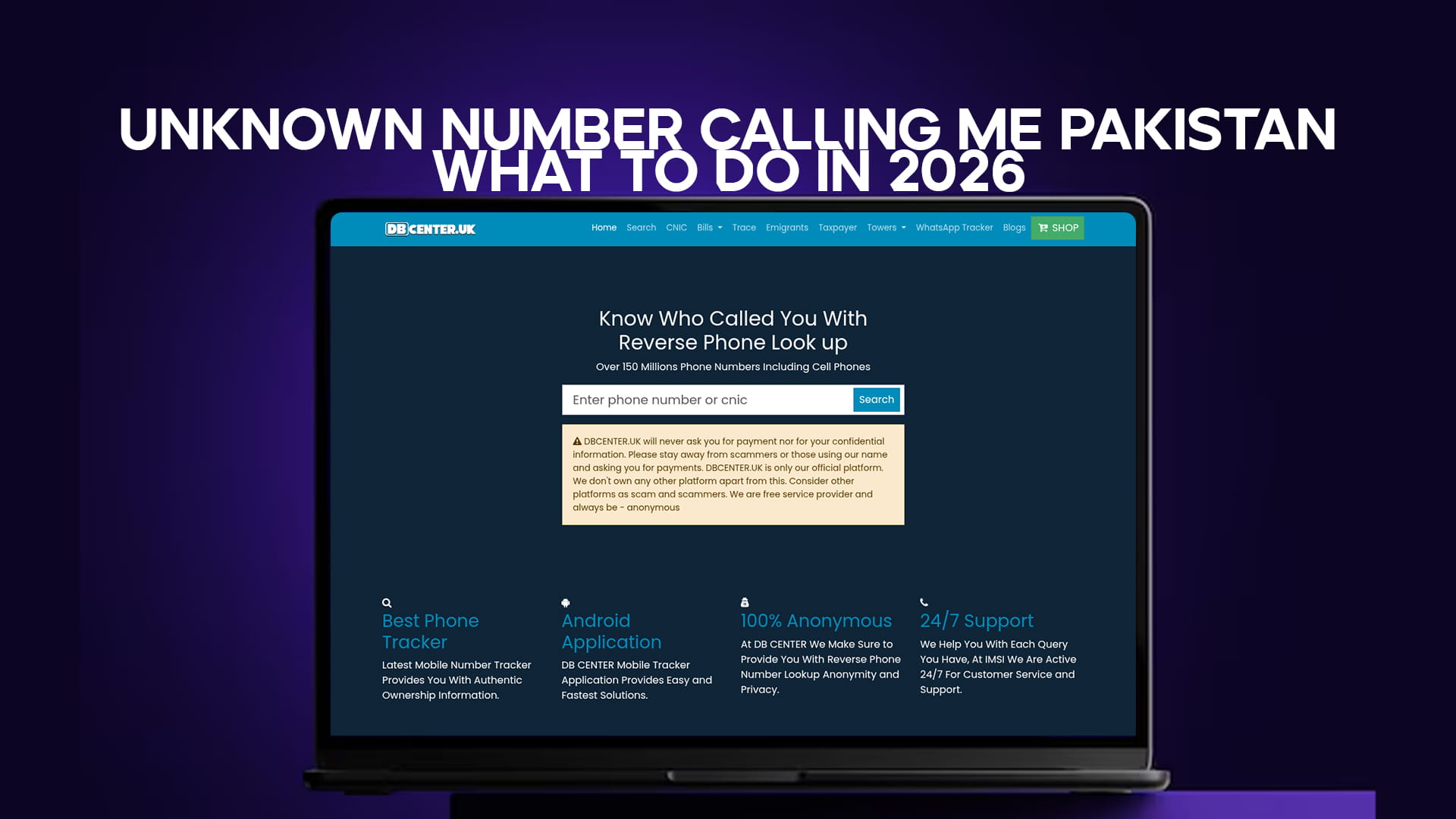
Before you do anything else with an unknown number, search it. DB Center gives you access to over 150 million Pakistan phone numbers including mobile numbers across all major networks and PTCL landlines nationwide.
Open DB Center in your phone's browser. Type the full number into the search box exactly as it appeared on your screen. Pakistani mobile numbers are eleven digits starting with 03. Landline numbers include a city code followed by the subscriber number. If the number showed a country code at the start, include that too.
Run the search and read what comes back. The results can include several types of information depending on what is in the database for that particular number.
Registered Name If the number is linked to a named person or business in the database, that name appears in the results. For business numbers, this is especially reliable. For personal mobile numbers, the name is usually the person the SIM was registered under, though this is not always the same person using the number today.
Telecom Operator Every result will tell you which network the number belongs to. Jazz, Telenor, Zong, Ufone, or another operator. This is useful context. Knowing the network sometimes helps you place where a call might be coming from, particularly when combined with other details in the results.
Location or City For landline numbers, the city code tells you exactly where the call originated. DB Center reads this automatically. For mobile numbers, location data varies, but the city or region is often shown when it is available in the records.
Community Reports This is often the most valuable part of a search result. When other users in Pakistan have searched the same number before and left ratings or comments, you see all of that. A number with multiple reports calling it a scam, a fake bank call, or a telemarketer tells you everything you need to know before you decide whether to engage.
Business Information Registered businesses in Pakistan, including hospitals, banks, courier companies, and government offices, often have their numbers in public directories that DB Center draws from. If the call came from a business line, the business name and category will likely appear.
The entire search takes under a minute. That is genuinely all the time it takes to go from no information to a clear picture of who is likely calling you.
Step Three: Understand What the Number Format Tells You
Even before you run a search, the number itself gives you some basic information. Knowing how Pakistani phone numbers are structured helps you read an unknown number before you do anything else.
Mobile numbers in Pakistan are always eleven digits and always start with 03. The first four digits identify the network. Jazz and Warid numbers use prefixes starting with 0300 through 0304 and 0321 through 0323. Telenor covers 0340 through 0345. Zong numbers start with 0310 through 0312. Ufone uses 0331 through 0333.
Landline numbers in Pakistan start with a city code. Karachi uses 021. Lahore uses 042. Islamabad and Rawalpindi share 051. Faisalabad is 041. Peshawar is 091. Multan is 061. Quetta is 081. If a number on your screen starts with one of these codes, it is a landline from that city.
If the number does not fit either pattern cleanly, it may be a VoIP number, an international call routed through a Pakistani gateway, or a spoofed number designed to look local. VoIP numbers are increasingly common in Pakistan and are used by both legitimate call centres and fraudulent operations. They often appear as local numbers even when the caller is based elsewhere.
A number that looks slightly off, too short, too long, or starting with digits that do not match any standard Pakistani prefix, is worth extra caution and a search before anything else.
Step Four: Identify What Type of Call It Likely Is
Once you have the search results and have looked at the number format, you can usually place an unknown call into one of several categories. Each one calls for a different response.
Legitimate Business or Service Call The results show a business name, a recognised operator, and no spam reports. This is the easiest case. You know who called and can return the call or wait for them to try again. Delivery services, clinics, schools, utility companies, and recruitment firms all fall into this category regularly.
Personal Call from an Unknown Number The results show a name or a clean number with no flags, but it is not a business you recognise. This could be a friend, relative, or acquaintance calling from a new or different number. A quick text asking who it is resolves this without the risk of calling back blind.
Telemarketer The results show the number flagged as a sales or marketing call. Banks, real estate companies, insurance providers, and telecom operators run large outbound calling operations in Pakistan. These calls are not dangerous but they are almost always a waste of your time. Blocking the number is the sensible response.
Scam Call The results show multiple reports identifying the number as fraudulent. This could be a fake bank alert, a prize scam, a fake job offer, or any number of other fraud attempts. Do not call back. Block the number immediately and consider reporting it on DB Center so other users in Pakistan see the warning.
Unrecognised Number with No Results The search returns only operator information and nothing else, with no community reports. This is a genuinely unknown quantity. The number could be anything. In this situation, sending a text is safer than calling back. Write something brief asking who is calling. A legitimate person will respond. A scammer usually will not, or will respond with something that quickly reveals their intent.
The Most Common Reasons for Unknown Calls in Pakistan
Understanding who is likely calling helps you approach unknown numbers with the right level of caution rather than treating every single one as a potential threat.
Delivery Riders Pakistan's e-commerce sector has grown rapidly. Millions of deliveries happen every day through services including Daraz, OLX commerce, and dozens of independent courier companies. Riders frequently call from personal numbers rather than company lines. If you ordered something recently, an unknown call is often your delivery.
Medical Appointments and Follow-Ups Hospitals and clinics across Pakistan call patients from department or ward numbers rather than the main reception. If you have had a recent test, appointment, or procedure, a follow-up call from an unknown number is common.
Recruiters and HR Departments If you have an active CV on any job portal in Pakistan or have recently applied for positions, calls from unfamiliar numbers are often from recruiters. Many HR departments in Pakistan use personal office extensions rather than published company numbers.
Old Contacts on New Numbers People in Pakistan change SIMs frequently. A contact who lost their phone, switched networks, or got a new number may call from a number you have never seen. Their name will not appear on your screen, but a search might return their name if their new SIM is registered under the same details.
Government and Utility Services NADRA, WAPDA, SNGPL, PTCL, and various local government departments call citizens for follow-ups on complaints, service issues, and documentation requests. These calls come from departmental numbers that are not widely publicised.
International Calls from Overseas Pakistanis Pakistan has one of the largest diaspora populations in the world. Relatives and friends calling from the UAE, Saudi Arabia, the UK, or elsewhere sometimes use local forwarding numbers or internet calling apps that display unfamiliar numbers.
What Scam Calls Look Like in Pakistan in 2026
Knowing the most active scam patterns helps you recognise them faster, even before you run a search.
The One-Ring Trick The caller rings once and immediately hangs up. The number is either a premium rate line that charges you when you call back or a lead generation operation collecting responsive numbers. If you call back, you either get charged or confirm your number is active and answered.
Bank Impersonation A caller identifies themselves as a representative from your bank's fraud or security department. They describe suspicious activity on your account and ask you to verify your card number, account details, PIN, or an OTP that just arrived on your phone. Real bank staff never ask for any of these things over the phone.
The Prize Call You are told you have won a cash prize, a car, or another valuable item in a draw organised by a mobile network or government body. To claim it, you need to pay a processing fee or share personal details. There is no prize.
Fake Job Offers A caller offers a job, often overseas, with a salary that sounds attractive. The role is described in enough specific detail to seem real. Eventually, they ask you to pay a registration fee, deposit for a work visa, or cost of a medical test. Once you pay, the number goes silent.
Government Impersonation The caller claims to be from NADRA, FBR, or a law enforcement agency. They say there is a problem with your CNIC, your tax record, or a legal case aainst you. They ask for payment or personal information to resolve the issue immediately. No government agency in Pakistan works this way.
What to Do After You Have Identified the Caller
Once you have checked the number and formed a clear picture of who is likely calling, the next steps are straightforward.
If it is a legitimate call: Call back or wait for the caller to try again. You already know who you are dealing with before the conversation starts.
If it is a telemarketer: Block the number. You do not need to engage to make the calls stop. Blocking takes five seconds on any smartphone.
If it is a confirmed scam: Block the number and report it. On DB Center, you can leave a report so that other users in Pakistan who search the same number see your warning. This directly reduces the effectiveness of the scam for whoever gets the next call.
If you already answered and realised mid-call that it was a scam: End the call immediately. Do not share any information. If you already shared anything sensitive, contact your bank directly using the number on the back of your card, not the number that called you.
If the call involved impersonation of a bank, NADRA, or a government body: File a complaint with the Pakistan Telecommunication Authority. Their complaint portal accepts reports about fraudulent calls and the information you provide contributes to action against those numbers.
Building Better Phone Habits in Pakistan
The single most effective change most people in Pakistan can make to their phone habits is simply pausing before reacting to unknown calls. Not for long. Thirty seconds is enough.
In that thirty seconds, a quick search on DB Center tells you whether the number belongs to a business, has been flagged by other users, or is completely clean. That information costs you nothing and protects you from the scenarios where acting without it causes real problems.
Pakistan's phone network is too large for anyone to know every number that might call them. Scammers count on that uncertainty to keep people off balance. A reverse phone lookup removes the uncertainty. Over 150 million Pakistani numbers are in the DB Center database. The number that just called you is probably among them.
Search it first. Then decide. That order makes all the difference.